
Review · PULA
1-Hour Private E Foil Surfing Lessons in Istria
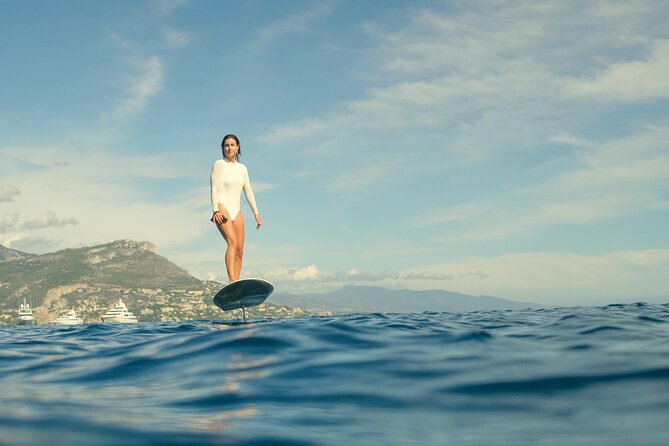
The first surprise is how quickly an e-foil can turn the sea into a quiet runway. You start low on the board, then work toward lifting above the water until the waves fade and the board feels like it is flying. This is one-on-one instruction, not a group class where you wait your turn.
I like the patient step-by-step teaching and the silent electric board, which lets you move without the roar of a jet ski. I also like the practical Bluetooth intercom, since you can hear your instructor while moving across the water. The main caution is price: at $192.23 per person for about an hour, this is a costly introduction to a new sport, and progress depends on your balance, comfort, and the weather.
Key points to know before booking
- Private lesson: Only your group takes part, so the instructor can focus on your balance and pace.
- Learn in three stages: You begin lying on your stomach, move to your knees, and finish by trying to stand.
- Ivan provides patient coaching: The instructor is praised for being kind, positive, helpful, and calm while teaching first-timers.
- Bluetooth keeps you connected: A waterproof wireless intercom lets you hear instructions from the board.
- GoPro Max video is included as a possibility: The guide can record your final time on the water and share it later.
- Weather matters: Poor conditions can cancel the lesson, with a new date or full refund offered.
What e-foiling in Pula actually feels like
An e-foil board uses an electric motor and underwater foil to lift the board above the surface. You control the board with a hand-held remote, while the foil creates the sensation of gliding above the water. The result is closer to silent flight than to ordinary surfing.
That description can make the activity sound easy. It is not effortless, but the lesson is designed to give you a sensible route into it. You do not begin by standing on a raised board and hoping for the best. You first learn how the Fliteboard moves while lying on your belly, where your center of gravity is low and mistakes are easier to manage.
As your control improves, you move to kneeling. This is the key transition. You begin to feel how small movements affect balance and how the board reacts when it rises into its flight position above sea level. Only then do you work toward standing.
That progression is one of the strongest reasons to book a private lesson. If you are struggling with one position, the instructor can keep you there rather than moving on because the rest of a class is ready. If you pick it up quickly, you can spend more of the short session trying to fly.
More One-Hour Experiences in the world:
- Los Cristianos : 1 Hour of Paddle surf Rental
★ 4.4 · 91 reviews - One Hour Surf Lesson with Experienced Instructor
★ 5.0 · 67 reviews - 1-Hour Private Surf Lesson in Cocoa Beach
★ 5.0 · 41 reviews
Meeting at Puntižela near Pula
The lesson starts at LULL eFoilBrioni Sunny Camping, Puntižela 155, 52100 Pula. You finish at the same meeting point, which keeps the day simple and avoids arranging a separate return transfer.
The activity is offered in English. It is a mobile-ticket experience, and booking confirmation is provided at the time of booking. Since the meeting point is at a camping location, check your route and allow enough time to arrive without rushing into the safety briefing.
The location matters because the lesson is built around getting on the water quickly. This is not a sightseeing cruise or a long coastal excursion. Your time is focused on instruction, practice, and a short video at the end. If you are trying to fit the activity between other plans in Pula, the one-hour format is useful, but it also leaves little room for lateness.
The beach briefing comes first
After meeting the instructor, you begin on the beach with safety instructions and an introduction to the Fliteboard. You learn the basic controls, the idea behind e-foiling, and how the equipment is used before entering the sea.
This short briefing is more important than it may sound. The board has power, and the foil changes how it behaves as it gains speed. Understanding the equipment before you are on the water lets you concentrate on balance rather than trying to decode the controls at the same time.
You also put on safety gear before heading out. The exact gear list is not specified, so you should rely on the instructor’s directions rather than assume what is provided. The lesson is described as suitable for most people, but no specific swimming, age, or fitness requirements are given in the supplied details. If any of those points matter to you, ask before booking.
First position: lying on your stomach
The first water exercise keeps you flat on your belly. This gives you the most stable starting position and lets you learn the board’s movement without immediately handling the challenge of standing.
You work on moving with the Fliteboard and getting a feel for its response. The instructor remains connected through a waterproof Bluetooth wireless intercom, so directions can be given while you are away from shore. That is a useful feature in a sport where turning your head or paddling back toward the instructor could interrupt your balance.
For a first lesson, this is the right place to spend time. The goal is not just to get moving. You need to understand how the board accelerates, how your body affects its direction, and how it feels before the foil lifts. A patient instructor can help you avoid rushing into the more difficult positions.
The private format also gives this stage real value. Your progress is not compared with another person on a second board. You can repeat the same movement until it feels natural, and the instructor can respond to your particular mistakes.
More Surf Lessons in the world:
- Tenerife: Surfing Lesson for All Levels, Photos included
★ 4.9 · 1,314 reviews - Group Surfing Lesson at Playa de las Américas, Tenerife
★ 5.0 · 1,072 reviews - Canggu: 2-Hour Surf Course
★ 4.8 · 1,053 reviews - Legian Beach, Bali: Beginner or Intermediate Surf Lessons
★ 4.9 · 1,019 reviews
Kneeling is where the board starts to fly
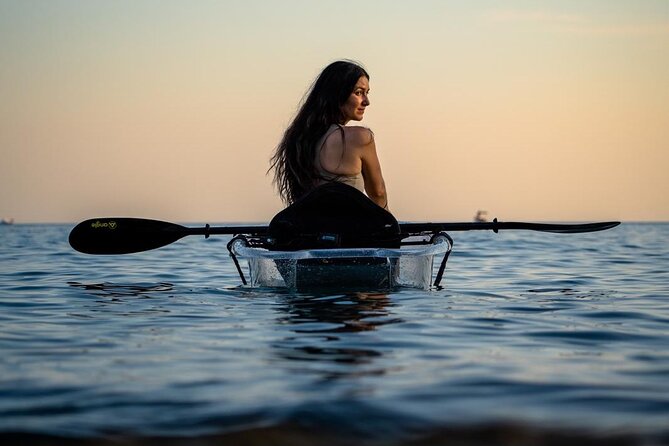
Once you are comfortable on your stomach, you move to a kneeling position. This brings your weight higher and makes balance more demanding. It is also where you begin working toward the feature that makes e-foiling different from ordinary board sports: lifting the Fliteboard above the surface.
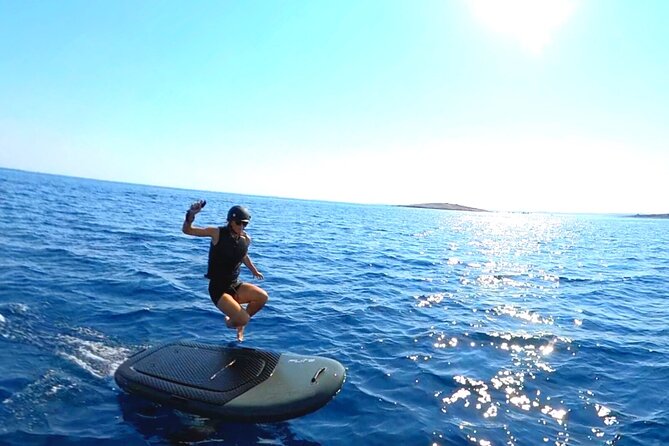
The aim is to balance and raise the board into the surf position, with the foil carrying it above sea level. This moment can be tricky. Too much movement can upset the board, while too little control can keep it from lifting. The instructor’s voice in your ear helps you make small corrections without stopping the lesson.
The supplied comments repeatedly praise Ivan for patience and a positive manner. That matters most here. A new water sport can feel awkward during the first attempts, and a calm instructor helps you treat each fall or wobble as information instead of failure.
You may reach the flight position during the first lesson, but the time spent there will vary. One person may stand briefly, while another may finish the hour still working on kneeling. The activity is a lesson, not a promise that every participant will master e-foiling in sixty minutes.
Standing up and finding the quiet
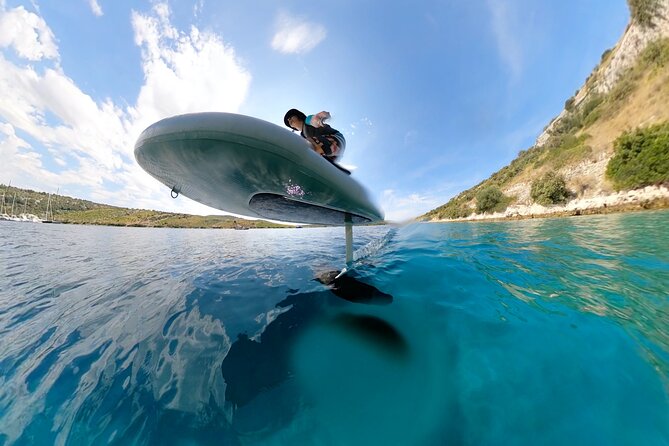
The final position is standing. This is the moment most people are waiting for, but it should come only after you have a feel for the board in the lower positions. Standing raises your center of gravity and demands more precise control of your feet, hips, and upper body.
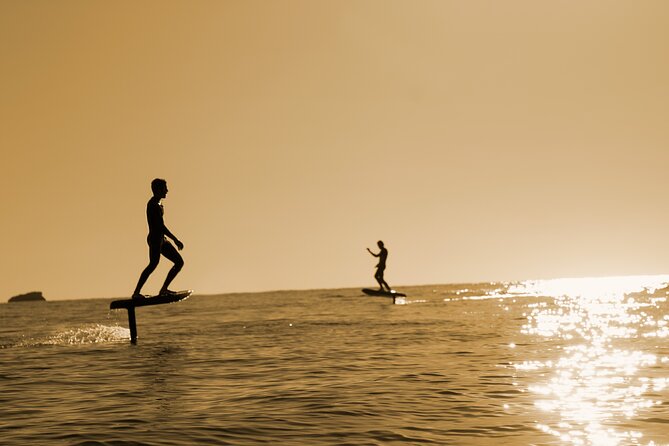
When it works, the character of the activity changes. You are no longer simply moving through the water. The board lifts, the contact with the surface decreases, and the noise of the waves fades. That quiet sensation is a major part of the appeal, especially compared with motorized water sports such as jet skiing.
The board is electric, so it does not produce the engine noise associated with a fuel-powered craft. The experience is also presented as a quieter, eco-friendly way to use the sea and is intended to leave wildlife undisturbed. That does not make it a wildlife tour, and you should not book it expecting animal sightings. The benefit is a lower-noise ride while you practice.
Standing for the first time can be exciting, but the one-hour limit is worth keeping in mind. You will have time to learn and possibly fly, yet you may not have long to explore once you become comfortable. The activity works best if your main goal is instruction and the thrill of learning, not a long free-riding session.
A GoPro Max memory at the end
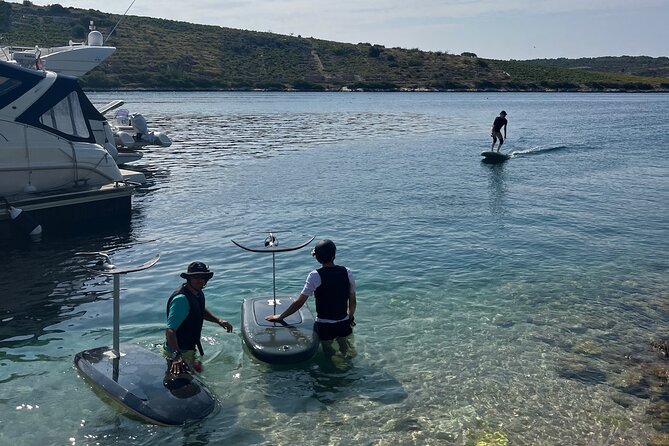
The last minutes on the sea are used to record your e-foiling experience. The guide can capture video with a GoPro Max camera and share it with you later, giving you a record of the attempt, the flight, or simply the early stages of learning.
This is a useful extra because e-foiling is hard to watch while you are doing it. You are busy balancing, listening to directions, and controlling the board. A video lets you see your position afterward and gives you a souvenir that is more personal than a standard beach photograph.
The wording indicates that the guide can record the experience, so you should confirm the exact video arrangements when you meet. The supplied information does not state how much footage you receive, the delivery method, or whether every participant is filmed for a particular length of time.
Why the private format is worth considering
The price is $192.23 per person. That is a serious amount for an hour on the water, especially if you are comparing it with a group water-sports rental. The value comes from the private coaching, equipment, safety briefing, intercom, and the chance to learn a sport without sharing the instructor’s attention.
I would consider the price reasonable for someone who specifically wants an introduction to e-foiling and values direct teaching. A private lesson can save time because you do not wait for other people to finish an attempt. It can also make the experience less intimidating if you have never tried a powered board.
The cost is harder to justify if you are looking only for a cheap beach activity. You might spend much of the hour learning basic positions, particularly if balance sports are new to you. You should book this because you want to learn e-foiling, not simply because you want an hour near the sea.
The fact that most people can participate helps, but the details do not promise that everyone will stand or fly. I would treat the first lesson as an introduction. If you become hooked, as several participants did, future sessions may be needed to build control.
Who should book this lesson
This activity suits curious beginners who want a direct introduction to a modern water sport. You do not need to arrive as an experienced surfer, and the instruction begins with basic safety and body positioning.
It also suits people who already have some experience with similar water sports. One participant noted that background in another water activity can be useful, though Ivan’s patience may make it unnecessary. That is a fair way to view it: prior experience may help with balance, but the lesson is not limited to experts.
I would especially consider it if you value:
- Private coaching rather than a group class
- A quiet alternative to jet skiing or water skiing
- A clear progression from belly to knees to standing
- A short activity that fits into a Pula visit
- Video of your first attempt
- An instructor who gives calm, positive guidance
It may be less suitable if you dislike falling, want a long ride, or need a fully predictable schedule. The activity depends on good weather, and the lesson may be canceled if conditions are poor.
Practical points for a smooth hour
Wear whatever you normally use for a sea activity, but follow the provider’s instructions about clothing and equipment. Safety gear is used, and the instructor will explain the board before you enter the water.
Arrive ready for a focused session. The hour includes the beach briefing, equipment preparation, water practice, and video time. There is no separate sightseeing portion, so late arrival would reduce the time available to learn.
Keep your expectations flexible. Your first success might be learning to control the board on your stomach. It might be kneeling without losing balance. Or you might manage a short flight while standing. All three are legitimate progress in a first lesson.
Weather is the main outside factor. If poor conditions force a cancellation, you can choose another date or receive a full refund. If you cancel yourself, do so at least 24 hours before the start time for a full refund. Changes or cancellations inside that window are not accepted for a refund.
Should you book the Pula e-foil lesson?
Book it if the idea of silently flying above the sea is the part of Pula you will remember most. The private format, Bluetooth coaching, patient instruction from Ivan, and possible GoPro Max video give the hour more substance than a simple board rental.
Skip it if the $192.23 price feels too high for a short lesson or if you want guaranteed standing time. The experience offers a strong introduction, not a full course or a long coastal ride.
For a first attempt at e-foiling, I like the careful progression and the chance to learn without a group watching every wobble. Go in expecting a challenge, listen closely, and count progress in small steps. If you reach the point where the waves fall silent beneath you, the unusual price may suddenly make sense.
FAQ
Where does the e-foil lesson start?
The lesson starts at LULL eFoilBrioni Sunny Camping, Puntižela 155, 52100, Pula, Croatia.
Where does the activity finish?
The activity ends back at the same meeting point.
How long does the lesson last?
The lesson lasts approximately one hour.
Is this a private activity?
Yes. Only your group participates in the private lesson.
Is the lesson suitable for beginners?
Yes. The lesson is designed for beginners, and most people can participate.
What positions will I learn?
You begin lying on your stomach, progress to kneeling, and then work toward standing on the Fliteboard.
Is instruction available in English?
Yes. The experience is offered in English.
What happens if bad weather cancels the lesson?
You can choose a different date or receive a full refund if the activity is canceled because of poor weather.
Just added for surfers in the world
- Valencia: Excursión en Moto de Agua + Paddle Surf★ 4.9 · 9 reviews
- Waikiki: Family, Private, and Group Surfing Lessons★ 5.0 · 4 reviews
- Waikiki: Surf Lessons Easy 60 min classes no crowds!★ 4.9 · 21 reviews
- Two- Hour Group Surfing Lesson in Cocoa Wrightsville Beach, NC★ 5.0 · 13 reviews
- Uluwatu: Surf Lessons Beginner★ 5.0 · 3 reviews
- Tricana Surf Experience★ 5.0 · 3 reviews
- 1-on-1 Private Surf Lesson in Santa Barbara★ 5.0 · 4 reviews
- Astonishing Scavenger Hunt: Surf, Sand and Sculptures!★ 3.0 · 2 reviews
1-Hour Experiences, compared.
One Hour Surf Lesson with Experienced Instructor
Read our review →
Kuta Beach Surfing Lesson (1 Hour, Local Instructor)
Read our review →
Private Surf Lesson: 1-Hour Wave-Riding on Kata Beach
Read our review →Browse the lists this tour appears in