
Review · CAPE TOWN
2-Hour Surf Lesson in Cape Town
Cape Town gives you a rare chance to learn surfing with a dramatic city setting nearby, but the real value here is the focus on ocean safety and understanding waves, not simply getting you upright on a board. The lesson suits first-timers, yet it also has useful goals for surfers who already know the basics. I like that your board and wetsuit are included, and I like the personal approach promised by a group capped at 12 people.
The main consideration is that this is not a guaranteed beach outing at a fixed hour. Lessons last about 1.5 to 2 hours and depend on weather and sea conditions. I would also confirm your booking with Atlantic Surf School before setting out, since one booking problem led to a very poor experience.
Key points before you book

- Your first wave is the starting point: Beginners work on timing, technique, confidence, and the basics of standing and riding.
- Equipment is included: A surfboard and wetsuit are provided, so you can arrive without carrying specialist gear.
- The ocean is part of the lesson: You learn how waves work and how to read conditions, not only how to stand on the board.
- Instruction changes with your level: Intermediate and advanced surfers focus on timing and positioning to catch better waves.
- Small-group format: The maximum group size is 12, giving you better access to the instructor than a large surf school can offer.
- Jesse and Jarrod are named instructors: Jesse is associated with patient first-time coaching, while Jarrod has taught children successfully.
Why this Cape Town lesson is more than a quick surf taster
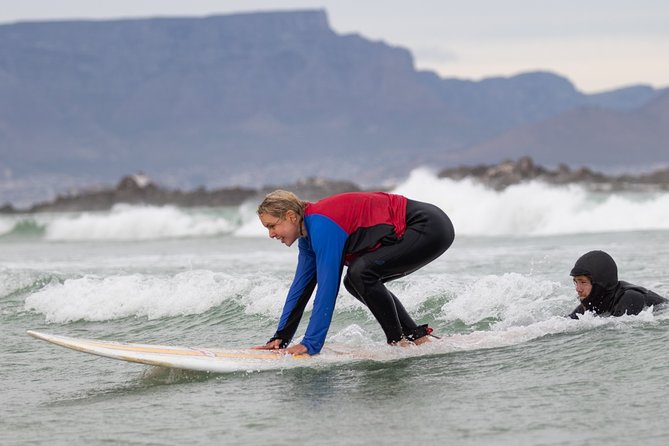
A beginner surf lesson can easily become a scramble of instructions: lie down, paddle, stand up, try again. This experience aims for something more useful. You learn how the ocean behaves and why a wave is worth catching before you worry about looking graceful on the board.
I like that approach. Standing is only one small part of surfing. You also need to understand timing, positioning, balance, and your own reaction to moving water. That makes this lesson a better fit for you if you want a foundation rather than a single photograph of yourself upright for two seconds.
The instructors also put safety first. That matters in Cape Town, where confidence in the water should grow at the same pace as your skills. The session is adapted to your ability and your comfort in the ocean, so you are not expected to perform at the same level as someone who has surfed before.
The provider is Atlantic Surf School, and the meeting point is 2 Coral Rd, Table View, Cape Town, 7439. The activity ends back at this same meeting point. It is close to public transportation, and service animals are allowed.
More Two-Hour Experiences in the world:
- Canggu: 2-Hour Surf Course
★ 4.8 · 1,053 reviews - Maui: Two Hour Beginner Group Surf Lesson in Kihei
★ 5.0 · 950 reviews - Bondi Beach: 2-Hour Surf Lesson Experience for Any Level
★ 4.9 · 935 reviews
Arriving at 2 Coral Road in Table View
Your practical job is simple: reach the meeting point and arrive ready to spend time in the water. The board and wetsuit are included, which removes two common hassles. You do not need to travel with bulky equipment, and you do not need to decide which board or suit is suitable for the conditions.
The exact session time is flexible. Lessons are available at a time that suits, provided the ocean and weather allow it. That flexibility can help you fit surfing around other Cape Town plans, but it also means you should not treat the lesson as an unchangeable appointment in the same way you would a museum entry.
I would keep your schedule open around the lesson. A session is described as lasting between 1.5 and 2 hours, and the sea may require a change of date. The experience requires good weather, so poor conditions can lead to another date or a full refund.
The group limit is 12 people. That is not a private lesson, but it is still more manageable than a large class. If you are nervous, staying near the instructor while the group receives direction should be easier than trying to attract attention in a packed lineup.
The first stage: safety, ocean awareness, and getting comfortable
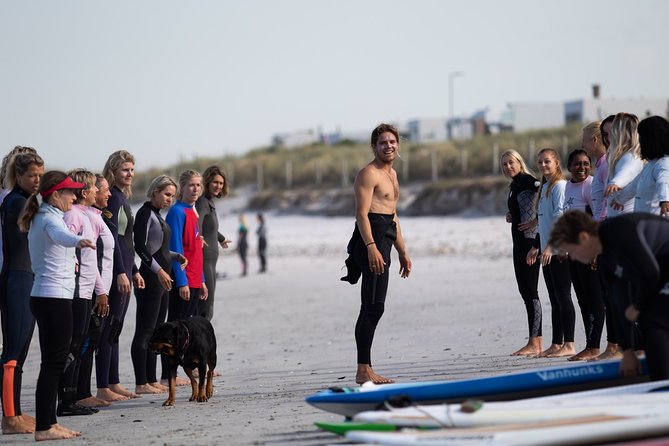
The lesson begins with the right priority: having fun while staying safe. Before you chase a wave, the instructor works with you on understanding the ocean and how waves work. The supplied details do not specify the exact shore briefing, so I would not assume a particular sequence of demonstrations, but ocean awareness is clearly part of the teaching style.
For a beginner, this stage is valuable because the sea can look simple from the beach. A wave is not just a wall of water arriving at random. Timing and position affect whether you catch it, miss it, or find yourself working far too hard for a poor attempt.
The instructors also pay attention to your confidence. That is important for children and adults who are fit enough to participate but unsure about the water. A calm first lesson can build a useful habit: assess conditions, listen carefully, and progress in small steps.
The available information says most people can participate. It does not provide a specific age limit, swimming requirement, or medical guidance, so you should contact the provider if you have concerns about your ability in the water.
The beginner lesson: from board position to first wave

If you have never surfed, your goal is to understand the basics of catching your first wave. That includes the technique for getting up, the timing of your movement, and the attitude needed when learning something unfamiliar.
You should expect repeated attempts rather than a polished ride at once. The instructor can help you understand when to paddle, how to position yourself, and how to respond once the wave begins to move the board. The emphasis is on learning the process, not on pretending every attempt will work.
This is where the lesson’s small-group size matters. You should have a better chance to receive corrections than in a crowded class. The maximum of 12 is still large enough that you will share attention, but the format offers a useful middle ground between a private coach and a mass lesson.
Jesse is specifically associated with helping a first-time surfer make those early attempts, with patient explanations and supportive instruction. That suggests the coaching can be encouraging without treating beginners as an afterthought. You may not have Jesse for your own session, so consider his approach a useful guide to the kind of instruction the school aims to provide, not a guarantee of your instructor.
Your first successful stand is worth celebrating, but I would judge the lesson by more than that. If you finish knowing how to position your board and how to read a basic wave, you have gained something you can use in a future session.
More Surf Lessons in the world:
- Tenerife: Surfing Lesson for All Levels, Photos included
★ 4.9 · 1,314 reviews - Group Surfing Lesson at Playa de las Américas, Tenerife
★ 5.0 · 1,072 reviews - Legian Beach, Bali: Beginner or Intermediate Surf Lessons
★ 4.9 · 1,019 reviews - Playa de las Américas: Private or Small-Group Surf Lesson
★ 4.8 · 980 reviews
The intermediate and advanced focus: timing and position
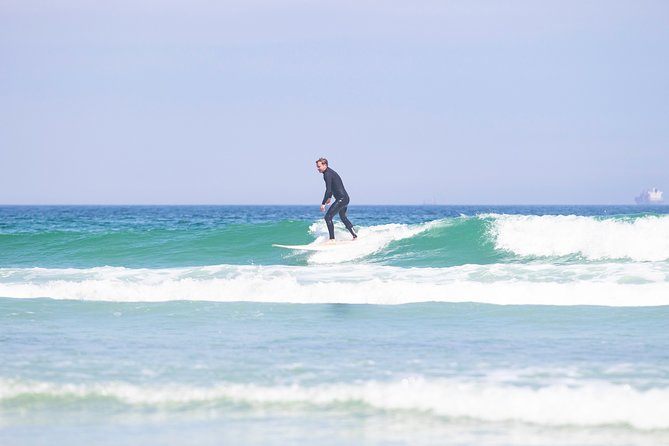
You do not need to be a complete beginner to book this lesson. If you already surf, the instructor can shift attention toward catching more waves and improving the quality of the waves you catch.
The main subjects are timing and positioning in the lineup. Those sound simple, but they often separate a frustrating session from a productive one. Better timing can help you catch a wave with less wasted effort. Better positioning can put you in a place where suitable waves reach you more often.
The information does not promise a particular break, wave height, or advanced technique. That is a good reason to keep expectations realistic. This is a lesson shaped by conditions, your ability, and your confidence, not a guaranteed performance clinic for a specific style of surfing.
Still, the flexible teaching model gives stronger surfers a reason to consider it. You can use the time to ask why you are missing waves, where you should sit, or how to improve your choices in the water. The ocean itself becomes part of the instruction rather than just the backdrop.
What the included board and wetsuit are worth
The $56.90 price per person is easiest to judge when you include the equipment. You are paying for roughly two hours of instruction, a surfboard, and a wetsuit, rather than only access to a coach.
That is useful if you are visiting Cape Town without surf gear. Buying or transporting a board would make little sense for a short trip, and choosing a wetsuit on your own can be awkward if you do not know what the local conditions require. Here, you can travel light and focus on the lesson.
The value is strongest for a first-timer who wants instruction and equipment in one booking. It is also reasonable for an improving surfer who already owns gear but wants help with wave selection and position. The value is weaker if you only want to rent a board and practice alone, since the price includes a coached experience rather than simple equipment access.
Group discounts are available, which may improve the price for families or friends booking together. Because group size can reach 12, you should not expect the close attention of a one-to-one session. The trade-off is a lower cost and a shared lesson with other people at varying levels.
A good choice for families, with one useful name to know
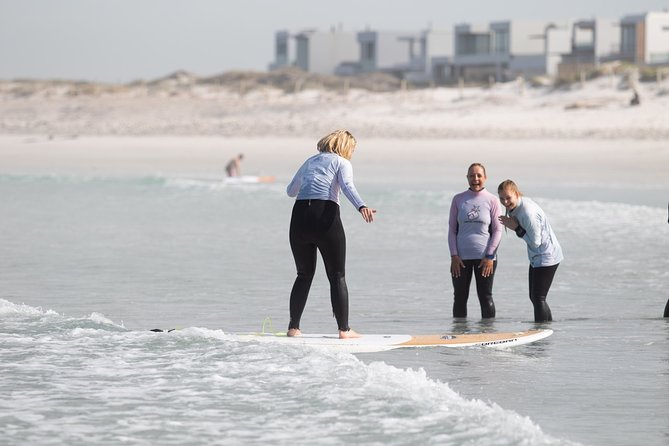
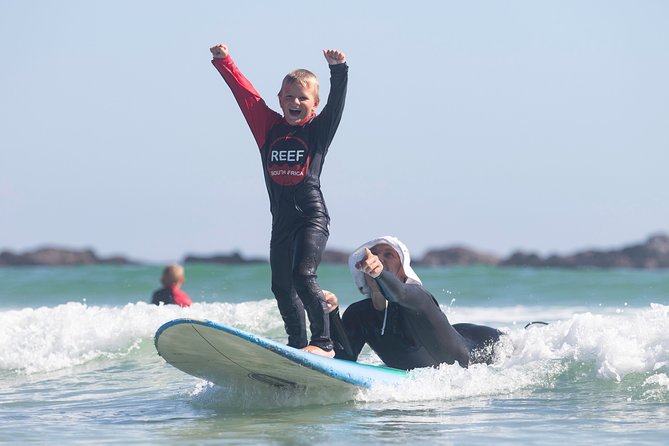
The lesson can suit families, provided each person can participate safely. Jarrod is specifically praised as a surfing teacher for children, and his instruction helped make a family session enjoyable. That makes this option worth considering if you are introducing children to surfing and want an instructor who can keep the lesson approachable.
You should still think about individual confidence. A child who is excited by the idea of surfing may need a slower introduction than an adult who is comfortable in open water. The provider says each lesson is adapted to the group’s level and confidence, which is helpful, but you should share any concerns when booking.
For friends, the lesson offers an easy shared activity. You can learn together, compare attempts, and avoid the problem of one person sitting on the beach while the rest of the group takes a lesson. Group discounts may also help with the total cost.
What can go wrong, and how to protect your day
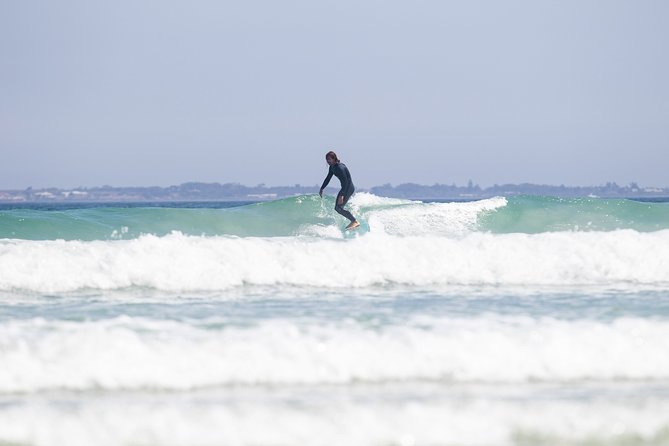
The clearest practical warning is a booking-confirmation problem. One person arrived at Atlantic Surf Co. and was told the school had not received the booking or payment. That kind of mismatch can ruin a short visit, especially if you have arranged transport or planned the rest of the day around the lesson.
I would take a simple precaution: after booking, confirm the time and reservation directly with Atlantic Surf School. Keep the confirmation available on your phone, and do not assume that a digital ticket alone guarantees the school has your place. This is especially important because the experience is booked, on average, eight days ahead.
The cancellation terms are otherwise flexible. You can cancel at least 24 hours before the local start time for a full refund. Changes or cancellations within 24 hours are not accepted for a refund. If poor weather cancels the lesson, you are offered another date or a full refund.
That weather policy is fair for an ocean activity, but it means you should schedule the lesson early enough in your Cape Town stay to allow for a change. If you book it on your final morning, a weather cancellation may leave no chance to reschedule.
How this compares with a large surf school
A large surf school may offer more fixed times and a more standard lesson plan. This experience takes a smaller, more adaptable route. The instructor works with the group’s ability and confidence, and the teaching includes how waves work and how your mindset affects progress.
That personal approach is the strongest reason to choose it. You are not simply handed a board and told to copy a movement. You are encouraged to understand why a wave can be caught and how to make better decisions in the water.
The maximum of 12 is worth noting. Small-group wording does not mean private, and you should not expect uninterrupted coaching. Still, it is a reasonable size for an introductory class, particularly if everyone arrives with a similar level.
The overall rating is 4.5 out of 5 from eight ratings, with strong praise for patient coaches, clear explanations, safety, first attempts, and teaching children. One severe booking complaint lowers confidence in the reservation process, so direct confirmation is the sensible extra step.
Who should book this Cape Town surf lesson
I would recommend it most strongly to:
- A complete beginner who wants equipment and instruction together
- A visitor who wants an active Cape Town experience rather than another land-based activity
- A family introducing children to surfing
- A small group that wants to learn together and may qualify for a group discount
- An intermediate surfer who wants help with timing and positioning
- Anyone who values ocean awareness and safety as much as standing on the board
I would be more cautious if you need a fixed schedule, guaranteed sea conditions, or a private instructor. I would also look elsewhere if you only want independent board rental without a lesson.
Should you book the 2-hour Cape Town surf lesson?
Book it if your main goal is to learn, not simply to pose on a surfboard. The included wetsuit and board keep the planning easy, while the instruction covers safety, wave behavior, timing, and positioning. That combination gives the $56.90 price solid value, especially for a first-time surfer.
Make the booking with two conditions in mind. First, allow flexibility for weather. Second, confirm your reservation directly with Atlantic Surf School after paying. If you can manage those points, this is a practical way to spend part of your Cape Town visit in the ocean, with patient coaching and a lesson that can grow with your ability.
FAQ
How long does the surf lesson last?
The lesson lasts approximately two hours, with sessions described as running between 1.5 and 2 hours.
How much does the experience cost?
The listed price is $56.90 per person. Group discounts are available.
Where does the surf lesson begin?
The meeting point is 2 Coral Rd, Table View, Cape Town, 7439, South Africa.
Where does the activity finish?
The activity ends back at the meeting point.
Is surf equipment included?
Yes. A surfboard and wetsuit are provided as part of the experience.
Can a complete beginner take this lesson?
Yes. The lesson is designed for all abilities, including people who have never surfed before.
How many people can join the lesson?
The activity has a maximum of 12 participants.
Can intermediate or advanced surfers join?
Yes. Stronger surfers can work on catching more waves and improving timing and positioning in the lineup.
What happens if the weather is poor?
If the experience is canceled because of poor weather, you can choose another date or receive a full refund.
Just added for surfers in the world
- Valencia: Excursión en Moto de Agua + Paddle Surf★ 4.9 · 9 reviews
- Waikiki: Family, Private, and Group Surfing Lessons★ 5.0 · 4 reviews
- Waikiki: Surf Lessons Easy 60 min classes no crowds!★ 4.9 · 21 reviews
- Uluwatu: Surf Lessons Beginner★ 5.0 · 3 reviews
- Tricana Surf Experience★ 5.0 · 3 reviews
- Two- Hour Group Surfing Lesson in Cocoa Wrightsville Beach, NC★ 5.0 · 13 reviews
- 1-on-1 Private Surf Lesson in Santa Barbara★ 5.0 · 4 reviews
- Astonishing Scavenger Hunt: Surf, Sand and Sculptures!★ 3.0 · 2 reviews
South Africa Surf Lessons, compared.
Private Surf Lesson in Cape Town – Transport & Photos Included
Read our review →
Jeffreys Bay: Private Surfing Lesson for Beginners
Read our review →

1h15min surfing lessons in Victoria Bay & Wilderness
Read our review →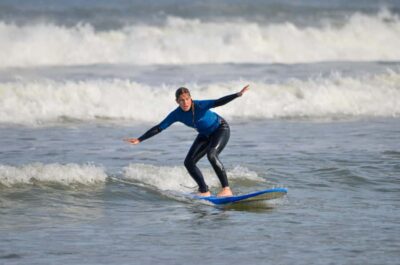
Learn to surf with the best view of Table Mountain
Read our review →Browse the lists this tour appears in