
Review · LANZAROTE
Group Longboard Surf Lesson in Lanzarote
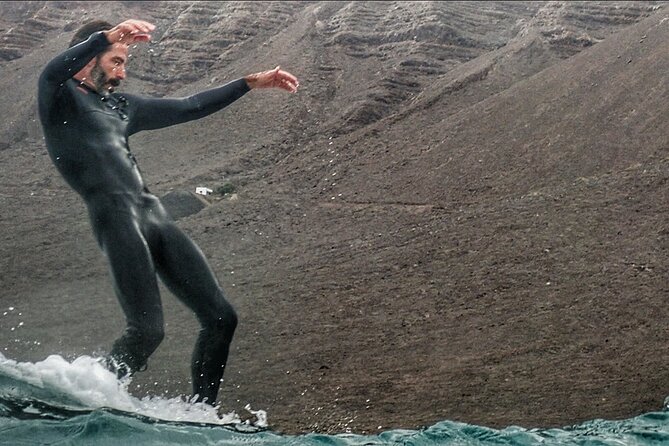
Lanzarote’s longboard lesson is built around a smart progression: first dry-land practice, then soft boards, then hardboards and white water. That approach gives you time to learn the basics without being thrown straight into the surf. The lesson lasts about four hours in Caleta de Famara, one of the island’s main surfing areas.
I like the maximum four-person group, since an instructor can watch your stance and correct small mistakes before they become habits. I also like the level matching and separate adult and children’s sessions. You get a calmer class rather than a mixed crowd moving at very different speeds.
The main consideration is the weather. This is an ocean activity, not a fixed indoor appointment, so poor conditions can lead to a new date or a refund. At $84.33 per person, the price is fair for a half-day lesson, but it makes the most sense if you want a focused introduction to longboarding rather than a quick try at surfing.
Key points about the Famara longboard lesson
- Small groups capped at four: You get more direct attention than in a large surf class.
- Soft boards before hardboards: The lesson builds confidence and control in stages.
- Adults and children are separated: Classes are arranged around age and surfing level.
- Longboard-specific instruction: Expect work on paddle technique, stance, timing, turning, and safe board handling.
- Four hours at Caleta de Famara: The schedule allows time for beach instruction and white-water practice.
- Personal coaching from Longboard Gliders: Niccolò is specifically noted for patience, clear instruction, and helping beginners feel at ease.
Why longboarding works well for beginners in Lanzarote
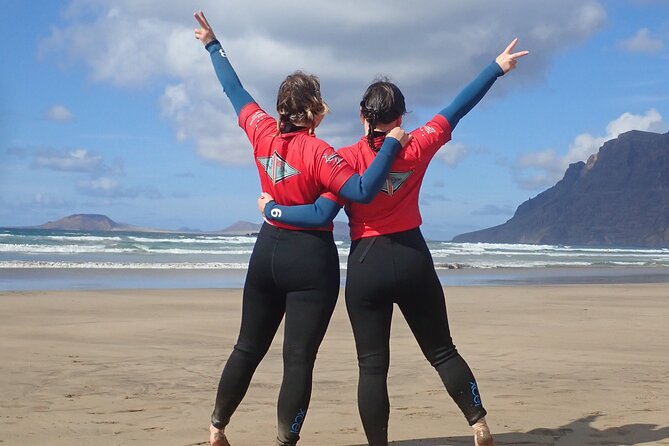
A longboard is wider and longer than a short surfboard. That extra surface makes it more stable and helps you catch smaller waves. You still need balance, timing, and good body position, but you are not starting with the least forgiving version of the sport.
That matters in a beginner lesson. If you spend the whole session trying not to fall off, you have little attention left for learning how a wave moves. A longboard gives you a better chance to feel the board glide and understand the basic rhythm of surfing.
The lesson also focuses on the classic side of the sport. Longboarding is not only about standing up quickly. It asks you to move with control, choose your position carefully, and turn a broad board without making sudden movements. You will not master all of that in four hours, but you can leave with a clear sense of how the sport works.
I would choose this class if you like the idea of learning properly instead of chasing a quick photograph standing on a board. The teaching plan covers the foundation you need for later practice, including how to lie on the board, paddle, stand, time your takeoff, and turn.
More Surf Lessons in Lanzarote:
- Lanzarote: Famara Surf Lessons & Courses for All Levels
★ 4.8 · 206 reviews - Surf class in Famara 9:15-12:00 or 11:45-14:30 (2h class)
★ 5.0 · 199 reviews - Surf lessons in Famara 9:15-14:30h (4 hours of class)
★ 5.0 · 173 reviews
Starting on the beach with safety and movement
The lesson begins on land with a warm-up and stretching designed for longboard surfing. That may sound basic, but it prepares you for the repeated movements ahead, especially paddling and getting from your stomach to your feet.
You also learn safety rules for handling a longboard on the beach and in the ocean. This is important because a large board has weight and momentum. You need to know how to carry it, where to position yourself, and how to avoid creating trouble for yourself or another person in the water.
The beach session is where the instructor can slow everything down. You can work through the correct lying position, paddle motion, stance, and stand-up sequence without also dealing with a moving wave. I like this part of the plan because it gives you something concrete to repeat once you reach the water.
You should pay close attention to body position here. A small error while lying down can make paddling harder. A poor stance can cause the board to wobble as soon as you stand. The instructor’s job is not simply to get you upright once, but to help you understand a repeatable movement.
From soft boards to white-water practice
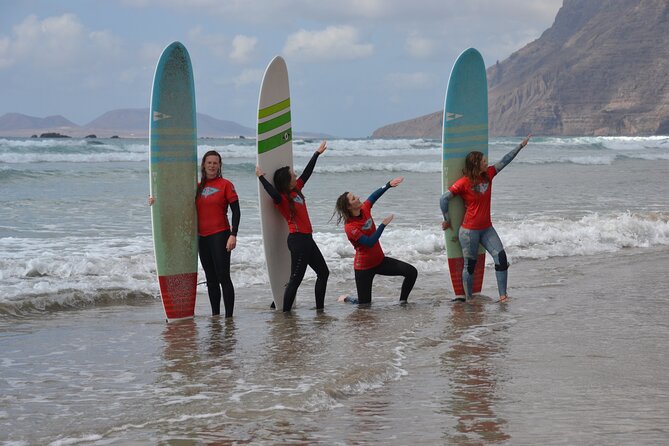
After the beach instruction, you move into the water and practice in the white water. White water is the broken part of a wave after it has rolled over. It is not the same as catching an unbroken wave, but it is a useful place to learn the timing and feel of a takeoff.
The soft boards come first. They are a sensible choice for the early stage because they allow you to concentrate on balance and technique while you are still learning how the board reacts. You can build confidence before handling the more demanding hardboard.
The lesson then progresses to a hardboard. That change gives you a useful comparison. You begin to feel why precise positioning and controlled movement matter. The board may respond differently beneath you, so the transition is part of the learning rather than just a change of equipment.
The sequence is practical: learn on the beach, try the movement in white water, then move toward more refined board control. You should not expect a guaranteed ride on every attempt. Surfing depends on timing, conditions, and your own coordination. The value here is that the instructor gives you a structured way to improve instead of leaving you to guess what went wrong.
The longboard skills covered in four hours
The lesson is not limited to standing up. It covers the parts of surfing that make standing up possible and useful.
Lying correctly on the board: Your body needs to sit in the right place on the board. Too far forward or too far back can affect speed and balance.
Paddling: You learn how to move the board toward a wave and keep it straight. Paddling is often tiring for beginners, so efficient technique matters.
Finding your stance: The instructor helps you work out how to place your feet once you stand. This is one of the moments where individual coaching helps, since people do not all move in the same way.
Standing up: The lesson breaks the takeoff into steps. You learn how to move from lying down to a stable standing position without rushing.
Timing the takeoff: You need to catch the wave at the right moment. Paddle too early and you may lose energy. Paddle too late and the wave may pass beneath you.
Turning the board: Once you can stand, turning becomes the next challenge. A longboard responds best to measured movement, not frantic shifts of weight.
This is a good amount to cover in four hours, but do not treat the list as a promise of mastery. Each skill supports the next. If paddling or balance takes longer than expected, the instructor may spend more time on that foundation rather than racing through every item.
Same break, a different way into the water:
- Famara Beach: Surfing Lessons with Videos
★ 4.9 · 147 reviews - Lanzarote’s First Surf School – 2-hour or 4-hour classes
★ 5.0 · 119 reviews - Full Day Surf Lesson for Beginners in Famara, Spain
★ 5.0 · 109 reviews - Group and private surf classes with a Certified Instructor in Lanzarote
★ 5.0 · 73 reviews
What the small group changes
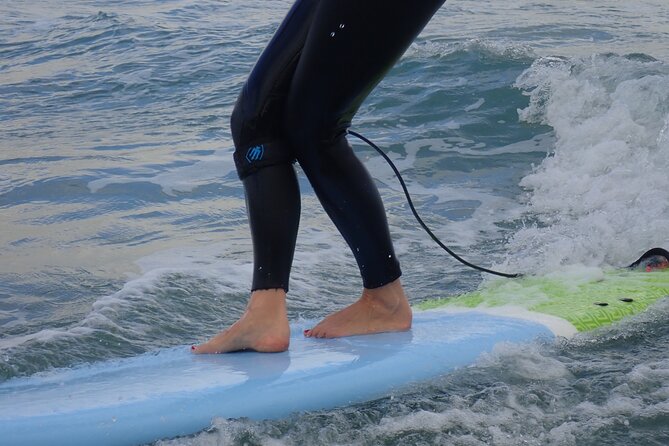
A class of up to four people is a real advantage here. Surf instruction can become frustrating when several students need help at once. In a small group, you have a better chance of receiving a correction while the mistake is still fresh.
Longboard Gliders also matches participants by surfing level. That keeps the lesson from becoming a contest between a complete beginner and someone who already knows how to catch waves. You can work at a similar pace to the rest of the group.
Adults and children are not mixed. This may matter if you are booking as an adult who wants a focused lesson, or if you are arranging a session for a child. The teaching style and pace can remain more suitable for the people in each class.
The activity is listed as private, meaning only your group takes part. The practical benefit is a more personal setting. Still, the stated maximum of four means you should check the booking details for how your particular group is arranged. Private does not necessarily mean one instructor for one person.
A closer look at the coaching style
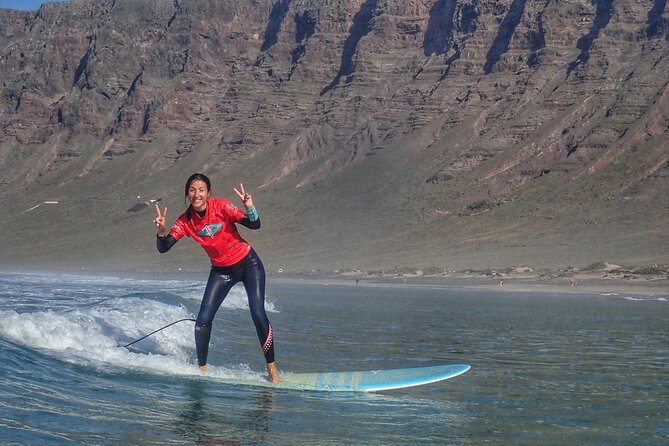
Niccolò is named as one of the instructors, and the strongest praise centers on his patience, competence, and ability to make beginners feel comfortable on the board. Those qualities matter more than flashy demonstrations when you are learning a sport that can feel awkward at first.
You need an instructor who can explain the same movement in more than one way. One person may respond to a technical explanation, while another may need a simple position cue. The school describes its method as tailored to the individual, which fits the small class size and level matching.
I would especially value that approach during the takeoff. Beginners often know what they are supposed to do but cannot coordinate the movement quickly enough. A patient instructor can identify whether the problem is timing, foot placement, balance, or hesitation.
The teaching also appears aimed at transmitting the spirit of longboarding, not just producing a single successful ride. That makes the lesson useful for someone who wants to continue surfing after the class. You receive a foundation for practice rather than a one-off stunt.
Caleta de Famara as the meeting point
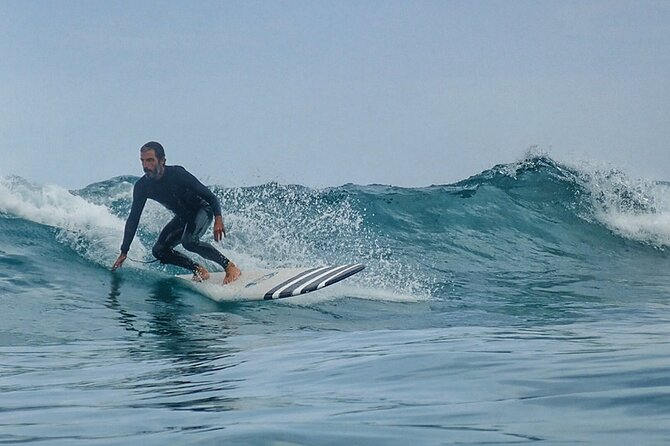
The meeting point is in Caleta de Famara, at 35558 Las Palmas, Spain. The activity starts and ends at the same meeting point, which keeps the day simple. You do not need to plan a separate return transfer as part of the lesson.
The stated operating hours are 8:30 AM to 6:30 PM, Monday through Sunday, for the listed operating period through December 12, 2026. The exact lesson time should be confirmed when you book, since ocean conditions and the school’s schedule can affect the start.
Famara is presented here as a working surf setting rather than a sightseeing stop. The focus is on getting into the water and learning. Do not book this expecting a guided tour of Lanzarote or a long list of beach visits. The meeting point is the base for a focused lesson.
You should allow extra time to arrive and get settled, even though the lesson itself is about four hours. Bring a flexible attitude about the conditions. Surfing is controlled by the sea and weather, not just by the clock.
Is $84.33 a fair price?
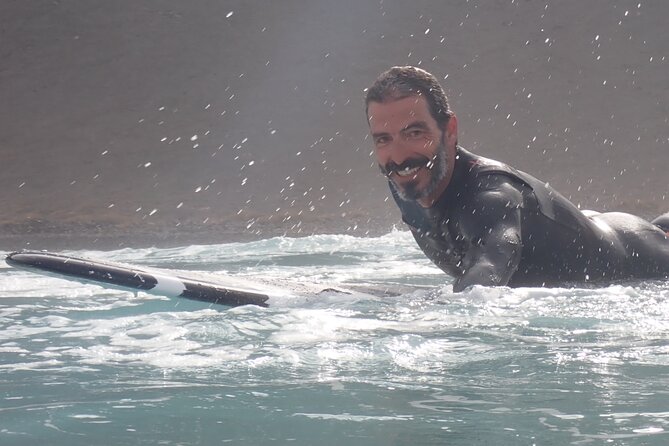
At $84.33 per person, this sits above the price of a very basic group introduction, but the small class changes the value. You are paying for about four hours, a staged lesson plan, individual corrections, and a move from soft boards to hardboards.
The price is easier to justify if you want to understand longboarding rather than simply stand up once. The instruction covers safety, board position, paddling, stance, takeoff timing, and turning. That is a broad set of skills for one session.
It is less compelling if you are already a capable surfer and only want free time in the water. The class is designed around teaching, so experienced surfers may find the basic beach work slow. The school’s level matching helps, but the available information does not promise an advanced longboard session.
There is also value in the small maximum group. More instructor attention can save time and prevent poor technique. If you have tried surfing before and struggled because you were lost in a large class, this format may be worth the extra cost.
Who should book this lesson?
I would recommend it most strongly to a first-time surfer, a beginner who wants a calmer introduction, or someone curious about longboarding specifically. The wider boards, soft-board start, and white-water practice create a sensible path into the sport.
It also suits people who prefer coaching over casual equipment rental. You are not left to work out the basics alone. The lesson gives you a clear sequence and an instructor who can adjust the teaching to your pace.
Families should note the separate adult and child classes. That can be helpful, but you should make sure the booking is placed in the correct age group. The available information confirms that adults and children are not mixed, but it does not provide specific age limits.
I would be more cautious if you dislike weather-dependent plans, have no interest in getting wet, or want a sightseeing activity. Surfing requires physical effort and patience. A good day may include plenty of failed attempts before a successful ride.
The activity is offered in English, and confirmation is provided at booking. Most people can participate, according to the supplied details, but the information does not list specific accessibility arrangements or equipment inclusions. Ask the provider directly if you need those details.
Cancellation and weather planning
You can cancel up to 24 hours before the start time for a full refund. Changes or cancellations made less than 24 hours before the local start time are not accepted for a refund.
Weather is handled differently from a personal change of plans. If poor weather forces the school to cancel, you are offered another date or a full refund. That protection makes the booking easier to plan, but you should still keep some flexibility in your Lanzarote schedule.
The activity is often booked about six days ahead. That is a useful planning guide, not a guarantee of availability. If your trip dates are fixed, booking earlier gives you more room to choose a suitable time.
My verdict on Longboard Gliders
You should book this lesson if you want a careful, small-group introduction to longboarding in Lanzarote. The progression from beach exercises to soft boards, white water, and hardboards is well suited to beginners, and the focus on patience and personal coaching is especially useful when your balance and timing are still developing.
Skip it if you want an unstructured surf rental, an advanced session, or a sightseeing outing. At $84.33, the value comes from instruction and attention, not from simply spending time near the sea. For a first step into longboarding, that is a sensible trade.
FAQ
Where does the longboard surfing lesson take place?
The meeting point is in Caleta de Famara, 35558 Las Palmas, Spain. The activity ends back at the same meeting point.
How long does the lesson last?
The lesson lasts approximately four hours.
What language is the lesson offered in?
The activity is offered in English.
How many people can join the group?
The group has a maximum of four participants. The activity is private, so only your group takes part.
Are adults and children taught together?
No. Adults and children are not mixed, and participants are matched by surfing level.
What will I learn during the lesson?
You will cover longboard safety, the correct lying position, paddle technique, stance, how to stand up, takeoff timing, and how to turn the board. The session also includes warm-up and stretching exercises.
What happens if poor weather cancels the lesson?
You will be offered a different date or a full refund if the activity is canceled because of poor weather.
Just added for surfers in Lanzarote
- Private Surfing Lesson in Famara★ 5.0 · 2 reviews
- Surf Lesson in Canary Islands★ 5.0 · 19 reviews
- Longboard Private Surf Lessons in Caleta de Famara Spain★ 5.0 · 7 reviews
- 2 Hours Surfing Lesson in Lanzarote★ 5.0 · 19 reviews
- Kalufa Surf School in Caleta de Famara, Lanzarote★ 5.0 · 2 reviews
- 2-Hour Surfing Experience for Beginners in Famara★ 5.0 · 4 reviews
- The Surftrip: A 2.5-hour morning surf session for beginners, intermediate surfers, and families.★ 5.0 · 12 reviews
- Private Surfing in Lanzarote: Enjoy the waves just for you – ALL LEVELS★ 5.0 · 7 reviews
Lanzarote Surf Lessons, compared.
Surf class in Famara 9:15-12:00 or 11:45-14:30 (2h class)
Read our review →
Surf lessons in Famara 9:15-14:30h (4 hours of class)
Read our review →
Lanzarote’s First Surf School – 2-hour or 4-hour classes
Read our review →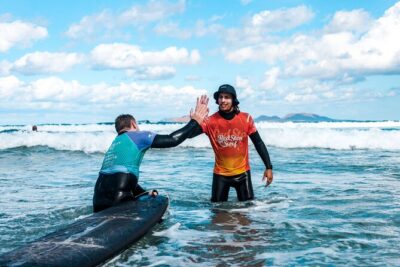
Full Day Surf Lesson for Beginners in Famara, Spain
Read our review →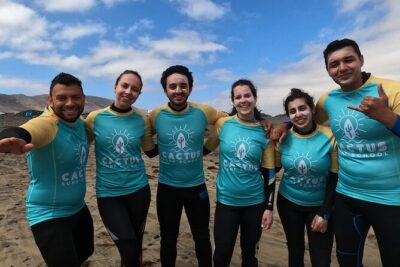
Group and private surf classes with a Certified Instructor in Lanzarote
Read our review →
Surf Lesson for Beginners in Famara: Introduction in Surfing
Read our review →Browse the lists this tour appears in