
Review · SAO MIGUEL
Exclusive Surf Lessons in S Miguel Azores
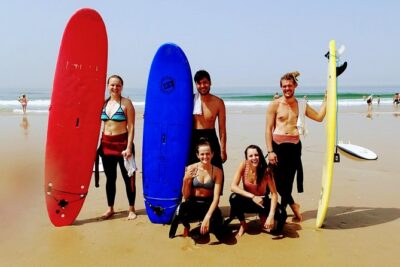
São Miguel’s surf lessons put you on a real Atlantic beach, not in a tame indoor pool. In about two hours, you’ll learn how to enter the water, paddle, stand up, and balance, with the lesson location chosen around your level and the tides. I like the maximum six-person group, which gives the instructor room to help, and I like that beginners start with warm-ups and practice on the sand. The one catch is that you need a strong level of physical fitness, and rough weather can change the plan.
I also like the choice between Praia das Milícias near Ponta Delgada and Praia do Areal de Santa Bárbara near Ribeira Grande. The small-group setup suits families and mixed-skill groups, though the beach assigned to you may not be the one you expected.
Key points at a glance
- Two useful beach options: Lessons may use Praia das Milícias or Praia do Areal de Santa Bárbara, depending on your ability and the tides.
- Small groups: A maximum of six people means more room for personal instruction.
- Clear beginner foundation: You practice entering the water, paddling, standing on the board, and keeping your balance.
- Warm-up before the waves: The session includes stretching, movement, and beach practice before you head into the water.
- A family-friendly choice: Families with teenagers and adults at different skill levels can take part together.
- Flexible weather policy: Poor weather may lead to a new date or a full refund.
Why these São Miguel surf lessons work well for beginners
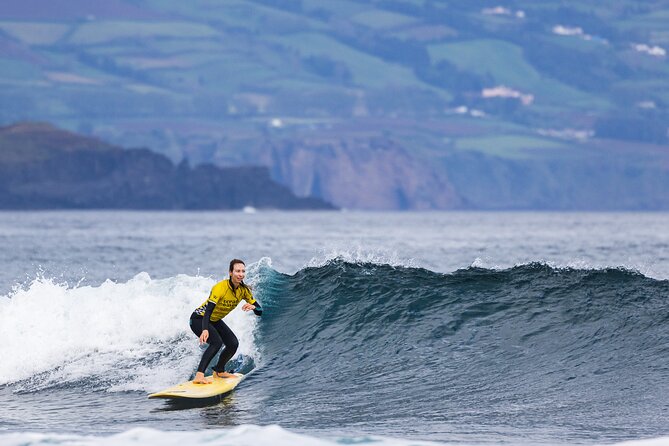
Surfing looks simple from the beach. You lie on a board, wait for a wave, then pop up. In practice, the order matters. You need to know how to carry yourself into the water, paddle with control, position the board, and stand without throwing off your balance.
That is the useful part of this lesson. It does not jump straight to the exciting bit. The session builds the basic movements first, then gives you a chance to try them in the water. If you have never surfed before, that structure can save you from wasting your first attempts by paddling in the wrong direction or standing too early.
The class lasts about two hours. That is long enough to cover the fundamentals and get into the water, but not so long that a first session becomes a test of endurance. Surfing asks a lot of your arms, legs, and core, so the time limit is sensible for beginners.
The instructors work with both beginners and people at an intermediate level. That matters if your group has mixed experience. One person may be learning how to stand, while another is trying to improve board control or wave timing. The small group limit gives the instructor a fair chance to adjust advice for different abilities.
More Surf Lessons in Portugal:
- Matosinhos: Surfing Lesson with Equipment
★ 4.8 · 926 reviews - Lisbon Surf Experience
★ 4.9 · 876 reviews - Albufeira: Surf Lesson
★ 4.7 · 699 reviews
Choosing between Praia das Milícias and Santa Bárbara
The lesson uses two of São Miguel’s main surfing beaches. Praia das Milícias is about four kilometres from Ponta Delgada, making it the more convenient option if you are staying in the island’s main city. Praia do Areal de Santa Bárbara is near Ribeira Grande and is listed as the meeting point for the activity.
You do not simply choose a beach and assume it will be used. The club selects the spot according to your level and the tides. That is a practical approach. A beginner needs manageable conditions, while someone with some experience may benefit from a different section of beach or a more suitable set of waves.
Santa Bárbara has dark volcanic sand, a memorable feature of São Miguel’s coast. The beach setting gives the lesson a strong sense of place, even before you get on the board. You are not learning in an anonymous resort setting. You are working with Atlantic water on one of the Azores’ striking volcanic shores.
The trade-off is that your final beach may depend on conditions. If you are hoping to meet at one particular beach for photographs or convenience, allow for the possibility that the session will be directed elsewhere. The information provided lists Praia do Areal de Santa Bárbara as the start and end point, while also explaining that Praia das Milícias may be used. Confirm the exact meeting instructions when you book.
What happens before you enter the water
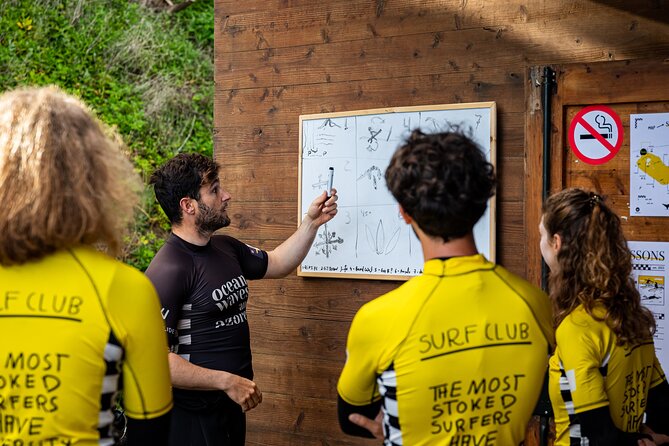
The early part of the class sets the tone. The team begins with a warm-up and stretching, then practices key movements on the beach. This is not wasted time. You get a chance to hear the instructions, copy the body position, and understand how the board should respond before waves add pressure.
For a first lesson, the beach practice may be the most valuable part. You can work on getting from lying down to standing without worrying about a moving board. You also learn the basic stance and balance points, which gives you something to remember once you are in the water.
The teaching covers several practical skills:
- How to enter the water safely
- How to paddle
- How to position yourself on the board
- How to get to your feet
- How to keep your balance
- How to improve your technique through repeated attempts
The class is not presented as a quick photo opportunity. It gives you the groundwork needed to continue surfing after this session. You may not leave as a polished surfer after two hours, but you should leave with a clearer idea of what to practice next.
Small waves, steady coaching, and mixed abilities
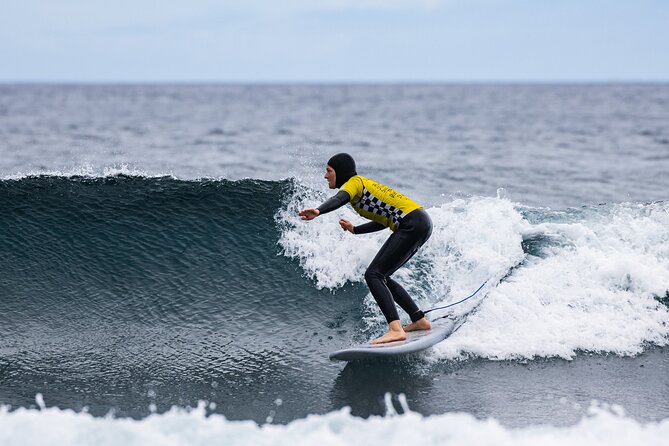
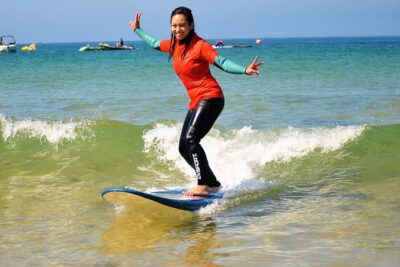
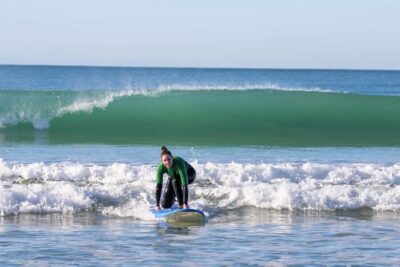
After the beach work, you head into the water to try the first waves. The available feedback describes beginners riding small waves, with the team offering regular help and tips about what to change. That is exactly the kind of coaching a new surfer needs.
A good lesson is not just someone telling you to stand up. You need brief corrections at the right moment. Perhaps your feet are too close together. Perhaps you are looking down instead of ahead. Perhaps you are paddling without enough speed. Small adjustments can make the difference between sliding smoothly and falling immediately.
The named instructor Constantine worked with a family whose three adult children had different levels of ability. That suggests the club can adapt within a group instead of giving everyone the same instruction. It is especially useful if one member of your party has surfed before and another has never touched a board.
The experience also suits teenagers. Parents can expect an organized lesson with attention to safety, while teenagers get the active part they came for. You should still remember that surfing is physical. The activity information calls for a strong level of fitness, so it is not a good match if you have difficulty with repeated paddling, standing, or getting through the water.
Same break, a different way into the water:
- Porto: Small Group Surf Lesson with Transportation
★ 4.9 · 594 reviews - Albufeira: 2-Hour Falesia Beach Surf Lesson
★ 4.8 · 464 reviews - Albufeira: Learn to Surf in Chill Beach Vibes & Good Times
★ 4.7 · 439 reviews - Surf Experience in Cascais
★ 5.0 · 423 reviews
Why the six-person limit matters
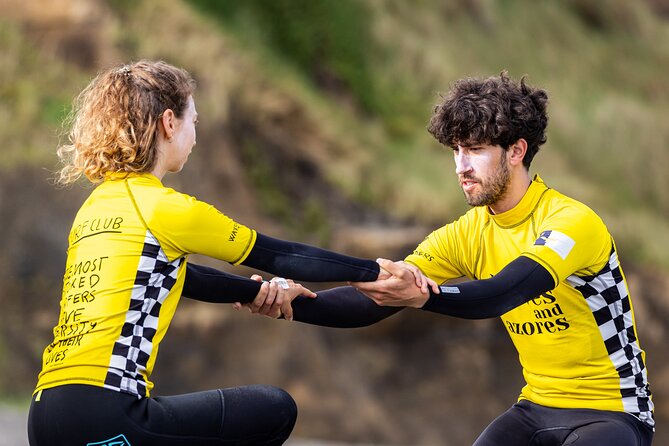
The maximum group size is six people. That is one of the strongest features of the experience because surf instruction loses value when too many people compete for the instructor’s attention.
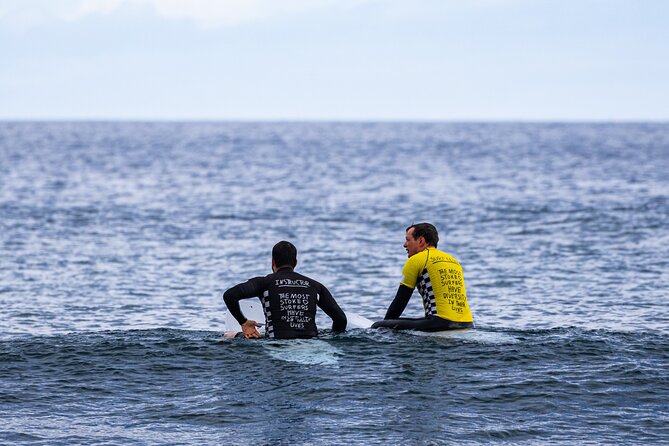
With six or fewer, you have a better chance of receiving a correction after an attempt. The instructor can watch how you paddle, see how you stand, and give you a specific adjustment rather than a general speech to the whole group. The smaller group should also make it easier to keep track of everyone in the water.
This format works well for a family or a small group of friends. You can share the experience without being folded into a large class. It also means that the pace may feel more personal than a busy beach lesson with a long line of boards.
Do not confuse a small group with a private lesson. The club still has up to six people to manage, and everyone will have different strengths. If one person needs much more help than the rest, the pace may not feel perfectly even. Still, the group size is modest enough to keep the instruction focused.
How the price compares with the experience
The cost is $54.01 per person for roughly two hours. I see that as a fair price if you want actual instruction rather than simply renting a board and trying to work things out alone.
The value comes from the structure. You receive a warm-up, beach practice, water instruction, and technique advice. The session also uses a beach selected for the conditions and your level, rather than treating every day as identical. For a first attempt, that guidance can prevent a frustrating morning and help you make better use of your time in the Azores.
The price is less compelling if you already surf confidently and only want equipment or unrestricted time in the water. This is a lesson first. The main thing you are paying for is coaching, organization, and a controlled introduction to the sport.
The small group improves the value for families and friends. You can learn together while still receiving individual pointers. If you are booking for teenagers, the cost also buys parents some peace of mind through a structured, supervised activity, although you should not treat it as a substitute for following all safety instructions.
The activity is often booked about 26 days ahead. That is a useful planning clue. If your dates are fixed, reserve before arriving rather than assuming there will be an open place at short notice.
Getting to the meeting point
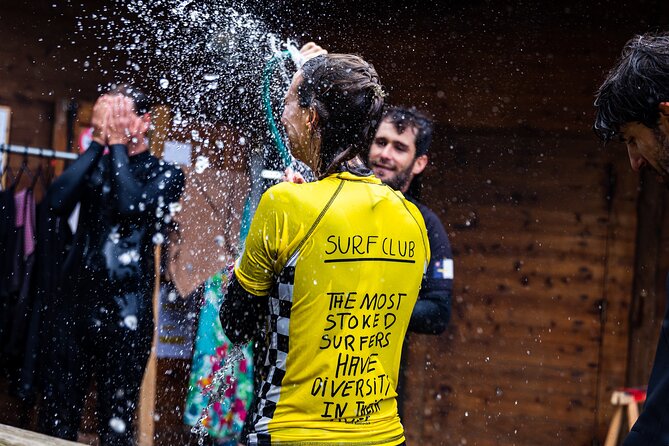
The listed meeting point is Praia do Areal de Santa Bárbara, in Ribeira Grande, São Miguel, and the activity ends back there. The beach is near public transportation, which helps if you do not have a rental car.
The information also places Praia das Milícias about four kilometres from Ponta Delgada. That gives you a second geographic reference when planning your day, but it does not remove the need to confirm the exact start instructions. The lesson may use either beach, based on the tides and your level.
Because the activity ends where it begins, you do not need to arrange a separate finish point. Plan your day around the meeting location and leave enough time to arrive ready for a physical session. The supplied details do not specify hotel pickup, changing facilities, board transport, or what personal equipment is included, so you should ask the club about those points before booking if they affect your plans.
Weather, tides, and the practical trade-offs
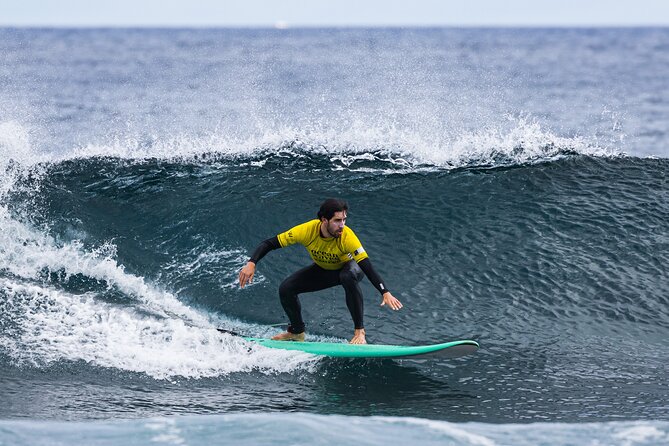
Surfing depends on the sea. The club chooses the beach with the tides and ability level in mind, but weather can still cancel the session. If poor weather stops the activity, you are offered another date or a full refund.
That policy is helpful, but it also means you should avoid putting the lesson on the final morning of your holiday. A weather change late in your visit may leave no room to reschedule. Booking earlier in your stay gives you a better chance of taking the lesson on a later date if conditions fail.
You can cancel for a full refund up to 24 hours before the start time. Cancellations or changes inside that 24-hour window are not refunded or accepted. The cut-off follows local São Miguel time.
The tide-based beach choice is another reason to keep your plans flexible. You may know the meeting point, but the actual teaching beach can depend on conditions. That is a small inconvenience in exchange for a lesson designed around the water available that day.
Who should book this lesson
I would choose this activity for a first-time surfer who wants instruction instead of guesswork. The beach practice, basic technique, and small waves create a sensible introduction to the sport.
It is also a good pick for families with teenagers. The class is active, organized, and short enough to fit into a day of exploring São Miguel. Parents who want a more careful setup than simply sending their children into the surf should find the format reassuring.
Mixed-skill groups are another strong match. Constantine’s work with three people at different levels shows how the class can serve a group that does not all start from the same point. Intermediate surfers should still set realistic expectations. This is a two-hour lesson, not an advanced coaching camp.
I would think twice if you have limited physical fitness, dislike cold or rough ocean conditions, or need a guaranteed beach and schedule. The activity requires effort, depends on weather, and may shift between two beaches.
Booking advice for a better day
Reserve ahead if your dates are important. The typical booking lead time of 26 days suggests this is not always a last-minute activity, especially during a popular period.
When booking, confirm the meeting point, the beach being used, and what you should bring. The supplied details establish the start and end location, language, duration, group size, and weather policy, but they do not list equipment or clothing details. A quick message to Watergliders Azores Surf Club can close those gaps.
Allow extra time around the lesson. You will be doing a physical activity, and the exact pace may vary with the surf and the group. Do not schedule a demanding hike immediately afterward unless you know your body handles paddling and repeated attempts well.
The class is offered in English. That makes the technical explanations easier to follow for English-speaking participants, particularly during the safety and board-position instructions.
Should you book the Watergliders lesson?
Book it if you want a well-organized introduction to surfing on São Miguel, especially if you are a beginner, traveling with teenagers, or joining with friends of mixed ability. The $54.01 price is reasonable for two hours of instruction, beach practice, water time, and a group capped at six.
Skip it if you are looking for a private advanced session, equipment rental without teaching, or a guaranteed beach and weather window. For everyone else, the combination of patient coaching, small waves, volcanic-sand beaches, and a flexible choice between Milícias and Santa Bárbara makes this a practical way to add Atlantic surf to a São Miguel trip.
FAQ
How long does the surf lesson last?
The lesson lasts approximately two hours.
How much does the activity cost?
The listed price is $54.01 per person.
Where does the lesson meet?
The listed meeting point is Praia do Areal de Santa Bárbara, Ilha de São Miguel, 9600 Ribeira Grande, Portugal.
Where does the activity finish?
The activity ends back at the meeting point.
Which beaches may be used?
The lesson may take place at Praia das Milícias or Praia do Areal de Santa Bárbara, depending on your level and the tides.
Is the lesson suitable for beginners?
Yes. The instructors teach beginners and intermediate participants, including how to enter the water, paddle, stand on the board, and keep balance.
What language is offered?
The activity is offered in English.
How many people can join the lesson?
The maximum group size is six participants.
Do I need to be physically fit?
Yes. The activity information says participants should have a strong level of physical fitness.
What happens if poor weather cancels the lesson?
You will be offered a different date or a full refund.
Can I cancel for a full refund?
Yes. You can cancel at least 24 hours before the experience start time for a full refund. Cancellations made less than 24 hours before the start time are not refunded.
Just added for surfers in Portugal
- Tricana Surf Experience★ 5.0 · 3 reviews
- Guided surf tours from Porto city to the beach★ 4.5 · 10 reviews
- Surfing Lesson | Porto: Small Group Surf Lesson with Transportation★ 5.0 · 34 reviews
- Self-guided tour Bike + Surf★ 5.0 · 6 reviews
- Private Surf Experience – Transfer to Matosinhos – All Levels★ 5.0 · 7 reviews
- Surf Lessons in Porto with transfer at Porto Surf School★ 5.0 · 42 reviews
- Surf Lesson | Surf Lessons★ 5.0 · 39 reviews
- Small Group Surfing Experience with Transportation in Porto★ 5.0 · 22 reviews
Portugal Surf Lessons, compared.
Learn to Surf in Chill Beach Vibes & Good Times
Read our review →
Browse the lists this tour appears in