
Review · CALETA DE FAMARA
Full-Day Surf Class in Lanzarote: Take Your Skills to the Next Level
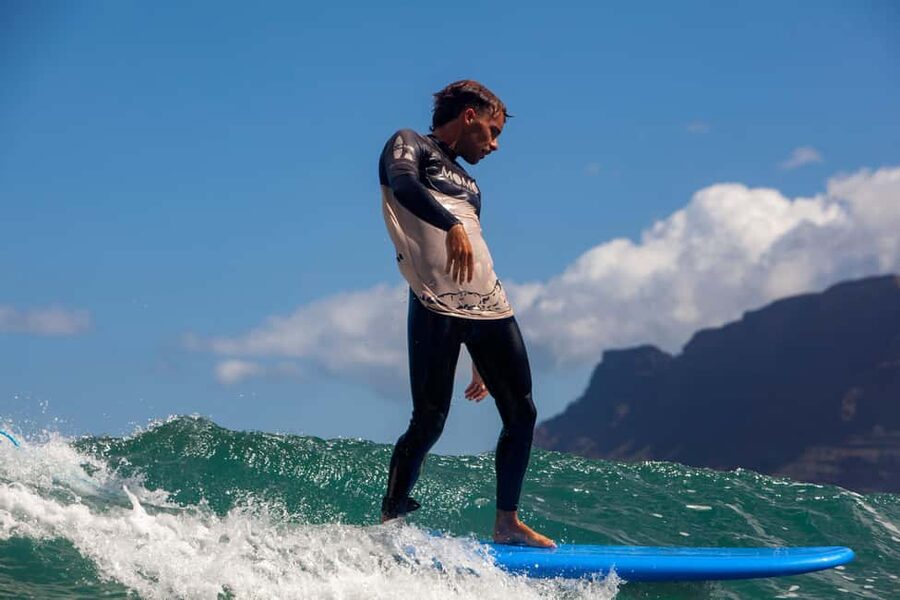
The clever part of this Lanzarote surf class is its two-block format. You get nearly three and a half hours in the water, but not all at once. A 30-minute break lets you rest, hydrate, and hear what to fix before heading back into the waves.
I like the way the class serves several skill levels without treating everyone as a complete beginner. I also like that the board, wetsuit, lycra, insurance, warm-up, safety talk, and stretching are included. The main drawback is simple: four hours of surf training is demanding, especially if you are new to the sport, so expect tired arms and legs by the end.
Key points
- Two long water sessions: Each practical block lasts about 1 hour and 45 minutes, giving you real time to practice instead of rushing through a short lesson.
- Training matched to your level: Beginners work on paddling, balance, take-off, and reading waves, while stronger surfers practice turns, speed, and board control.
- A useful 30-minute reset: The break is used for rest, hydration, and personal feedback, not just waiting around.
- Caleta de Famara setting: The class takes place in a natural beach setting with waves selected for different ability levels.
- All core gear included: You receive a suitable surfboard, wetsuit, and lycra, along with accident insurance.
- Three teaching languages: Certified instructors teach in Spanish, French, and English.
Four hours at Caleta de Famara
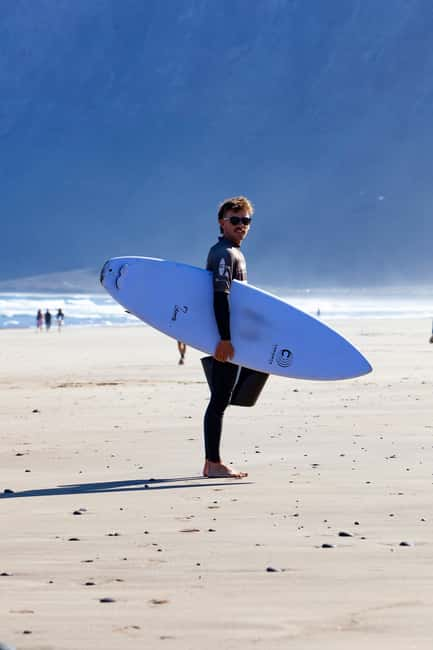
This is an intensive surf lesson based at Caleta de Famara, with the day beginning and ending at the Momo Surf School meeting point. The format is built around practice. You do not spend most of the morning sitting on the sand listening to a long lecture.
The class opens with equipment handout and a short explanation of the sea conditions, safety rules, and goals for the session. That briefing matters. Surfing is not only about standing on a board. You need to understand where to position yourself, how to move through the water, and how to respond to changing waves.
You then take part in a guided warm-up before entering the water. This is a useful start for anyone, but especially for beginners who may be tense or unsure of what to expect. A few minutes of preparation can help you paddle with better form and avoid wasting energy early in the class.
The setting at Caleta de Famara is also part of the appeal. The class takes place in a natural beach environment with waves suitable for different levels. Exact wave conditions can change, of course, so the instructors’ focus on sea conditions and safety is more valuable than any promise of perfect surf.
More Full-Day Trips in Spain:
- Full Day Surf Lesson for Beginners in Famara, Spain
★ 5.0 · 109 reviews - Gold Coast Full Day Learn To Surf Adventure
★ 5.0 · 45 reviews - Sagres: Full Day Surfing Lessons
★ 5.0 · 31 reviews
What beginners work on first
If you have never surfed, the first block is about building a reliable base. You learn how to paddle, how to position yourself on the board, and how to make the take-off, the movement from lying down to standing up.
Balance is the next hurdle. The aim is not to produce a polished surfer in one morning. It is to help you make sensible choices, catch suitable waves, and stay calm when the board moves beneath you.
Reading your first waves is another important part of the beginner program. You learn to watch the water rather than simply chase every wave that appears. That habit can save energy and make the session more enjoyable.
The class format gives beginners repeated chances to try. If your first attempt ends with a splash, you still have plenty of water time ahead. Instructors provide corrections as you go, so you can work on one change at a time instead of trying to remember a long list of instructions.
You should expect some frustration. Surfing asks several parts of your body to work together, and the timing can feel awkward at first. The group setting helps here because everyone is practicing, making mistakes, and trying again.
How intermediate and advanced surfers use the class
The class is not limited to first-timers. Intermediate surfers work on posture, reading the sea, catching waves without constant help, and beginning maneuvers. That makes the session useful if you can stand up but still lose balance, choose poor waves, or need an instructor’s eye to correct your position.
The goal for this level is greater independence. You are not just learning how to stand. You are learning when to paddle, how to hold your line, and how to make better use of each wave.
More advanced surfers receive work aimed at fluidity, turns, speed, and board control. The supplied information does not promise advanced coaching in a particular style or on a particular type of board, so you should see this as adaptable group training rather than a specialist performance clinic.
Still, the long session can give a stronger surfer time to repeat a movement and make small adjustments. That is often more useful than a brief lesson that ends just as you begin to feel comfortable.
Because the class includes different ability levels, the quality of your experience depends partly on how well the instructors manage the group. The description promises close attention and continuous feedback, but it does not give a maximum group size. If individual coaching is your top priority, ask Momo Surf School about group numbers before booking.
Why the first 1-hour-45-minute block matters
The first practical session lasts about 1 hour and 45 minutes. That is long enough for a proper cycle of instruction, practice, correction, and another attempt.
For beginners, the instructor can explain a movement, watch you try it, and then offer a clear adjustment. For intermediate and advanced surfers, the same time allows more repetitions of a turn, take-off, or wave-reading exercise.
Long water sessions also reveal where your technique breaks down. You might begin with reasonable balance but lose your stance when tired. You might paddle well in one direction but struggle to catch a wave at the right moment. These problems are hard to spot in a very short class.
The drawback is physical effort. Paddling for nearly two hours can be tiring, and the water may feel much longer than the clock suggests. Pace yourself, listen to the instructors, and use the break properly rather than treating every wave as a contest.
More Surf Lessons in Spain:
- Tenerife: Surfing Lesson for All Levels, Photos included
★ 4.9 · 1,314 reviews - Group Surfing Lesson at Playa de las Américas, Tenerife
★ 5.0 · 1,072 reviews - Playa de las Américas: Private or Small-Group Surf Lesson
★ 4.8 · 980 reviews - From Nerja: Guided Paddle Surf Cliffs and Maro Waterfall
★ 4.5 · 400 reviews
The 30-minute break is part of the lesson
The half-hour pause is not filler. It gives you time to recover, hydrate, and think about what happened in the first session.
This is also when you receive personalized feedback. That timing is useful because the advice is connected to something you have just done. You can then return to the water with a specific goal, such as keeping your weight forward, improving your paddle timing, or holding a steadier stance.
The break also changes the mood of the class. You have time to share the experience with the group and prepare mentally for the second block. A positive group atmosphere can help you keep trying after a run of poor attempts.
Bring beachwear, as requested, and plan to use the pause sensibly. The included equipment covers the surfboard, wetsuit, and lycra, but the information does not say that food or drinks are provided. Hydration is important during a four-hour outdoor activity, so check with the school about what you should bring or where you can refill.
The second water session turns advice into progress
The second practical block lasts another 1 hour and 45 minutes. Its purpose is to apply what you learned, repeat the useful movements, correct mistakes, and add more specific exercises.
This is where the split schedule earns its place. Instead of finishing after your first set of attempts, you return with fresh guidance. The instructors remain available to direct, correct, and motivate you throughout the class.
For a beginner, that may mean trying the take-off again with better foot placement. For an intermediate surfer, it could mean catching waves more independently. For an advanced surfer, the focus may shift toward speed, turns, and smoother board control.
You should not judge the class only by how many times you stand up. Progress can also mean paddling more efficiently, choosing safer waves, recovering from a mistake, or understanding why a particular attempt worked.
The class is described as suitable for waves appropriate to all levels. Even so, sea conditions are never fully predictable. The opening safety explanation and ongoing instructor guidance are important safeguards, but you still need to follow directions and respect your own limits.
Finishing with stretching and practical advice
The session ends on the beach with gentle stretching and a final talk. This is a small but worthwhile detail after several hours of paddling and repeated attempts to stand.
The closing advice is personalized, with recommendations for improving and enjoying surfing safely. That gives you something useful to take away, even if your main goal is simply to try surfing during a Lanzarote holiday.
The final stretch also helps bring the pace down. Surf lessons can leave you excited, tired, and a little stiff. A calm finish is better than being sent straight from the water with no chance to loosen up or ask a last question.
You return to the Momo Surf School meeting point after the class. No transport service is described, so you should plan on reaching the meeting point yourself.
What the $74 price buys you
At $74 per person, this is not priced like a quick introductory beach activity. You are paying for a full four-hour session, with two long periods in the water and a structured rest break between them.
The value is strongest if you want practice time. The class includes a surfboard suited to your level, wetsuit, lycra, certified instruction, guided warm-up, basic theory, safety guidance, feedback, stretching, and accident insurance. Renting equipment separately and arranging instruction on your own could reduce the convenience and remove the benefit of a planned progression.
The price is less compelling if you only want to stand on a board once for a short photo opportunity. A four-hour lesson asks for a real commitment, and you may find it physically demanding.
The group format keeps the atmosphere social and motivating. It also means the attention is shared. The instructors promise personalized guidance, but the exact group size is not given. Ask about that detail if one-to-one coaching is important to you.
A five-star rating from a verified booking in the supplied feedback praised the instructors as fun and professional. That is a useful signal about the teaching style, but it is based on a very small number of ratings. I would treat it as encouragement rather than proof that every class will feel identical.
Languages, equipment, and what to bring
Instruction is available in Spanish, French, and English. That makes the class practical for a wide range of visitors, and the safety briefing is especially important to understand clearly.
Your surfboard is adapted to your level. That matters because board choice affects balance, stability, and how easy it is to catch a wave. Beginners generally need a board that supports learning, while stronger surfers may need equipment that lets them work on control and turns.
A wetsuit and lycra are included. The only item specifically listed for you to bring is beachwear. Since the class lasts four hours, it is sensible to confirm whether you should bring water, sun protection, and a towel, as these are not listed as included items.
The activity also includes accident insurance. That does not remove the need to follow safety instructions, but it is a useful part of the package and means you do not have to arrange separate cover for the lesson itself.
Who will get the most from this class
I would choose this class if you want more than a short introduction and like the idea of working toward clear progress during one morning or afternoon.
It suits:
- First-time surfers who want repeated practice and patient guidance.
- Beginners who have tried surfing once and want to improve their take-off.
- Intermediate surfers who want better wave reading and more independent catches.
- Advanced surfers looking for focused work on turns, speed, fluidity, and board control.
- Solo visitors who enjoy a social group atmosphere.
- Couples or friends with mixed ability levels, since the lesson adapts to different stages.
It may not suit you if you dislike group activities, want private coaching, or prefer a very relaxed beach day with little physical effort. The four-hour duration is the key point. This is an intensive class, not a casual hour in the water.
The flexible booking terms help if your plans are still moving. You can cancel up to 24 hours in advance for a full refund, and the reserve-now, pay-later option lets you hold a place without paying at once. Starting times depend on availability, so check the schedule before you build the rest of your day around it.
Should you book the Momo Surf School class?
Book it if your goal is to make real progress in the water, not simply sample surfing for a few minutes. The two 1-hour-45-minute sessions give you time to practice, receive corrections, rest, and try again with a clearer plan.
The strongest reasons to choose it are the full equipment package, certified instructors, level-based coaching, three available teaching languages, and useful break for feedback. The instructors are described as both fun and professional, which fits the class’s social but structured approach.
Think twice if you are looking for private attention or are unsure about handling a demanding four-hour activity. Ask about group size and the day’s starting time before reserving.
For a visitor who wants an active Lanzarote experience and hopes to leave with better technique and more confidence, this is a solid use of $74. You will work hard, but the schedule gives you a fair chance to turn that effort into progress.
FAQ
Where does the surf class take place?
The activity meets at the Momo Surf School meeting point, travels to Caleta de Famara for the surfing session, and returns to the same meeting point.
How long does the activity last?
The class lasts four hours. It includes two practical water sessions of about 1 hour and 45 minutes each, separated by a 30-minute break.
Is the class suitable for beginners?
Yes. Beginners learn paddling, the take-off, balance, and how to read their first waves. The instructors adapt the class to different ability levels.
What equipment is included?
The class includes a surfboard adapted to your level, a wetsuit, and a lycra. Accident insurance is also included.
Which languages are available?
The instructors provide live guidance in Spanish, French, and English.
What should I bring?
Beachwear is listed as the item to bring. The activity information does not list food, drinks, towels, or sun protection as included, so check with Momo Surf School about any additional personal items you may need.
Just added for surfers in Spain
- Valencia: Excursión en Moto de Agua + Paddle Surf★ 4.9 · 9 reviews
- Surf lesson on Valencia beach★ 3.5 · 5 reviews
- small group surf lesson in Playa de las Américas,Tenerife★ 5.0 · 31 reviews
- Surfing Lesson in La Mata Beach★ 5.0 · 51 reviews
- Surf Lessons at El Médano Beach★ 4.5 · 7 reviews
- Surfing lessons in Las Americas★ 5.0 · 32 reviews
- Tenerife Paddle Surf and Snorkeling Experience★ 5.0 · 4 reviews
- Paddle Surf★ 5.0 · 4 reviews
Spain Surf Lessons, compared.
Surfing Lesson for All Levels, Photos included
Read our review →
Group Surfing Lesson at Playa de las Américas, Tenerife
Read our review →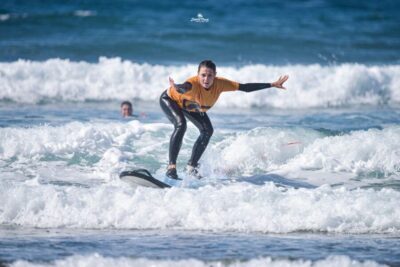
Playa del Inglés Maspalomas: High Quality Surf Classes
Read our review →

Lezioni di Surf per Beginner e Intermedi (6 persone a istruttore)
Read our review →
Browse the lists this tour appears in