
Review · LANZAROTE
Group surf lessons in Lanzarote, learn with a local team
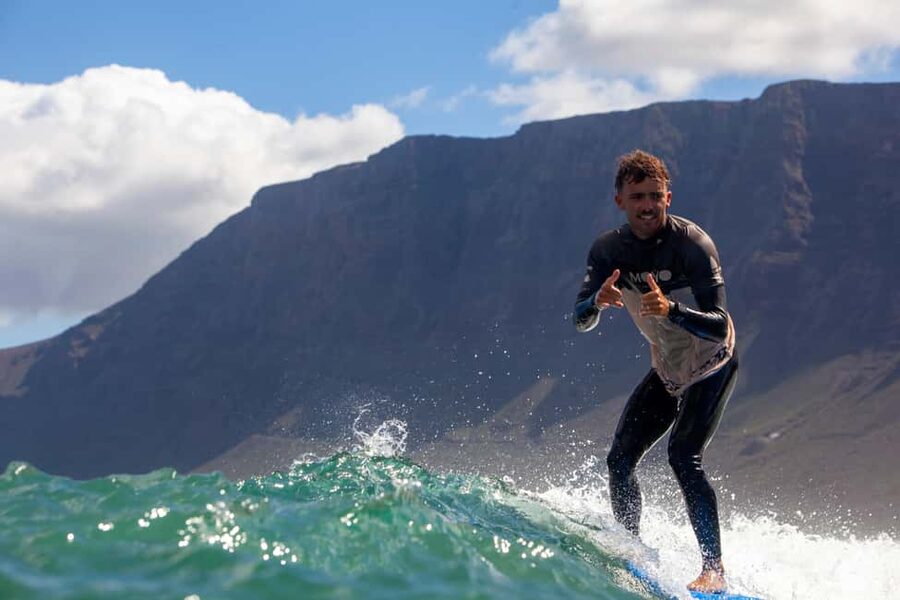
Lanzarote gives this surf lesson an unusual backdrop: black volcanic land, Atlantic waves, and wide-open ocean air. Momo Surf School keeps the focus on learning, not showing off, with a warm-up, beach instruction, and guided practice in the water. I like the small groups of up to eight and the way the lesson is built for beginners as well as returning surfers.
I also like the local family-run approach. The multilingual team speaks French, Spanish, and English, and instructors such as Mateo have been singled out for kind, clear teaching. The main consideration is time: two hours goes quickly once you collect gear, warm up, learn the basics, and get in the water.
Key points at a glance
- Volcanic Lanzarote setting: Learn beside the Atlantic on an island shaped by volcanic activity.
- A real lesson, not just board rental: You receive safety guidance, dry-land technique, and coaching in the water.
- Small groups: A maximum of eight participants allows the instructor to watch your form and help with timing.
- Equipment included: Your board, wetsuit, safety Lycra, and third-party liability insurance are covered.
- Three teaching languages: Choose French, Spanish, or English, depending on the available instructor.
- Flexible booking: The $53 price includes a two-hour lesson, and cancellation is free up to 24 hours before the start time.
Why Lanzarote is a fine place to start surfing
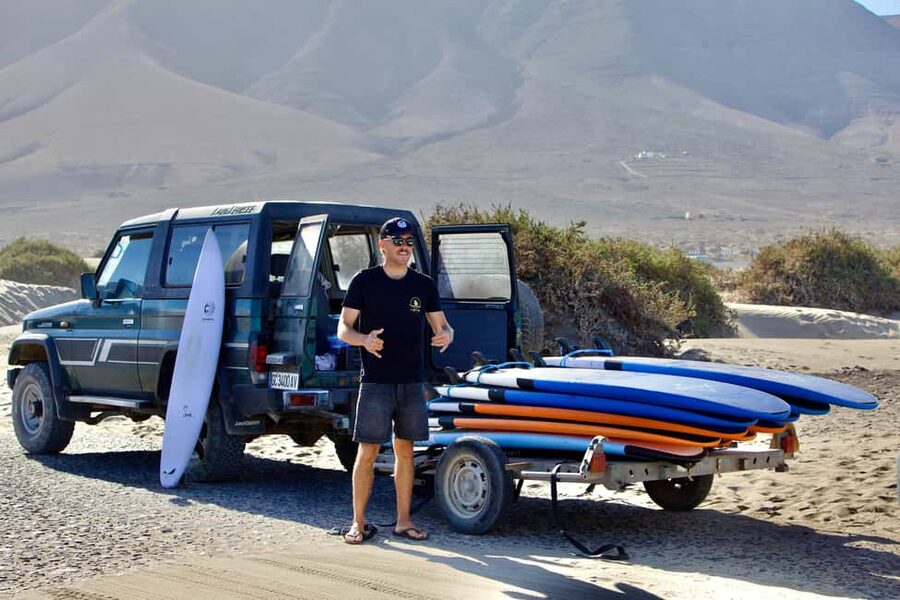
Lanzarote is not a standard beach holiday setting. The island is shaped by volcanoes, and its dark, rugged terrain gives the coast a spare, almost lunar character. Add the Atlantic and you have a memorable place to learn a sport that depends entirely on the sea.
That setting matters because a surf lesson is not only about standing on a board. You are learning to read moving water, judge a wave, and understand your place among other people in the ocean. Lanzarote gives the lesson a clear sense of place from the first minute.
The school describes the island as a UNESCO biosphere reserve, and its local setting is part of the appeal. You are not being placed in an indoor training environment or handed a board with little explanation. The lesson connects the physical setting to the skills you need.
I would still keep expectations sensible. The setting may be dramatic, but your first success could be modest: paddling correctly, getting the board pointed in the right direction, or standing for a few seconds. That is normal. Surfing looks simple from the shore and feels much less simple once the water starts moving you around.
More Group Surf Lessons in Spain
- Group Surfing Lesson at Playa de las Américas, Tenerife
★ 5.0 · 1,072 reviews - Playa de las Américas: Private or Small-Group Surf Lesson
★ 4.8 · 980 reviews - Group Surf Lessons
★ 5.0 · 310 reviews
Meeting the Momo Surf School team
The lesson usually begins at the beach or at a designated meeting point. The exact meeting arrangement is something I would confirm carefully when booking, since the supplied details do not name one fixed beach or provide transport information.
Momo Surf School is a local, family-run business. That usually means a more personal tone than you get from a large activity company, and the lesson is designed around encouragement rather than competition. The school’s approach is relaxed, but it is not casual about safety.
You are placed in a group according to your ability. A complete beginner should not be expected to keep pace with someone who has surfed before, and a returning surfer can receive advice beyond the basic stand-up movement. The school accepts beginners, people who have tried surfing a few times, and participants who want to improve their technique.
Communication is straightforward for many international visitors. Instruction is available in French, Spanish, or English. That is especially useful during safety explanations, when a small misunderstanding about currents, board handling, or surfer priority can become a serious problem.
The instructors also seem to bring an upbeat personality to the lesson. Mateo is specifically noted as a great instructor, while another recent booking praised two monitors for being very clear teachers. That fits the school’s stated aim: friendly coaching with enough structure to help you make progress.
Getting ready with board, wetsuit, and Lycra
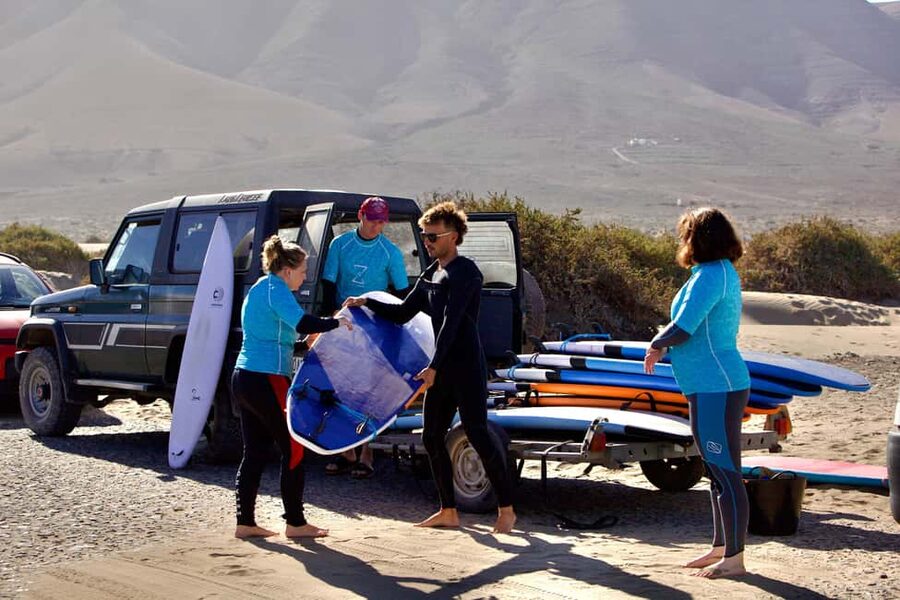
Your two hours begin with equipment. The school supplies a surfboard suited to your size and ability, along with a wetsuit and safety Lycra. Having the main gear included keeps the booking simple and makes the $53 price easier to assess.
A wetsuit is practical rather than decorative. Even in a sunny Atlantic setting, you can lose body heat while waiting for waves or repeating beginner drills. The board also matters. A board matched to your level gives you a better chance of learning the basic movement instead of wrestling with equipment that is too difficult to control.
The safety Lycra helps identify you as part of the lesson group. You also receive third-party liability insurance, which is a useful inclusion for an activity involving boards, waves, and other people in the water.
The school does not present the equipment as a substitute for instruction. You are not simply collecting a board and heading out alone. The gear is part of a guided lesson, and the instructor remains involved as you use it.
Wear practical beach clothing beneath or around the wetsuit, and allow a little patience for the changing and fitting process. The supplied information does not give details about lockers, changing rooms, towels, or showers, so I would not assume those are included.
Warm-up and ocean safety before the water
Before you paddle out, the instructor leads a dynamic warm-up. This prepares your body for paddling, pushing up, balancing, and repeated attempts to stand. It also gives the group a chance to settle in and pay attention.
The safety talk covers several key points:
- How to understand waves and currents
- How to handle your board safely
- Basic surfer priority rules
- What to do when you fall
This part may feel less exciting than catching a wave, but it is one of the most valuable parts of the lesson. Surfing is not just a balance sport. You need to know how your board moves, where it can go if you lose hold of it, and how to avoid creating problems for another person.
The instructor also looks at marine conditions and gives advice based on what is happening that day. That is important because the best technique depends on the waves in front of you, not just on a fixed script prepared before arrival.
I appreciate that the school presents safety as a shared responsibility. You learn to respect the sea and the other people in it. That makes the lesson useful even if you do not become an instant surfer.
More Group Surf Lessons in Lanzarote:
- Maui: Two Hour Beginner Group Surf Lesson in Kihei
★ 5.0 · 950 reviews - Byron Bay: 2-Hour Small Group Surf Lesson
★ 4.8 · 657 reviews - Porto: Small Group Surf Lesson with Transportation
★ 4.9 · 594 reviews - Open Group Surfing Lesson in Waikiki, Hawaii
★ 4.5 · 582 reviews
Sand instruction: the movements that make the first wave possible
The next stage takes place on land. The instructor explains how to lie on the board, where to place your body, and how to paddle efficiently. You also learn how to pass the whitewater, the broken part of a wave that rolls toward shore.
Then comes the take-off. This is the movement from lying on the board to standing on it. The instructor demonstrates the position and gives you a chance to repeat it before you try it in moving water.
These dry exercises may look a little awkward. That is not a problem. It is much easier to notice where your hands and feet should go when you are not also dealing with a wave, a board, salt water, and a group around you.
For a first-timer, this section can make the difference between random effort and a useful attempt. You start to understand the order of movements: paddle, feel the push of the wave, place your hands, rise, and keep your balance. The timing will take practice, but the explanation gives you something specific to work on.
If you have surfed before, the sand lesson may seem familiar. Listen closely anyway. A small adjustment to body position or take-off technique can help you catch waves more cleanly, and the instructor may adapt the advice to your level.
In the water with an instructor beside you
The water session is where the lesson becomes physical. You enter with your board and practice the skills from the beach. The instructor guides you toward suitable attempts, watches your position, and offers corrections as you go.
Beginners can expect help with the first waves. That does not guarantee a perfect stand-up, and no responsible school can promise that every participant will ride a long wave. It does mean you have someone watching for the right moment and giving you a better chance than you would have alone.
The instructor can point out problems that are hard to spot yourself. You may be paddling too slowly, looking down, placing your feet too close together, or standing before the board has enough speed. Clear advice during the attempt is far more useful than a general tip after the session.
The lesson also suits people with some prior experience. You can work on wave reading, positioning, take-off technique, and confidence. The school says the coaching is adjusted to each participant’s progress and pace, so the class is not limited to a single first-day routine.
The small-group limit matters here. With no more than eight participants, the instructor has a reasonable chance to see what each person is doing. It is not the same as private coaching, and you may still wait for your turn, but it should feel more personal than a very large beach class.
What the two-hour format really gives you
Two hours sounds generous until you break down the schedule. Equipment collection, group organization, warm-up, safety information, sand instruction, and water practice all take time. You should think of this as a complete introductory lesson, not two full hours of uninterrupted wave riding.
That is not a weakness. A safe surf class needs preparation. Rushing straight into the water might give you more minutes on the board, but it would leave you with less understanding of how to behave around waves and other surfers.
The two-hour format is a good match for a first lesson during a broader Lanzarote holiday. You can try surfing without committing to a full course, and you can decide afterward if you want more practice. It also works for families or friends with mixed levels, provided everyone understands that progress will vary.
For a returning surfer, two hours may feel brief if your goal is major technical improvement. Still, focused coaching on take-off, positioning, or wave reading can make the time worthwhile. I would choose this lesson as a first step or a refresher, rather than expecting advanced coaching on every part of surfing.
The value of $53 per person
At $53 per person, the price is reasonable for a two-hour guided activity, especially because the main equipment is included. You receive a board, wetsuit, safety Lycra, an instructor-led lesson, safety and technical coaching, and third-party liability insurance.
The value improves if you would otherwise need to rent equipment separately. It also improves for beginners, since the cost includes the part that is hardest to arrange alone: knowing where to go, how to read the conditions, and how to start safely.
The price is less compelling if you want only casual beach time with a board. This is an instructional session, so part of your time is spent on safety, explanations, and drills. That is exactly what I would want from a first lesson, but it may not suit someone seeking unstructured water time.
The small-group limit adds value. You are paying for access to a local team and guidance, not simply for use of a board. The included cancellation policy also reduces the risk of committing too early: you can cancel for a full refund up to 24 hours before the activity.
There is also a reserve-now-and-pay-later option. That can help if your Lanzarote schedule is still changing, though you should check the final booking terms and available start times before relying on it.
Who will enjoy this lesson most
I would recommend Momo Surf School to:
- First-time surfers who want a careful introduction
- Visitors who prefer a small, friendly class to a large commercial session
- People who need instruction in French, Spanish, or English
- Returning surfers who want help with basic technique
- Couples or friends with different levels of experience
- Anyone who wants an active two-hour outing tied closely to Lanzarote’s coast
It may be less suitable if you want a private lesson, a long advanced training session, or a fixed beach location with transport provided. Those details are not part of the supplied activity information, so ask before booking if they matter to you.
The school’s tone also seems best for people who enjoy encouragement and steady progress. You are not being pushed into a contest. You are being taught how to behave in the water, how to make the basic movements, and how to improve one attempt at a time.
Language, safety, and the human touch
The multilingual teaching is more than a booking convenience. Surfing uses quick instructions, and you may need to understand a correction immediately. Being able to learn in your strongest language can make the lesson calmer and more useful.
The school’s family-run character adds another layer. You are dealing with a local team whose work is tied to the island and its ocean. The aim is to share a love of surfing while keeping the mood friendly and responsible.
The strongest praise centers on the instructors’ attitude and teaching ability. Mateo is called out by name for making the session great, and another booking describes the two instructors as especially clear and encouraging. That is the quality I would care about most in a beginner lesson. A perfect beach is no help if the instructor cannot explain the next move.
At the same time, no school can control every factor in the ocean. Your progress will depend on your own comfort, fitness, timing, and the conditions during your session. Go in expecting to learn, not demanding a guaranteed stand-up.
Should you book Momo Surf School?
Book it if you want a well-structured introduction to surfing in Lanzarote, with equipment included and a local team that teaches in three languages. The combination of a volcanic Atlantic setting, small groups, safety instruction, and in-water coaching gives you more than a simple board rental.
I would be especially happy choosing it for a first attempt or a short refresher during a Lanzarote trip. The $53 fee is fair for what is included, and the 24-hour cancellation window gives you some flexibility.
Skip it if you want private coaching, a longer session, or confirmed transport and facilities that are not listed. For most people who want to try surfing without taking on a full course, Momo Surf School offers a practical, friendly starting point.
FAQ
How long is the Momo Surf School lesson?
The lesson lasts two hours. It includes preparation, a warm-up, safety guidance, sand-based technique instruction, and practice in the water.
How many people are in each group?
The group is limited to eight participants. The school uses small groups to provide more personal guidance and adapt coaching to different levels.
Is surf equipment included?
Yes. The activity includes a surfboard suited to your size and level, a wetsuit, and safety Lycra.
What languages are available?
Lessons are offered in French, Spanish, and English, depending on the instructor and booking availability.
Is the lesson suitable for beginners?
Yes. The school accepts complete beginners as well as people with some surfing experience. Instructors adjust the coaching to your progress and pace.
What happens if I need to cancel?
You can cancel up to 24 hours before the activity for a full refund. A reserve-now-and-pay-later option is also available.
Just added for surfers in Lanzarote
- Surf Lesson in Canary Islands★ 5.0 · 19 reviews
- Private Surfing Lesson in Famara★ 5.0 · 2 reviews
- Group Longboard Surf Lesson in Lanzarote★ 5.0 · 25 reviews
- Longboard Private Surf Lessons in Caleta de Famara Spain★ 5.0 · 7 reviews
- 2 Hours Surfing Lesson in Lanzarote★ 5.0 · 19 reviews
- Kalufa Surf School in Caleta de Famara, Lanzarote★ 5.0 · 2 reviews
- 2-Hour Surfing Experience for Beginners in Famara★ 5.0 · 4 reviews
- The Surftrip: A 2.5-hour morning surf session for beginners, intermediate surfers, and families.★ 5.0 · 12 reviews
Lanzarote Surf Lessons, compared.
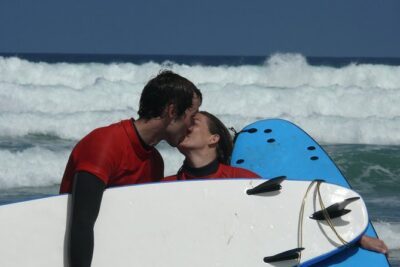
Surf class in Famara 9:15-12:00 or 11:45-14:30 (2h class)
Read our review →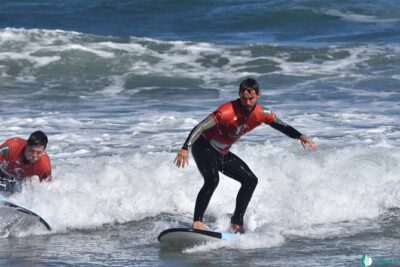
Surf lessons in Famara 9:15-14:30h (4 hours of class)
Read our review →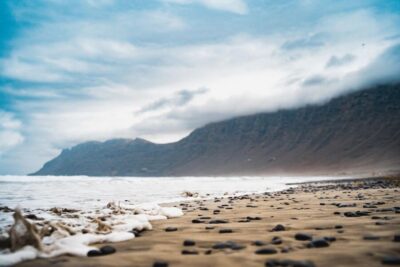
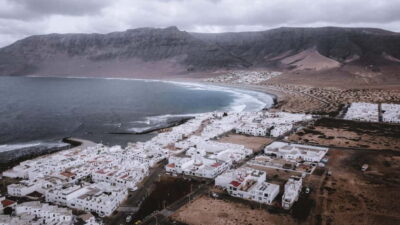
Lanzarote’s First Surf School – 2-hour or 4-hour classes
Read our review →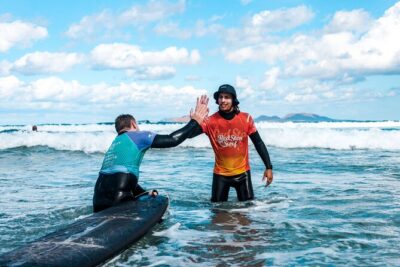
Full Day Surf Lesson for Beginners in Famara, Spain
Read our review →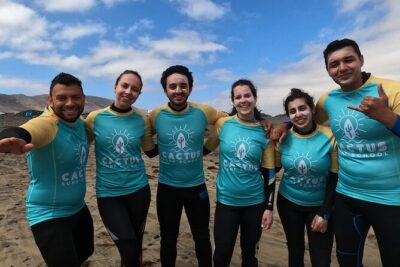
Group and private surf classes with a Certified Instructor in Lanzarote
Read our review →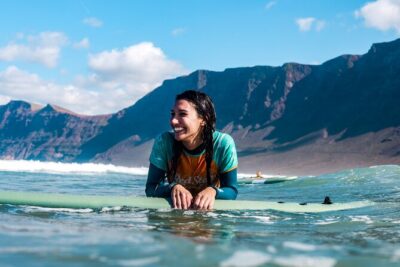
Surf Lesson for Beginners in Famara: Introduction in Surfing
Read our review →Browse the lists this tour appears in