
Review · VILA NOVA DE MILFONTES
Alentejo: 2-Hour Surf Lesson
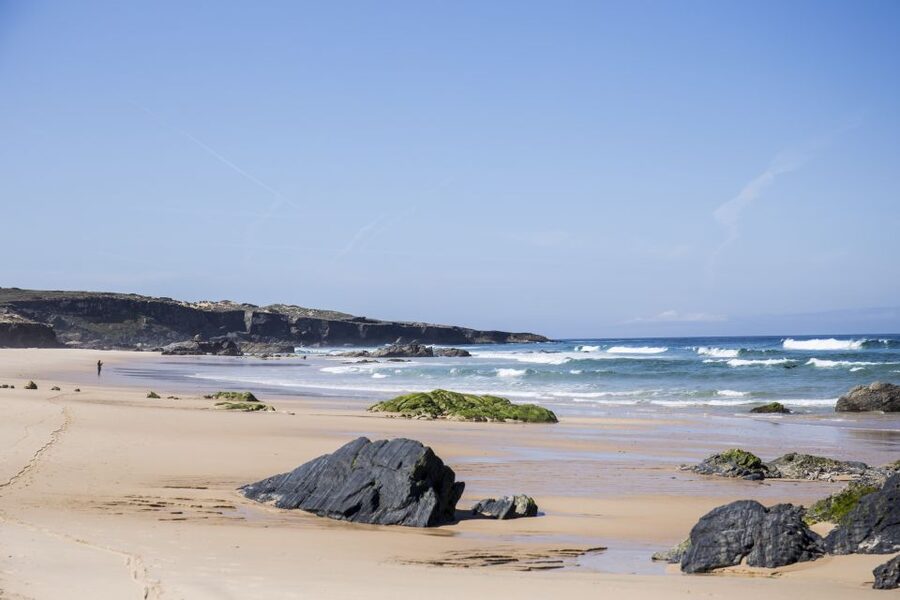
Alentejo’s Atlantic coast gives this lesson its main attraction: you learn to surf on wild Portuguese beaches, not in a crowded indoor pool or a carefully staged resort setting. The two-hour format moves quickly from basic theory to warm-up and then into the water, so you spend most of your time actually trying to catch waves.
I like the small-group structure, with no more than eight students assigned to each instructor, and I like that beginners and more experienced surfers are separated by ability. The individual performance check is useful, too. You are not simply handed a board and left to guess what went wrong.
The main drawback is physical effort. You should expect to finish tired, and beginners may find the water practice demanding. Also, the information says the activity is wheelchair accessible but separately lists it as unsuitable for people with mobility impairments, so you should confirm the practical arrangements before booking.
Key points to know before booking
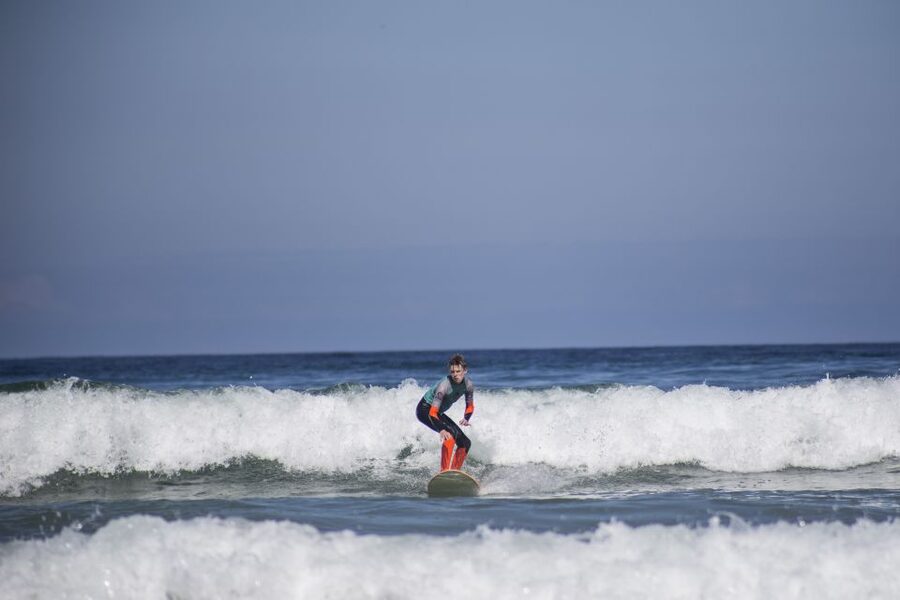
- Two hours from briefing to final wave: Expect 20 to 30 minutes of theory and warm-up, followed by about 90 minutes in the water.
- Beginner-friendly instruction: The lesson welcomes first-timers as well as surfers with some previous experience.
- Groups are matched by ability: Instructors divide students according to experience so beginners are not placed in a difficult session.
- Equipment is included: You receive a surfboard, wetsuit, and leash, along with personal accident and indemnity insurance.
- Miguel’s patient teaching style: A lesson with Miguel included careful safety coaching, wave-by-wave observation, and corrections that helped one student move to a higher level soon afterward.
- $57 can be good value: The price includes equipment, insurance, coaching, and beach transport when needed, but the short session is best suited to a focused introduction rather than a full surf course.
What the two-hour Alentejo lesson is really like
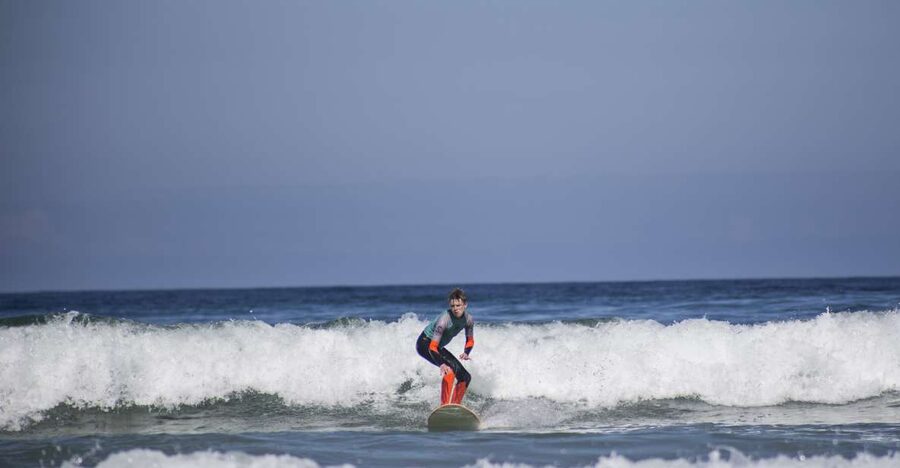
The schedule is simple, and that is a strength. You arrive at the meeting point 30 minutes before the activity begins, then head to the beach if transport is needed. The actual lesson lasts two hours, and it ends back at the meeting point.
The first 20 to 30 minutes cover theory and warm-up. You learn the basic safety rules, get familiar with the equipment, and prepare your body for the work ahead. This opening may sound short, but it matters. Surfing is not just about standing on a board. You need to understand how to move around the water, how to handle the board, and how to act around other people.
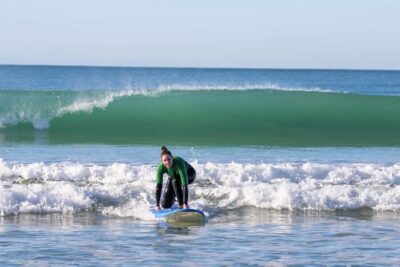
The remaining time is spent practicing in the water. The advertised schedule gives you roughly 90 minutes of water work, with some descriptions allowing up to 1 hour and 40 minutes. Either way, this is the part that makes the lesson worthwhile. You get several chances to repeat the same movement, listen to feedback, and try again before the class ends.
For a first lesson, repetition is more valuable than a long lecture. You may not leave as a polished surfer, but you should understand the basic sequence and have a clearer idea of what you need to improve.
More Two-Hour Experiences in Portugal:
- Albufeira: 2-Hour Falesia Beach Surf Lesson
★ 4.8 · 464 reviews - 2-Hour Surf Lesson in Alentejo
★ 5.0 · 243 reviews - Algarve: 2-Hour Beginner Surf Lesson
★ 4.8 · 192 reviews
Learning safety before chasing waves
The instructors place safety first, which is exactly what you want in a beginner surf class. Before the practical work starts, you receive an explanation of the main safety standards. As your ability improves, those rules become more detailed and are tied to better technique.
That approach gives the lesson a useful structure. You are not treated as someone who only needs encouragement. The instructor watches how you handle the board, how you prepare for a wave, and how you respond after an unsuccessful attempt.
The lesson also includes personal accident and indemnity insurance. That does not remove the need to listen carefully or follow instructions, but it is a sensible inclusion in an activity that involves the ocean, equipment, and physical exertion.
I also like the maximum of eight students per monitor. The overall group can have up to 10 participants, so the exact instructor ratio is worth checking when you book. A small class gives the instructor more time to watch each person, which matters when a tiny adjustment to your posture or timing can change the result.
Boards, wetsuits, and what the price covers
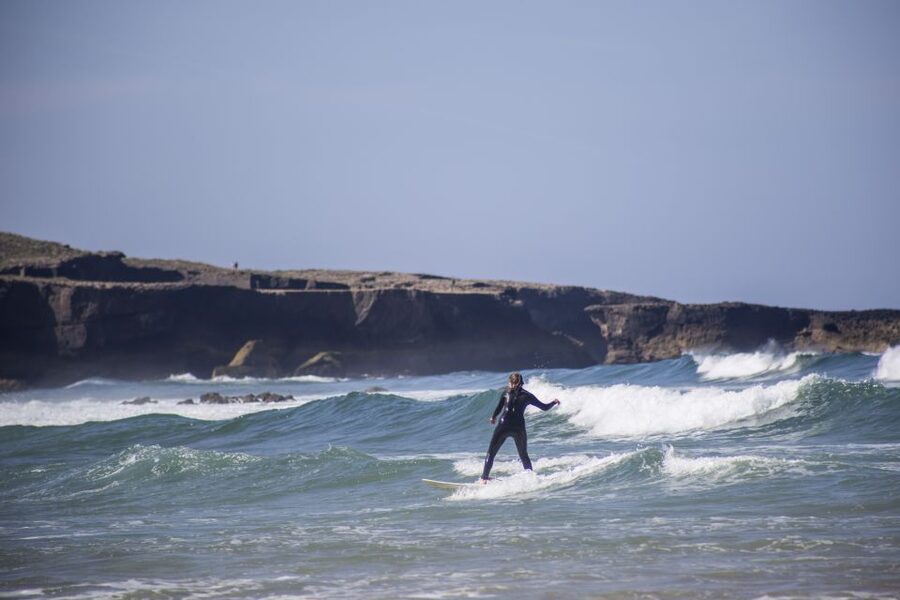
The $57 price includes the board, wetsuit, and leash. That makes the cost easier to judge, since you do not need to rent the basic gear separately for the lesson.
The wetsuit is especially important for a surf class. You will spend a long period in the water, often repeating the same movements, and comfort affects how much attention you can give to instruction. Having the main equipment supplied also makes this easier for visitors who are not carrying surf gear around Portugal.
Transport to the beach is included if necessary. The exact transfer arrangement is not specified, so I would check the meeting point and transport details before setting out. You are told to arrive 30 minutes early, and that buffer is worth taking seriously. A rushed arrival is not a good way to begin a lesson that starts with safety instructions and physical preparation.
For $57, I consider the lesson fairly priced if you want a guided first attempt and need all the equipment. It is less compelling for someone who already surfs regularly and only wants casual water time. In that case, the value depends on how much you want structured coaching and an individual progress assessment.
Coaching that changes with your ability
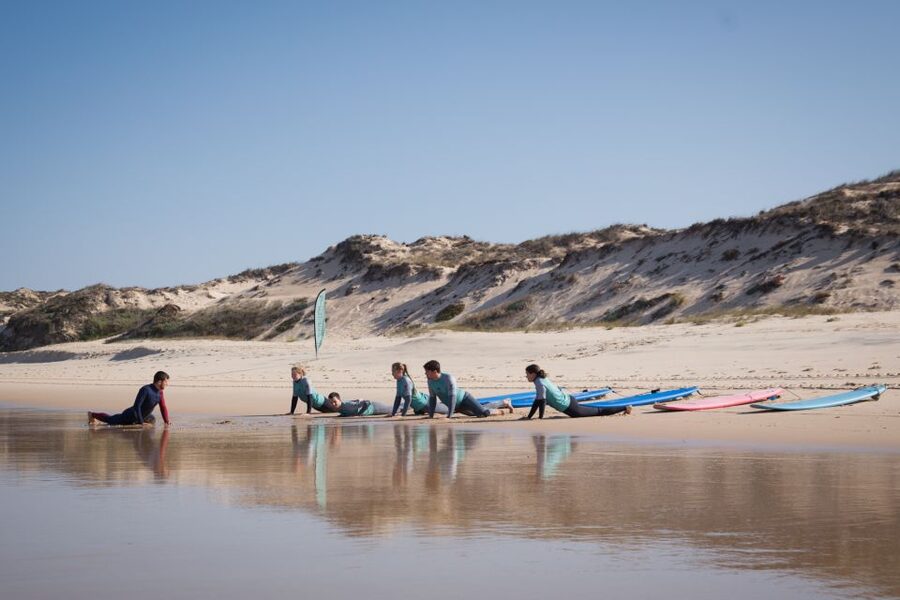
The instructors do not use exactly the same approach for every student. Beginners receive the basic safety and technique guidance they need, while more experienced participants get additional goals and corrections suited to their level.
That matters in a mixed class. A first-timer needs help with the fundamentals, while someone who has surfed before may need feedback on timing, balance, or wave selection. Dividing the group by experience keeps the class more useful for both.
The teaching plan uses specific goals, allowing you to judge your own progress. That is better than vague advice such as try harder or stand up faster. You can work on one movement at a time, then ask the instructor what to change on the next attempt.
The instructor’s role also changes as you improve. Early on, you receive closer guidance. Later, the aim is to help you act more independently, with the instructor stepping in to suggest, correct, and assess. That is a good way to learn a sport because you need to make decisions for yourself eventually.
The feedback described from Miguel gives a clear picture of this approach. He took time to explain safety before the practical work, watched each wave closely, and suggested how to apply a correction on the next attempt. That kind of immediate, specific advice is more useful than a general comment after the session has ended.
One student who later took another lesson in Lisbon was placed in a higher level two days afterward. That does not mean every participant will make the same jump, but it shows the possible value of careful observation and clear corrections during this class.
More Surf Lessons in Portugal:
- Matosinhos: Surfing Lesson with Equipment
★ 4.8 · 926 reviews - Lisbon Surf Experience
★ 4.9 · 876 reviews - Albufeira: Surf Lesson
★ 4.7 · 699 reviews - Porto: Small Group Surf Lesson with Transportation
★ 4.9 · 594 reviews
The beach setting and the Alentejo coast
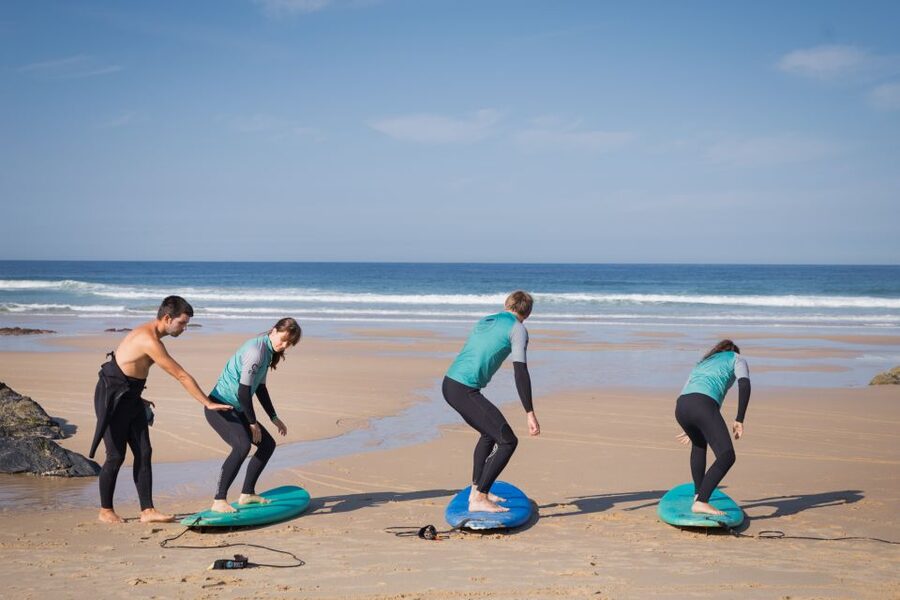
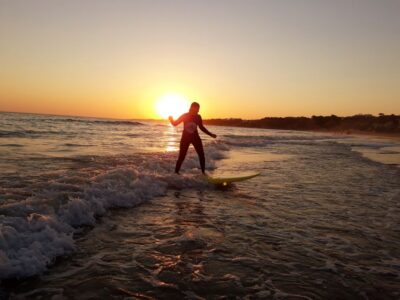
The lesson takes place around Alentejo’s wild beaches. The setting is part of the appeal. You are not simply learning a sport in isolation. You are spending time on a less built-up section of Portugal’s coast, with the Atlantic providing the conditions and the challenge.
The exact beach depends on the schedule and surf conditions, so you should not assume a particular stretch of sand from the general description alone. That uncertainty is normal for a surf lesson. Instructors need to choose a suitable location based on the day’s conditions and the group’s ability.
The coastal setting can also be a drawback for anyone expecting a calm, predictable activity. Waves are not arranged to suit your timetable, and the class may feel more demanding than a dry-land lesson. Your experience depends partly on your physical condition, partly on your confidence, and partly on the conditions available that day.
I would treat the beach as a working classroom rather than a sightseeing stop. You will have time to notice the coast, but most of your attention should be on instructions, the board, and the next wave.
Who should book this class
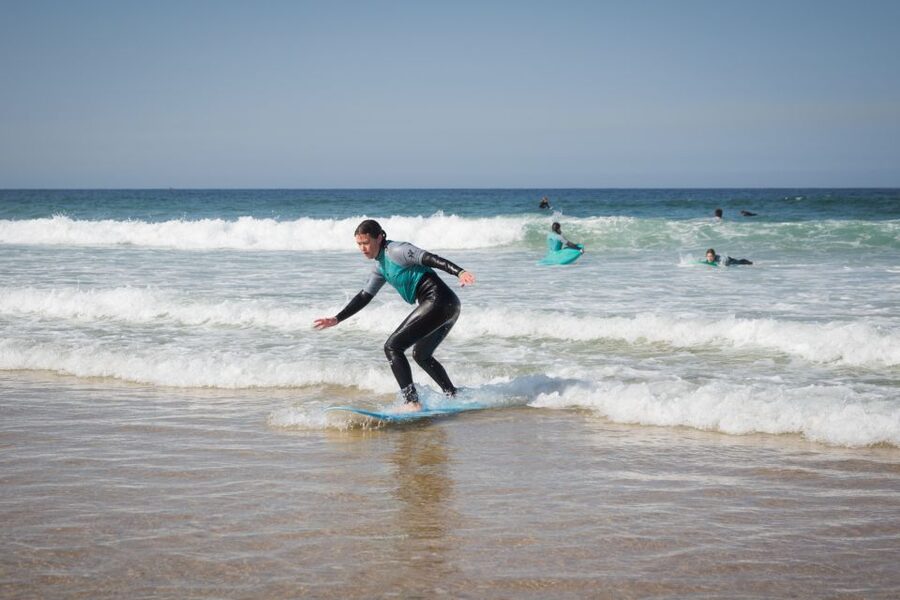
This lesson suits a first-time surfer who wants a proper introduction rather than a casual attempt with no guidance. You receive equipment, safety instruction, warm-up time, water practice, and personal feedback in one booking.
It also suits people who have tried surfing before and want help improving. The instructors divide participants by experience and set goals according to ability, so previous experience is not wasted.
The group setting is best for people who enjoy learning alongside others. You will challenge yourself while watching other students work on the same basic tasks. The social side may make the class more enjoyable, though anyone wanting complete privacy or one-to-one attention should look for a private lesson instead.
The physical demand deserves honest attention. You will paddle, push up, balance, fall, and repeat the process. The activity description makes clear that students often finish exhausted, but also with a sense of accomplishment. That is a fair expectation, not a warning meant to put you off.
Pregnant women should not book this activity. The additional information also says it is not suitable for people with mobility impairments, even though the activity is marked wheelchair accessible. Because those details conflict, contact the provider before booking if accessibility affects your decision.
The instructors speak English, Portuguese, Spanish, and German. That broad language choice can make safety instructions easier to follow, especially during the first part of the lesson.
Timing, meeting points, and cancellation terms
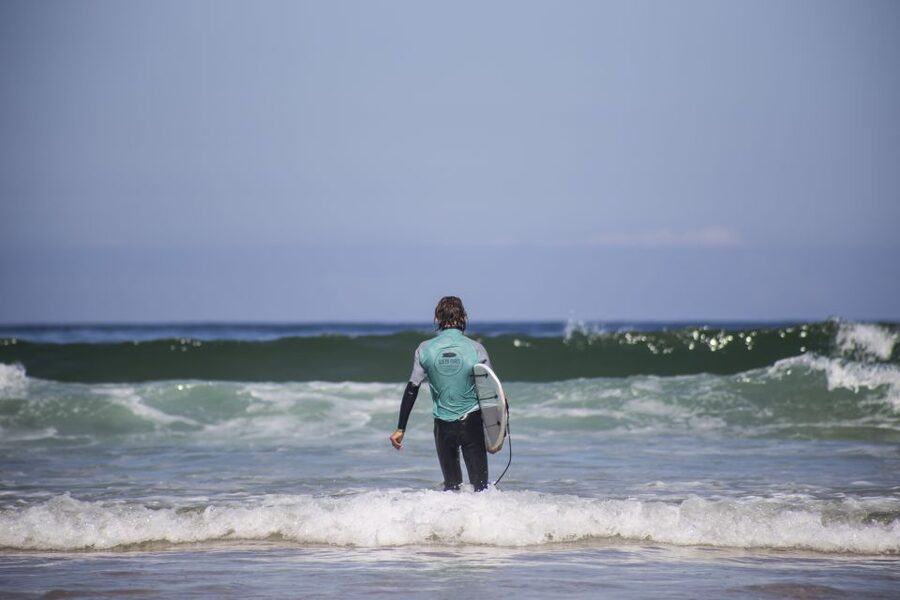
You need to arrive 30 minutes before the activity begins. The starting time depends on availability, so check the selected date and time rather than planning around a fixed daily schedule.
The lesson finishes back at the meeting point. If transport to the beach is needed, it is included, but the available details do not specify the exact pickup arrangement. I would allow extra time around the activity rather than booking another fixed appointment immediately afterward.
Free cancellation is available up to 24 hours before the activity for a full refund. You can also reserve now and pay later, which helps if your coastal plans depend on weather, transport, or the rest of your Portugal itinerary.
These flexible booking terms are useful, but they do not guarantee that a particular time or beach will work for you. Check availability early if your schedule is tight.
Is $57 fair for two hours?
The value depends on what you need. If you are starting from zero, the price covers the pieces that can quickly add up: a board, wetsuit, leash, insurance, transport when required, and an accredited instructor. You also get a structured class rather than simply renting equipment.
The Portuguese Surfing Federation accreditation is a reassuring detail. It does not promise perfect waves or instant progress, but it indicates that the instructors meet a recognized professional standard.
The weak point is the limited duration. Two hours is enough for an introduction, but not enough to build reliable surfing skills. You may stand up once, several times, or not at all, depending on your balance, timing, fitness, and the conditions. The lesson should be judged as a first step, not as a complete course.
I think the price makes sense for visitors who want a guided activity during an Alentejo stay and do not own equipment. It is harder to justify for confident surfers who already have gear and only want to use the water independently.
My advice before you book
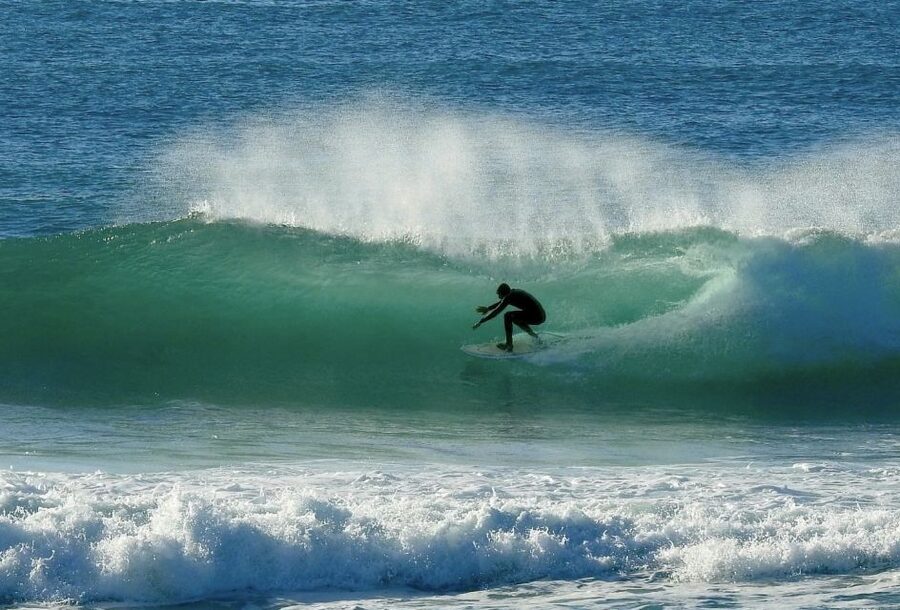
Wear or bring whatever the provider instructs you to use for the meeting point, and arrive early enough to avoid a rushed start. The most important preparation is mental: expect to spend much of the session repeating basic movements.
Listen closely during the safety briefing. The class is more than a quick photo opportunity on a board, and the instructor’s corrections are where much of the value lies. If you get a coach with Miguel’s patient style, make a point of asking how to apply each correction on the next wave.
Do not compare your progress too closely with other people in the group. Students are separated by experience, but people still learn at different speeds. Set a small goal for yourself, such as improving your board position or following one safety rule consistently.
Should you book the Alentejo surf lesson?
Book it if you want a well-structured first surf lesson with equipment, insurance, beach transport when needed, and instructors who watch your progress. The wild Alentejo coast gives the activity a strong sense of place, while the small-group setup keeps the coaching personal enough to be useful.
Skip it if you are looking for a relaxed beach outing, have mobility concerns that require special arrangements, or expect to master surfing in one short session. For most beginners who accept the physical effort and want a real introduction to the sport, $57 is a reasonable price for two focused hours.
FAQ
How long does the Alentejo surf lesson last?
The lesson lasts two hours. The first 20 to 30 minutes cover theory and warm-up, followed by about 90 minutes of practice in the water.
What equipment is included?
The lesson includes a surfboard, wetsuit, and leash. Personal accident and indemnity insurance are also included.
Is transport to the beach included?
Transportation to the beach is included if necessary. The activity ends back at the meeting point.
How early should I arrive?
You should arrive at the meeting point 30 minutes before the activity starts.
Is the lesson suitable for complete beginners?
Yes. The class is intended for people taking their first surf lesson as well as participants who already have some surfing experience.
Are experienced surfers allowed to join?
Yes. Instructors divide participants according to their experience level and adapt coaching and goals to each student.
How large is the group?
The activity is limited to 10 participants. The safety information also states that there is a maximum of eight students per monitor.
Which languages do the instructors speak?
Instruction is available in English, Portuguese, Spanish, and German.
Can pregnant women take part?
No. The activity is not suitable for pregnant women.
What is the cancellation policy?
You can cancel up to 24 hours in advance for a full refund. The booking option also allows you to reserve now and pay later.
Just added for surfers in Portugal
- Tricana Surf Experience★ 5.0 · 3 reviews
- Exclusive Surf Lessons in S Miguel Azores★ 5.0 · 21 reviews
- Guided surf tours from Porto city to the beach★ 4.5 · 10 reviews
- Surfing Lesson | Porto: Small Group Surf Lesson with Transportation★ 5.0 · 34 reviews
- Self-guided tour Bike + Surf★ 5.0 · 6 reviews
- Private Surf Experience – Transfer to Matosinhos – All Levels★ 5.0 · 7 reviews
- Surf Lessons in Porto with transfer at Porto Surf School★ 5.0 · 42 reviews
- Surf Lesson | Surf Lessons★ 5.0 · 39 reviews
Portugal Surf Lessons, compared.
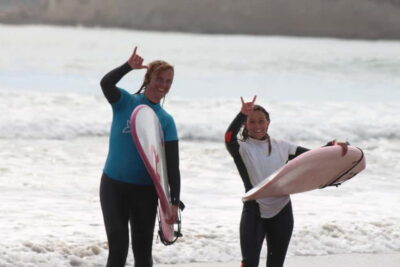
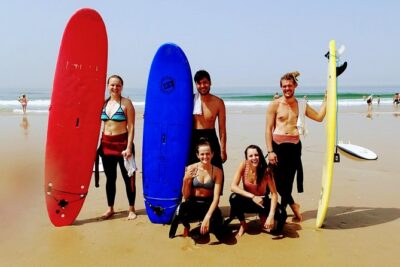
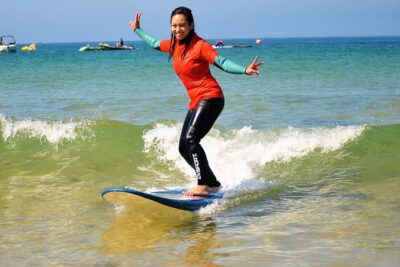

Learn to Surf in Chill Beach Vibes & Good Times
Read our review →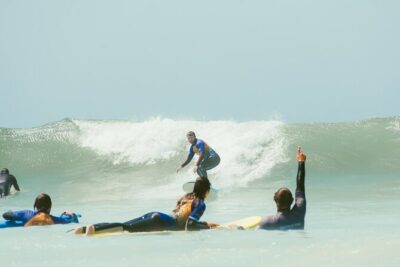
Browse the lists this tour appears in