
Review · APOLLO BAY
Apollo Bay: Surf Lesson with Qualified Instructors
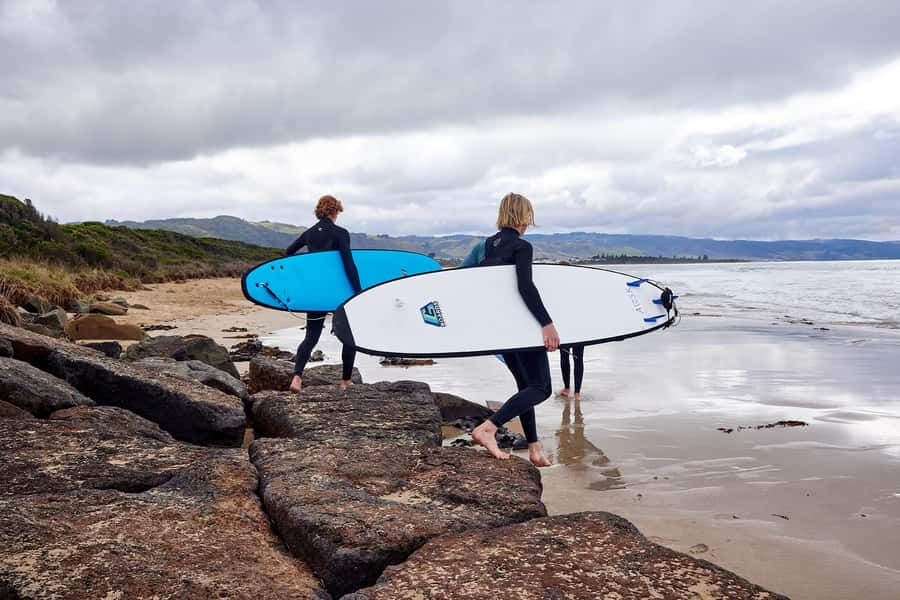
Apollo Bay makes a fine place to learn surfing because the lesson gets you into the water quickly, rather than leaving you on the sand for most of the session. I like the waist-deep practice area and the use of softboards, which make the first attempts feel less intimidating. I also like that qualified instructors stay in the water with you and teach surf safety as you learn.
The main drawback is the short 90-minute format. It gives you enough time for a useful first lesson, but not much room for a slow start, long breaks, or repeated coaching if the conditions are difficult. Photos are not included, so bring a waterproof camera if you want a record of your first ride.
Key points for your Apollo Bay surf lesson
- Waist-deep instruction: You learn in manageable water with easy-to-ride waves rather than starting in deep water.
- Softboards and wetsuits included: The equipment is supplied, so you do not need to arrange beginner gear separately.
- More wave time: The lesson aims to put you in the water for practical training instead of spending most of the session on the beach.
- Safety comes first: You learn how to carry your board, respect other surfers, and read the water.
- A realistic first goal: The instructors aim to help you stand on your first lesson, though conditions and ability always matter.
- Clear booking flexibility: You can cancel up to 24 hours before the lesson for a full refund and reserve now while paying later.
Why Apollo Bay is a good place to start surfing
A first surf lesson works best when the water feels manageable. This Apollo Bay session is built around waist-deep water and easy-to-ride waves, giving you a practical starting point without sending you straight into conditions that feel overwhelming.
I like that the lesson takes place on Apollo Bay’s safe surf beach. That wording does not mean the ocean is risk-free. It means the teaching is planned around a beach considered suitable for beginner instruction, with surf safety and ocean awareness included from the start.
You will not simply be shown a few movements and sent off alone. The qualified instructors teach in the water with you, which matters when you are trying to balance, paddle, read a wave, and remember what your feet are supposed to do at the same time.
The stated aim is to get you standing during your first lesson. Treat that as a sensible target, not a promise. Your result will depend on the waves, your comfort in the water, and how quickly your body adapts to the board.
More Surf Lessons in Australia:
- Bondi Beach: 2-Hour Surf Lesson Experience for Any Level
★ 4.9 · 935 reviews - Byron Bay: 2-Hour Small Group Surf Lesson
★ 4.8 · 657 reviews - Noosa Heads: 2 Hour Surf Experience on the Sunshine Coast
★ 4.9 · 644 reviews
Getting kitted out at the Surf Club foreshore
Your meeting point is easy to identify: look for the surf trailer and instructors on the foreshore near the Surf Club. You should arrive ready with swimwear, a towel, sunscreen, and water. A waterproof camera is optional, but it is the only practical way to take pictures during the lesson because photos are not included.
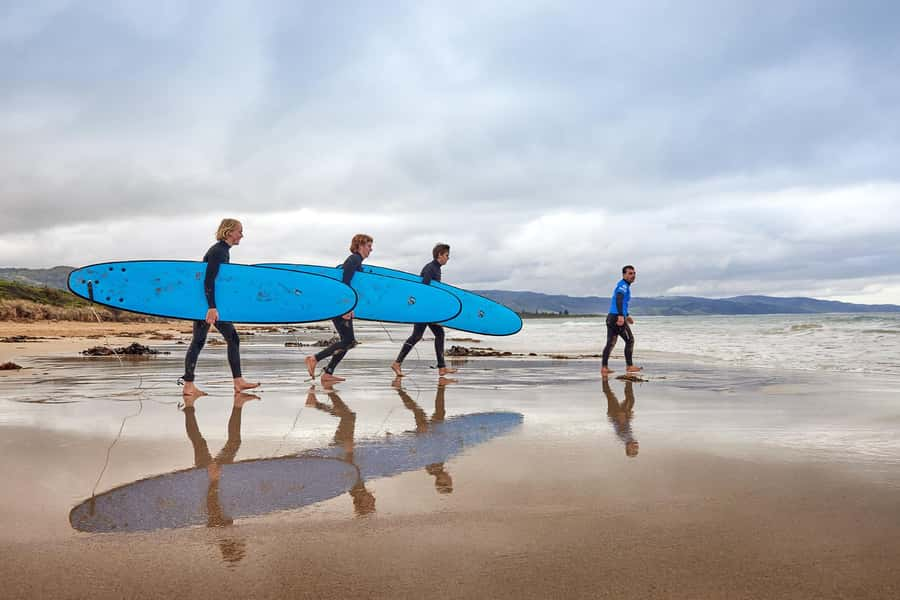
The operator provides a wetsuit and a safe softboard. That is useful for a first attempt, especially if you are visiting Apollo Bay without surf equipment. A softboard is forgiving and easy to ride, and it reduces some of the worry that comes with handling a harder, more technical board.
Getting changed and fitted uses part of the 90-minute session, so do not arrive at the last moment. The supplied information does not state how early you should check in, but allowing yourself enough time to find the trailer and be ready is sensible.
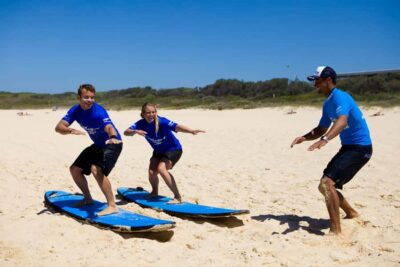
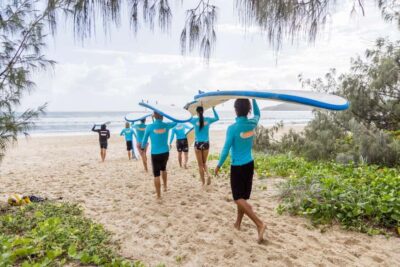
The first equipment lesson is not filler. You learn how to carry the board safely and how to behave around other surfers. Those habits are important because a board is long, awkward, and potentially dangerous if handled carelessly near people.
Learning surf safety before chasing waves
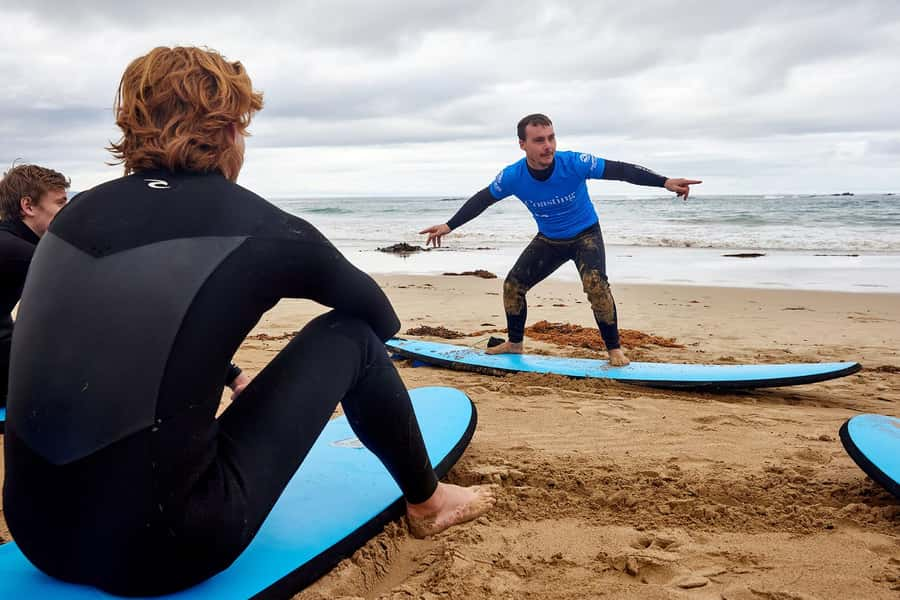
Before you focus on standing, you learn basic ocean awareness. That includes understanding how to ride the waves with control and how to respect other surfers.
This is one of the strongest parts of the session. Beginners often concentrate so hard on standing that they forget to watch the people around them or pay attention to the water. Learning those points early helps you become a safer beginner, not just someone who briefly gets upright.
The instructors also cover surf safety while teaching in the water. You get advice in the setting where you need it, rather than hearing every rule on the beach and trying to remember it later.
The beach is described as safe for instruction, but you still need to listen carefully. Non-swimmers are not accepted, and you should be comfortable being in the ocean before booking. The lesson uses waist-deep water, but that does not remove the need for basic swimming ability.
Practicing in waist-deep water with a softboard
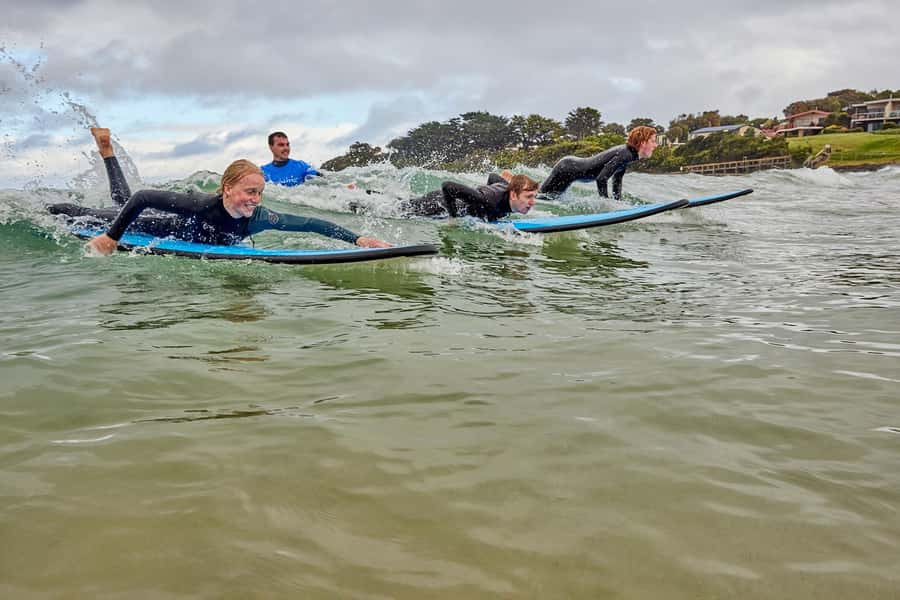
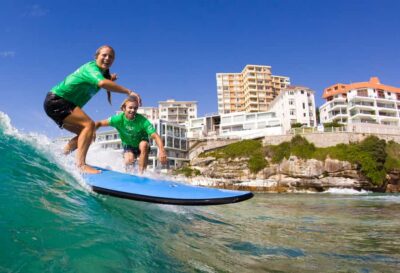
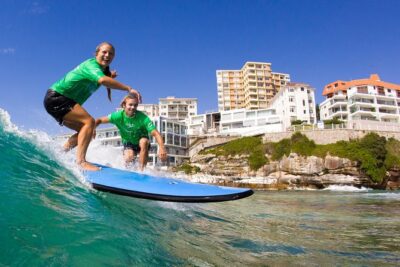
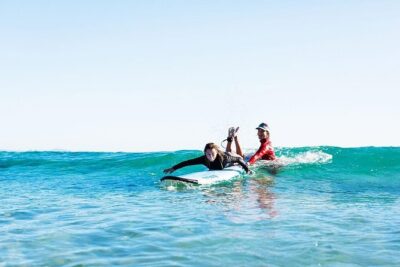
The main action takes place in the water. You practice with the softboard, work on your balance, and try to catch small, manageable waves while an instructor is nearby.
I like the focus on wave time. Many beginner lessons spend a large share of the session explaining technique on the beach. Here, the stated approach is more training in the waves, which gives you more chances to connect the instructions with the feel of the board and moving water.
Waist-deep water also lets you reset after a failed attempt without having to swim far. You can return to position, listen to a correction, and try again. That practical rhythm is valuable during a short lesson.
Your first successful ride may be brief. That is normal for a beginner session. The real benefit is learning the sequence: position yourself, catch the wave, keep your weight balanced, and try to stand at the right moment.
You will also learn to carry and control the board with more style and care. That sounds like a small detail, but it is part of becoming comfortable in a surf setting. You want to know what to do with the board before and after a wave, not only during the few seconds when you are upright.
Same break, a different way into the water:
- Learn to Surf at Noosa on the Sunshine Coast
★ 5.0 · 277 reviews - Surfing Lessons on Sydney’s Bondi Beach
★ 5.0 · 267 reviews - 2 Hour Ultimate Learn to Surf Adventure
★ 5.0 · 235 reviews - Half Day Surf Lesson
★ 4.5 · 234 reviews
Meeting local instructors and fellow learners
The lesson is taught in English by local Australian instructors. The tone is intended to be friendly, and the setup gives you a chance to meet other people learning at the same time.
That social side can help if you feel nervous. Everyone begins with the same basic problem: a board that feels unstable and a wave that seems to arrive too soon. Working alongside other beginners can make the first attempts feel less serious.
At the same time, you should expect a shared lesson rather than private coaching. The information does not specify the group size or a personal instructor for each participant. If you need constant one-to-one attention, ask the operator before booking.
One verified booking praised the staff as professional, kind, and accommodating when the weather and surf quality were not ideal. That is useful practical information. Surfing depends on conditions, and a thoughtful instructor should adjust the session when the water does not cooperate.
The lesson is supplied by Apollo Bay Surf and Kayak. No individual instructor names are provided, so you should not expect to request a particular coach based on the available information.
What the 90-minute schedule means for you
Ninety minutes is long enough to cover equipment, basic safety, water practice, and several attempts at catching waves. It is also short enough to fit neatly into a day exploring Apollo Bay.
The clock begins to matter if you are slow to get ready or uneasy in the water. You will get more from the session if you arrive prepared, listen closely, and stay engaged rather than taking long pauses.
The exact start times vary. Check availability when booking, especially if you are planning this around other activities in Apollo Bay. The experience does not state that transport is included, so plan to reach the foreshore meeting point yourself.
A single session is best viewed as an introduction, not full surf training. You may stand on a wave, learn the basic rules, and gain enough confidence to consider another lesson. You should not expect to leave with polished technique after 90 minutes.
Is $63 good value for a first lesson?
At $63 per person, the price includes the full 90-minute lesson, a qualified instructor, a wetsuit, and a softboard. That makes the cost easier to justify if you are new to surfing and do not own equipment.
The value comes from the combination of gear and supervision. Renting a wetsuit and beginner board separately would add cost and leave you without instruction. Here, the equipment is matched with coaching in the water and safety advice.
The price is less attractive if you already surf confidently or have your own board and wetsuit. This is aimed at beginners, and much of what you pay for is the safe introduction, equipment, and instructor support.
You also need to factor in the possibility that conditions may limit the experience. The staff are described as accommodating with weather and surf quality, which is reassuring, but no surf lesson can control the ocean. If you want guaranteed long rides or perfect waves, this is not the right kind of activity.
Who should book this Apollo Bay lesson?
This session suits first-time surfers who can swim and want a guided introduction without buying or carrying equipment. It also fits people who prefer practical instruction over a long beach briefing.
You should consider it if you want to:
- Try surfing during a visit to Apollo Bay
- Learn in waist-deep water
- Use a softboard and supplied wetsuit
- Get basic ocean awareness and surf safety advice
- Meet other beginners and local English-speaking instructors
- Aim for a first standing wave without committing to a longer course
The activity is not suitable for children under seven, pregnant women, non-swimmers, or people over 70. Those limits are clear, so do not book it for someone in one of those categories.
The session may also be a poor fit if you dislike cold water, need private instruction, or want to spend the entire time riding waves. The equipment helps, but you still need to be active, comfortable in the sea, and willing to take instruction.
What to bring and what to leave at home
Bring swimwear, a towel, sunscreen, and water. You will be outside and in the water, so sun protection matters even when the air feels cool.
A waterproof camera is allowed as a suggested item, but use it only if you can manage it without distracting yourself from the lesson. Photos are not included, and the supplied information does not promise a photographer.
You do not need to bring a wetsuit or softboard. Both are included. You should also avoid assuming that other personal items, transport, or photographs are part of the price because they are not listed as inclusions.
Booking flexibility and practical limits
You can cancel up to 24 hours in advance for a full refund. You can also reserve the activity and pay later, which helps if you are still arranging your Apollo Bay plans.
Check the available start times before choosing a date. The experience lasts 90 minutes, and the information does not specify a fixed daily departure time.
The lesson is offered in English. If you need instruction in another language, this activity may not suit you.
Apollo Bay’s weather and surf conditions can change. The professional and accommodating approach noted by a verified participant is encouraging, but you should still keep a little flexibility in your day rather than placing an important onward connection immediately after the lesson.
My verdict: book it if you want a real first attempt
I would book this lesson if you are a swimmer, have never surfed, and want to spend your first session in the water with an instructor rather than learning from a beach demonstration alone.
The best reasons to choose it are the waist-deep setting, included softboard and wetsuit, practical safety coaching, and focus on catching waves. The qualified staff and friendly approach also matter, especially when weather or surf quality is less than perfect.
Skip it if you are a non-swimmer, outside the stated age limits, or already comfortable surfing. For everyone else, $63 is a fair price for a well-contained introduction, as long as you understand that standing on a wave is the goal, not a guarantee.
FAQ
How long is the Apollo Bay surf lesson?
The lesson lasts 90 minutes.
How much does the surf lesson cost?
The price is $63 per person.
Where do I meet the instructors?
Look for the surf trailer and instructors on the foreshore near the Surf Club in Apollo Bay.
Is a wetsuit included?
Yes. A wetsuit is included in the activity.
Is a surfboard included?
Yes. The lesson provides a safe softboard.
Will I learn in deep water?
The lesson takes place in waist-deep water with easy-to-ride waves.
Is the lesson taught in English?
Yes. The instructors teach in English.
Do I need to know how to swim?
Yes. The activity is not suitable for non-swimmers.
Can children join the lesson?
Children under seven cannot join this activity.
Can I cancel for a refund?
Yes. You can cancel up to 24 hours in advance for a full refund.
Just added for surfers in Australia
- Learn to Surf at Sydney’s Maroubra Beach★ 4.5 · 25 reviews
- Sunrise & Surf Beach Lifestyle Photoshoot★ 5.0 · 3 reviews
- Australian Surfing and Camping Tours★ 5.0 · 8 reviews
- Rainbow Beach: Surf Lesson Safari & Beach 4WD Double Island Point★ 5.0 · 12 reviews
- Epic Surf Safari Beach 4WD Day Tour -Noosa to Double Island Point★ 5.0 · 34 reviews
- Private Surf Coaching Session in New South Wales★ 5.0 · 3 reviews
- Private Surf Lesson at Margaret River in Western Australia★ 5.0 · 6 reviews
- 2 Hour Adults Only, Learn to Surf Lesson in Torquay/Anglesea★ 5.0 · 6 reviews
Australia Surf Lessons, compared.

Broadbeach: 2 Hour Surf Experience on the Gold Coast
Read our review →Browse the lists this tour appears in