
Review · QUEPOS
Beginner Surf Classes
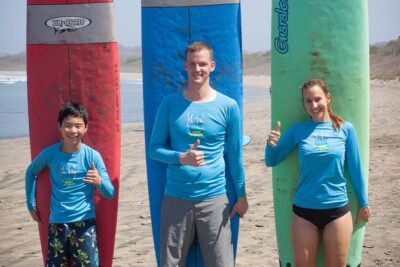
Learning to surf here is less about heroic wave riding and more about getting the basics right: reading the water, lying correctly on the board, popping up, and knowing when not to go. Instructors such as Alex, Josue, Angel, and Jake focus on safety before sending you into the waves, which makes this a sensible first lesson for adults, children, couples, and families.
I like the small maximum group of eight, since it leaves room for hands-on help in the water. I also like the practical teaching, especially the advice to look toward a tree or another fixed point instead of staring at the board. The main consideration is the changing beach plan and schedule. Beginners generally use Playa Dominical, while stronger surfers may go to Dominicalito, and the meeting time can change from day to day.
Key points to know before booking
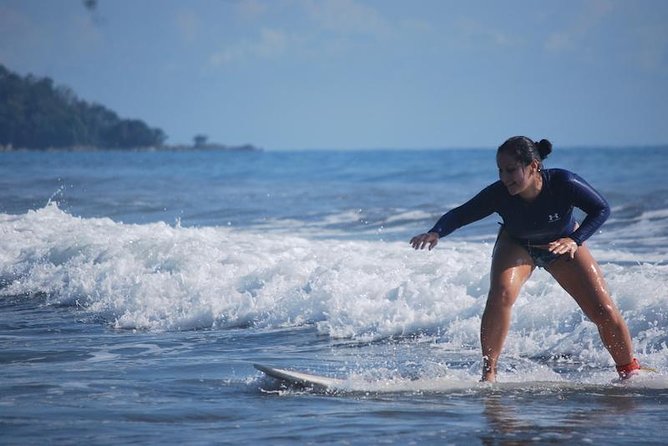
- Beginner-friendly coaching: Start on the sand with board position, standing technique, currents, and safety.
- Two beach options: Beginners generally head to Playa Dominical, while intermediate and advanced surfers may use Dominicalito.
- Small group size: The activity accepts no more than eight people.
- Flexible timing: Sessions are offered during the listed 7:00 AM to 5:00 PM operating window, but the daily start time can change.
- Helpful extras: Bottled water and snacks are included.
- Good for older beginners and children: Instruction has helped first-time surfers in their 60s and a child as young as 5 and a half.
A first surf lesson built around safety
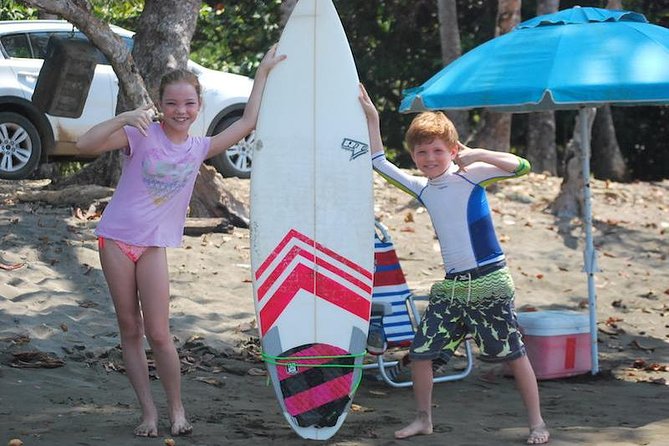
A good first lesson should not begin with a board shoved into the surf and a quick instruction to paddle. This experience takes a more sensible route. You first learn what the waves and currents are doing, how to control the board, and how to move from lying down to standing.
That order matters. Surfing looks simple from the beach, but a beginner is managing balance, timing, water movement, other people, and a board that can quickly become awkward. The instructors make the first steps clear and repeatable rather than treating the lesson as a test of bravery.
The teaching team includes Alex, Josue, Angel, Jose, Sabina, Jody, and Jake, depending on the session. The strongest praise centers on their patience, encouragement, and ability to explain small changes that make a real difference. One useful example is Jake’s instruction about reading surf forecasts and understanding how conditions affect a beginner. Angel gave another practical correction: if you keep falling forward, stop looking at the nose of the board and focus on a fixed point ahead.
That is the sort of advice you can use after the lesson ends. You are not only trying to stand once. You are learning what your body and the ocean are telling you.
More Beginner Surf Lessons in the world:
- Legian Beach, Bali: Beginner or Intermediate Surf Lessons
★ 4.9 · 1,019 reviews - Maui: Two Hour Beginner Group Surf Lesson in Kihei
★ 5.0 · 950 reviews - Uluwatu: Beginner & Intermediate Surf Lesson with Equipment
★ 4.9 · 832 reviews
What happens before you enter the water
The lesson lasts about two hours, and the first part takes place on the beach. You should expect an explanation of currents, rip tides, wave choice, and board control before the main surfing begins.
The instructors also demonstrate the movement from lying on the board to standing. You get a chance to practise on the sand, where falling is less dramatic and the steps are easier to repeat. This dry-land practice is especially useful if you have never handled a surfboard before or if you are unsure which foot should lead.
The beach briefing also helps take away some of the mystery. Beginners often know that they want to catch a wave but not how to spot a safe one. The instructors explain what to look for and how to react when conditions change. That guidance is one of the strongest reasons to choose a lesson instead of simply renting a board.
Parents should appreciate the clear focus on confidence and control. A young child has been taught by two instructors at once, with close attention and encouragement throughout the lesson. The experience is not limited to young, athletic adults. First-time surfers in their 60s have also been able to get upright and catch waves.
You should still be honest about your own comfort in the ocean. The description says most people can participate, but surfing is active and takes place in moving water. If you have concerns about fitness, balance, or medical conditions, ask before booking.
Playa Dominical for first-time surfers
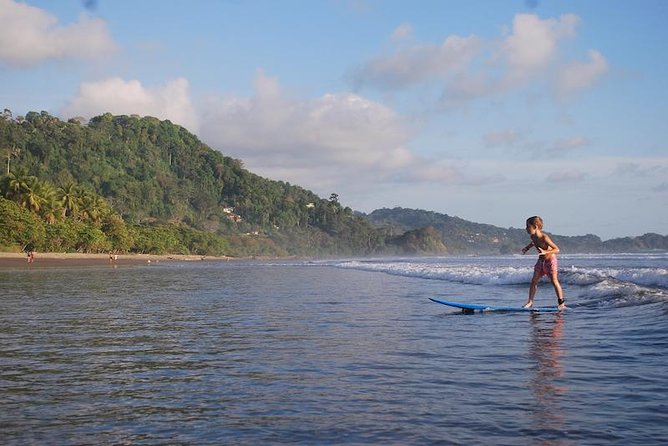
The usual beach for beginners is Playa Dominical. It is the practical choice for learning because the teaching is set up around manageable surf and repeated practice. You are not expected to master the entire sport in one morning. The aim is to catch several small waves, learn from each attempt, and leave with a better sense of timing.
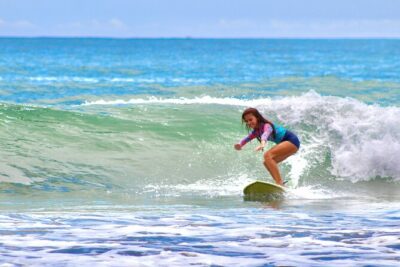
The best part of a beginner lesson is often the moment when the board starts moving and the instructor tells you to stand. That moment can arrive quickly for some people, while others need more attempts. The instructors remain in the water to help with timing and positioning, rather than leaving you to guess why the last wave passed underneath you.
I like that the coaching is described as both encouraging and specific. General cheering feels good, but it does not tell you what to change. A direct correction about where to look, how to place your body, or when to catch the wave is much more useful.
Playa Dominical is also a reasonable setting for a family activity because the lesson can be adjusted to the person in front of the instructor. A child, a nervous adult, and a stronger beginner will not need the same pace. The group limit of eight helps, though your exact instructor-to-student ratio can vary.
Bring plenty of sunscreen, especially for your face, and consider a rash guard. You should also bring a reusable water bottle if you prefer one, even though bottled water and snacks are provided.
Dominicalito Beach for stronger surfers
Dominicalito is listed as the stop for intermediate and advanced surfers. It may also be the beach used for some sessions, so you should confirm the final location and time before setting out.
One useful detail is that Dominicalito has been described as having good beginner waves but also rocks in the water. That creates a tradeoff. The waves may suit learning, yet the rocky entry means you need to pay close attention to the instructor’s directions and your footing.
For that reason, I would not assume the beach name alone tells you how easy the lesson will feel. Ask which beach is planned for your ability level and what conditions are expected that day. The company’s stated approach is to match beginners with Playa Dominical and stronger surfers with Dominicalito, but the daily timing and conditions can change.
If you already surf, this option may be more useful than a standard first-timer class. Jake’s instruction about surf forecasts, wave types, and dangerous conditions suggests that the lesson can help you make better decisions, not just practise standing. That is valuable if you plan to surf again elsewhere in Costa Rica.
More Surf Lessons in the world:
- Tenerife: Surfing Lesson for All Levels, Photos included
★ 4.9 · 1,314 reviews - Group Surfing Lesson at Playa de las Américas, Tenerife
★ 5.0 · 1,072 reviews - Canggu: 2-Hour Surf Course
★ 4.8 · 1,053 reviews - Playa de las Américas: Private or Small-Group Surf Lesson
★ 4.8 · 980 reviews
Why the water and safety briefing matter
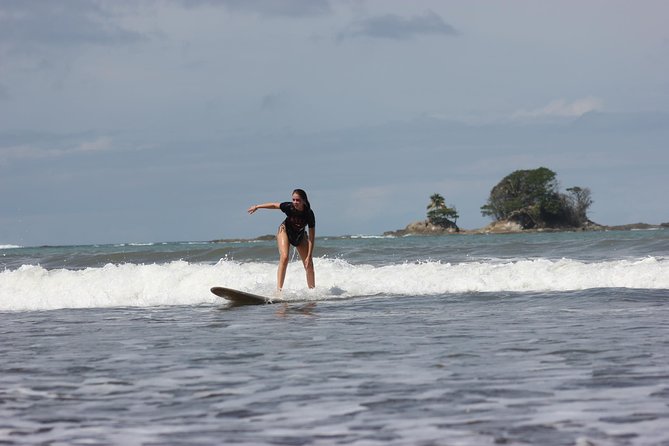
Surfing instruction is partly about technique and partly about judgment. You need to know which waves are suitable, how currents affect your position, and how to avoid creating a problem for another person in the water.
The instructors explain rip tides, currents, and board control before the practical work begins. They also cover how to react to unsafe conditions. This is not filler. A beginner who understands the water can make better choices long after the instructor is no longer beside them.
The teaching style also appears to include close supervision in the surf. Alex and Josue have been praised for helping people understand wave timing, while Angel is described as patient and attentive with a first-time solo student. The emphasis is on getting you riding while keeping the session calm.
A small group can make a difference here. With up to eight people, you are not signing up for a huge beach class where the instructor has to divide attention among dozens of boards. The exact number in your session may be lower, and the number of instructors can vary, but the maximum is clear.
Keep your own expectations sensible. Standing on a board in the first lesson is possible, but it is not guaranteed for every person. A successful session can also mean learning how to fall safely, choosing a wave, and understanding why one attempt worked better than another.
Flexible times, with one important warning
The operating hours are listed as 7:00 AM to 5:00 PM, Monday through Sunday. That does not mean you can arrive at any time without checking. The start time is described as variable from day to day, likely because surf and weather conditions affect the plan.
This flexibility can work well if you are fitting a lesson around a wider Costa Rica itinerary. You may be able to choose a morning or later session, depending on availability. It is also useful for families and couples who need a schedule that fits other plans.
The catch is simple: confirm the time before you travel to the meeting point. Do not rely on a generic daily schedule. Ask about the exact hour, the beach, and the expected conditions.
The listed starting point is Costa Rica Explorer on Main Street in Puntarenas Province, in the Dominical area, with the activity ending back at the meeting point. The highlights also refer to a central meeting point at the Domi Plaza Complex. Because the supplied location details use both descriptions, I would confirm the exact place directly when booking.
That small step prevents an avoidable scramble, especially if you are carrying boards, travelling with children, or trying to connect the lesson with another activity.
What the $70 price includes
At $70 per person for about two hours, this is priced as an instructional activity rather than a casual board rental. You are paying for coaching, safety guidance, equipment support, and time in the water with an instructor.
The value depends on what you want from the session. If you only want to stand on a board once for a photograph, the price may feel high. If you want to understand currents, improve your wave timing, and receive corrections while you practise, the cost makes more sense.
I especially value the instruction on reading conditions. A surf lesson that teaches you how to think about the ocean can save you from repeating the same mistakes on your next outing. The included bottled water and snacks are modest extras, but they are useful after active time in the sun.
The price also compares favorably for families or couples who want a shared activity rather than separate entertainment. Keep in mind that the charge is per person, so the total rises quickly for a large family. The group cap of eight helps keep the session personal, though you should ask how many people are booked for your chosen time.
The people this lesson suits best
I would recommend this experience most strongly to:
- First-time surfers who want a proper introduction rather than a quick rental
- Adults who are nervous about the ocean or have tried surfing without success
- Older beginners who want patient, step-by-step coaching
- Families with children who can take part in an active beach lesson
- Couples who want to learn together
- Intermediate surfers who want help with wave reading and safer decisions
The lesson is particularly appealing if you are over 50 and assume surfing has passed you by. Several instructors have experience helping older beginners get up on the board, and the teaching is built around confidence rather than speed.
It can also suit a solo student. One first-time student received individual attention from Angel and described the instruction as respectful, clear, and confidence-building. You should not assume every session will be private, but the small maximum group gives you a reasonable chance of receiving useful feedback.
Advanced surfers may find the beginner emphasis too basic unless they are specifically seeking advice on conditions and safety. Ask about the planned beach and lesson content before booking if you already surf regularly.
Booking, weather, and cancellation details
You receive confirmation at booking unless you book within 12 hours of the start time. In that case, confirmation arrives as soon as possible and depends on availability.
The activity requires good weather. If poor weather causes cancellation, you are offered another date or a full refund. You can also cancel for a full refund if you do so at least 24 hours before the start time. Cancellations or changes made inside that 24-hour window are not accepted for a refund.
Those rules are worth noting because the surf time can change and weather matters. If your Costa Rica schedule is tight, book early enough to leave room for a change of date.
FAQ
How long is the beginner surf lesson?
The lesson lasts approximately two hours.
How much does the experience cost?
The price is $70 per person.
Where does the lesson take place?
Beginners are generally taken to Playa Dominical. Intermediate and advanced surfers may go to Dominicalito Beach. The exact beach can depend on experience and daily conditions.
Can the start time change?
Yes. The time is variable from day to day. The listed operating hours are 7:00 AM to 5:00 PM, Monday through Sunday, but you should confirm your exact start time.
Where do I meet the instructors?
The listed starting point is Costa Rica Explorer on Main Street in the Dominical area. The information also identifies the Domi Plaza Complex as a central meeting point, so confirm the precise meeting location when booking.
Are water and snacks included?
Yes. Bottled water and snacks are provided.
How many people can join the lesson?
The activity has a maximum of eight participants.
What happens if bad weather cancels the lesson?
You are offered a different date or a full refund if the experience is canceled because of poor weather. You can also receive a full refund if you cancel at least 24 hours before the start time.
Should you book this Costa Rica surf lesson?
I would book it if you want a structured first lesson with strong attention to safety, clear beach instruction, and active coaching in the water. The most useful feature is not simply the chance to stand on a board. It is the effort to teach you how to read waves, handle currents, control your board, and correct small mistakes.
The $70 fee is fair for a two-hour lesson with a maximum of eight people, bottled water, snacks, and instructors who work with children, older beginners, solo students, and mixed-ability groups. Just confirm the meeting point, beach, and start time before you go. If you are comfortable with those moving parts, Costa Rica Explorer offers a practical and welcoming way to make your first surf attempt in the Dominical area.
Just added for surfers in the world
- Cocoa Beach: Surfing Lessons & Board Rental★ 4.7 · 24 reviews
- Surfing and Yoga in Lisbon★ 5.0 · 15 reviews
- Muizenberg Cape Town: Private Surf Lesson★ 5.0 · 37 reviews
- 8 Day Outstanding Surf & Yoga Holiday in Tamraght, Agadir★ 5.0 · 18 reviews
- Surf, Stay and Yoga in Byron Bay 2 day 2 night★ 5.0 · 10 reviews
- Surf Rental★ 5.0 · 31 reviews
- Surf, Yoga & Glamping Weekend in Cornwall★ 5.0 · 33 reviews
- Private Surfing Lesson in Santa Monica★ 5.0 · 47 reviews
Costa Rica Surf Lessons, compared.
Private Surfing Lesson in Playa Grande for beginners and intermediates
Read our review →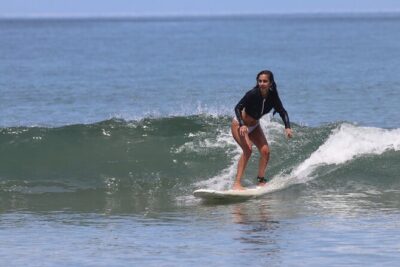
Browse the lists this tour appears in