
Review · ALICANTE
INTRODUCTION TO SURFING COURSE
The best part of this two-hour course is that you are not simply handed a board and sent toward the sea. Certified instructors teach the basics first, then help you work toward standing on a wave. If the surf is flat, the session still goes ahead with surf drills, theory, technical practice, slackline, or paddleboarding in Alicante Bay.
I like the private group format, which should give you more direct help than a crowded beach lesson. I also like the practical backup plan: you do not lose the session just because the sea is calm. The main drawback is the meeting-point confusion. The published street address has led people astray, so confirm that you are going to the beach location connected with Sidi Blue Valley, not simply the address shown in the booking details.
Key points for your Alicante surf lesson
- Two hours on or near Alicante Bay: You get a focused introduction rather than a quick equipment handoff.
- Certified instruction: FESURF and IOSUP certified staff lead the course, with English and Spanish available.
- Private group setting: The format allows closer attention to your balance, technique, and confidence.
- Flat-water backup plan: Surf theory, technical drills, slackline, and paddleboarding replace wave riding when needed.
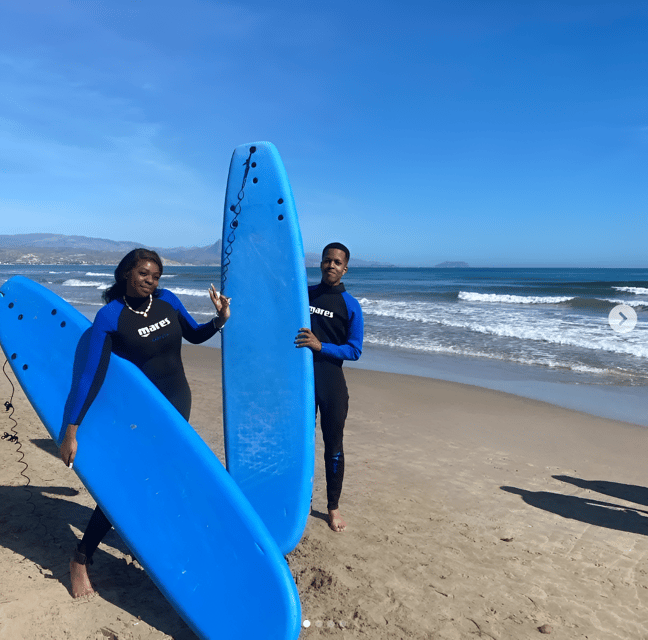
- Equipment and insurance included: A board, safety leash, wetsuit when necessary, liability insurance, and accident insurance are provided.
- Check the meeting point carefully: Go to the beach-based Blue Valley location, since the street address can be unclear.
Your first steps toward standing on a wave
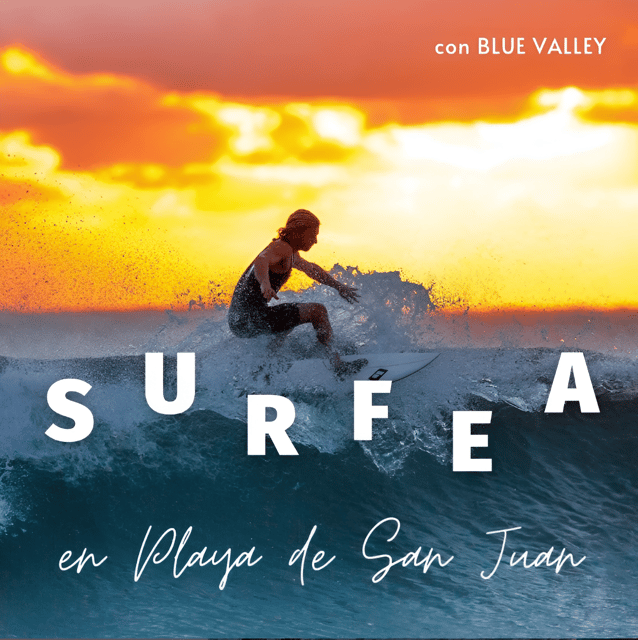
This course is built for a first taste of surfing, not for advanced riders chasing demanding breaks. The instructors begin with the foundations of the sport, including the basic movements and practical skills needed before you head into the water.
You can expect the lesson to focus on body position, balance, board handling, and the simple sequence that helps you move from lying on the board to standing. The exact amount of wave time depends on sea conditions, but the aim is clear: give you enough understanding to try your first wave safely and sensibly.
I like that the program was created by physical education professionals who specialize in surfing. That matters for beginners because good teaching is more than shouting instructions from the shore. You need clear demonstrations, corrections you can understand, and a pace that does not leave you struggling to remember five things at once.
The instructors also work with different fitness levels and prior experience. That makes the course suitable for a complete newcomer, but it can also help someone who has tried surfing before and still feels unsure about the basic technique.
More Surf Lessons in Spain:
- Tenerife: Surfing Lesson for All Levels, Photos included
★ 4.9 · 1,314 reviews - Group Surfing Lesson at Playa de las Américas, Tenerife
★ 5.0 · 1,072 reviews - Playa de las Américas: Private or Small-Group Surf Lesson
★ 4.8 · 980 reviews
What the two-hour session is likely to include
The course description does not set out a fixed minute-by-minute schedule, and that is sensible for a water activity. Surf lessons have to respond to the sea, the weather, and the ability of the group. Still, you can expect a clear progression.
Meeting the instructor and preparing the equipment
You meet at Blue Valley Store, where the equipment side of the session begins. A board and safety leash are included, along with a wetsuit if one is needed for the conditions.
The staff provide instruction in English or Spanish. The instructor names connected with recent sessions include Wilma and Sergi. Wilma is noted for explaining the process clearly to first-timers, while Sergi is described as patient and kind. Those qualities are especially useful when you are trying to stand up for the first time and your legs have other plans.
The course also includes liability insurance and accident insurance. That does not remove the need to listen carefully, but it is a useful sign that the activity is organized as a proper coached session rather than an informal board rental.
Learning the basic surf technique
Before you try to ride, the instructor works through the core movements. You learn how to position yourself on the board, how to prepare to stand, and how to keep your balance once you are up.
This part can feel less exciting than catching a wave, but it is where much of the value lies. A beginner who understands the steps can use the lesson more effectively and continue practicing afterward. The course also aims to give you enough technical knowledge to keep training through the provider’s wider Blue Members Club program.
Expect the instructor to adjust the teaching to your ability. A strong, confident participant may need less time on the basics, while someone nervous in the water may need a slower start. The small private-group format should help here, as the instructor has fewer people to watch and correct.
Same break, a different way into the water:
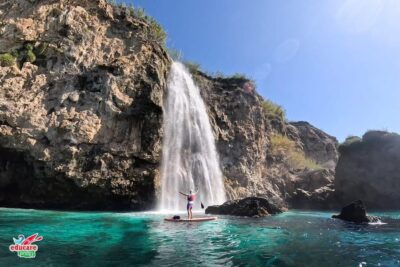
- From Nerja: Guided Paddle Surf Cliffs and Maro Waterfall
★ 4.5 · 400 reviews - Playa del Inglés Maspalomas: High Quality Surf Classes
★ 4.9 · 363 reviews - Fuerteventura: Surfing Lesson in the south of Fuerteventura
★ 4.8 · 354 reviews - Lezioni di Surf per Beginner e Intermedi (6 persone a istruttore)
★ 5.0 · 350 reviews
Heading into the water
Once you have the basic movements, the lesson turns to the practical part: using the board and trying to catch a wave. The exact wave quality is not guaranteed, and the provider is direct about that.
When conditions cooperate, you may get several attempts to apply the technique. Your first successful stand might last only a moment, but that is normal. The point of an introductory course is to give you a workable foundation, not to turn you into an expert in a single morning.
The instruction seems to be one of the strongest parts of this experience. Participants have singled out the clear explanations, professional approach, and patient coaching. That is important because surfing can be frustrating when the lesson is reduced to just keep trying. Good feedback tells you what to change on the next attempt.
When there are no waves
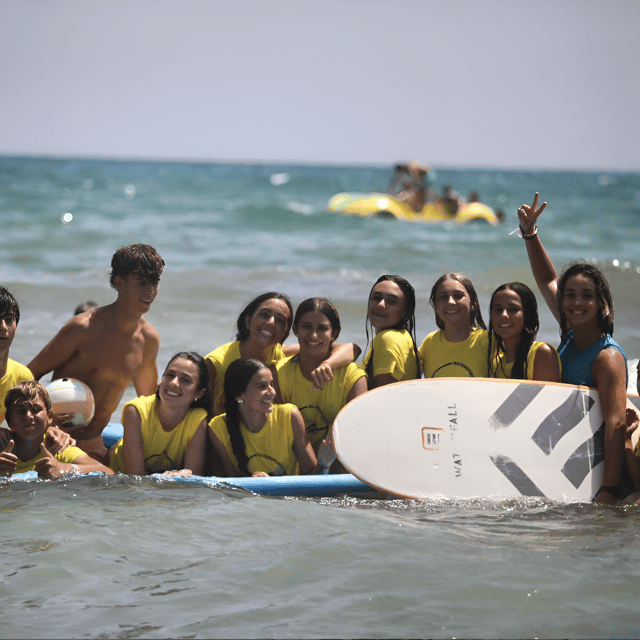
This is the detail you should read carefully before booking. The session is not canceled simply because the surf is flat.
Instead, the instructors may use the time for surf exercises, theory, technical practice, and slackline work. Paddleboarding is also available so you can enjoy Alicante Bay from the water even when the waves are not suitable for beginner surfing.
That policy is both a strength and a limitation. It is a strength because you still receive two hours of instruction and activity rather than losing the booking to ordinary sea conditions. It is a limitation if your only goal is to stand on a breaking wave. You should book this as a surf introduction with a water-sports backup plan, not as a guaranteed wave-riding session.
The theory and technical work can still be useful. You may learn more about board control, movement, and the habits that make future practice safer. Slackline exercises also fit the theme: they give you a simple way to work on balance away from the water.
If paddleboarding replaces surfing, the experience changes character. You will not get the same rush of catching a wave, but you can still spend time on Alicante Bay with instruction and equipment supplied. For a mixed group, that flexibility may be a real advantage.
Why the private format matters
The activity is listed as a private group, which makes it different from a large shared beach class. The exact maximum number is not stated, so I would not assume the group is limited to a particular size. Still, the private arrangement should make it easier for the instructor to focus on your group rather than rotate among unrelated participants.
That matters in surfing because small technique errors have a big effect. Your feet may be too far forward, your weight may be too far back, or you may stand before the board has enough speed. A prompt correction can save several unproductive attempts.
It also helps with confidence. Beginners often hesitate because they do not know if they are using the board correctly. A patient instructor such as Sergi can make the early attempts less intimidating, while clear explanations like those praised in Wilma’s session can help you understand what went wrong.
The course is also suitable for a range of physical conditions, according to the program description. That does not mean every participant will find the activity easy, or that every medical condition is automatically suitable. You should judge your own fitness and ask the provider if you have concerns before booking.
The beach meeting point needs extra care
The most practical warning is about where to go. The meeting point is given as Blue Valley Store, but the street address shown in some booking information has caused confusion. The beach-based location associated with Sidi Blue Valley is the one you should look for.
This is not a minor detail when you have a fixed two-hour activity. Arriving at the wrong address could mean rushing, missing the introduction, or losing valuable water time. I would check the confirmation carefully and contact Blue Valley Adventures before the day if the location is not clear.
Do not rely only on the wording of the street address. Use the beach location and Sidi Blue Valley reference as your practical guide. Several people have managed to find the session despite the confusion, but there is no good reason to add that stress to your morning.
Equipment, safety, and what the price covers
At $65 per person, the course sits in a reasonable range for a two-hour guided introduction, especially because the cost includes the board, safety leash, and wetsuit when necessary. You are also paying for certified instruction rather than just equipment access.
Liability insurance and accident insurance are included as well. These items are easy to overlook when comparing prices, but they help show what you are receiving for the fee. A cheaper board rental would not provide the same teaching or organized safety structure.
The value depends on your expectations. If you want a guaranteed sequence of strong waves, $65 may feel less attractive on a calm day. If you want a coached introduction with a useful alternative when conditions change, the price is easier to justify.
The two-hour length is another positive. It is long enough to cover instruction and allow repeated practice, but short enough for a first session without turning into an exhausting full-day commitment. You should still expect physical effort. Paddling, balancing, getting on and off the board, and repeated attempts can tire you quickly.
Who will get the most from this course
I would choose this experience if you have never surfed, have tried once without much guidance, or want a structured way to learn the basics in Alicante. The patient teaching and private format are particularly useful for beginners who want personal corrections rather than a large group lesson.
It also suits couples, families, or friends who want to learn together. The private-group setup keeps the experience centered on your party, though the provider does not give a precise group-size limit in the available information.
The course can work for people with different physical conditions, since the program is designed for all levels and physical abilities. You should still be realistic about the demands of a water sport and tell the provider about any relevant concern before taking part.
I would hesitate if your priority is a guaranteed surf session. Alicante may offer suitable waves, but conditions can be calm. In that case, you will receive drills, theory, technical exercises, slackline practice, or paddleboarding instead.
Choosing the right day and preparing well
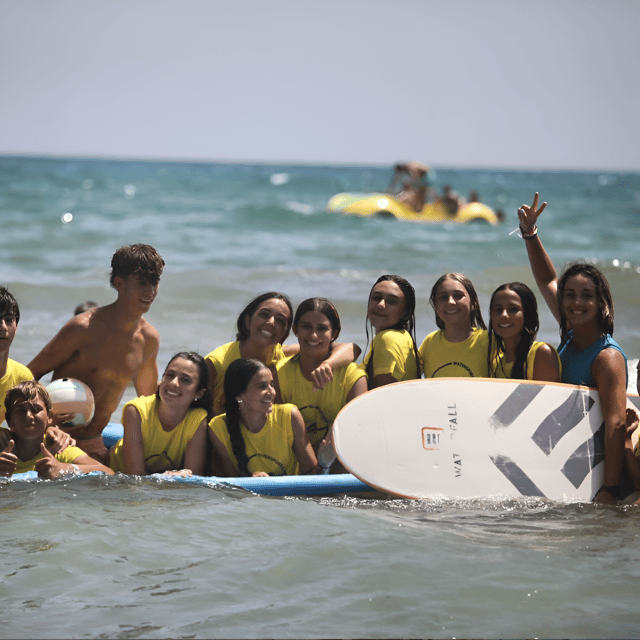
Because the session depends on sea conditions, flexibility helps. The provider does not cancel solely because there are no waves, so approach the booking with an open mind about the exact activity.
Wear what you would normally choose for a beach water sport, but remember that a wetsuit is supplied when necessary. You should also allow enough time to find the correct beach meeting point. A late arrival is especially unhelpful in a two-hour course, since the safety explanation and initial instruction are part of the experience.
The course is offered in English and Spanish. If you need one of those languages, it is available according to the activity details. The named instructors, including Wilma and Sergi, have been associated with patient, clear teaching, but the instructor assigned to your session may vary.
Free cancellation is available up to 24 hours before the activity for a full refund, and you can reserve now and pay later. Those options are helpful if your Alicante plans are still moving, though they do not change the need to check the meeting point and wave policy before committing.
Should you book the Alicante Introduction to Surfing Course?
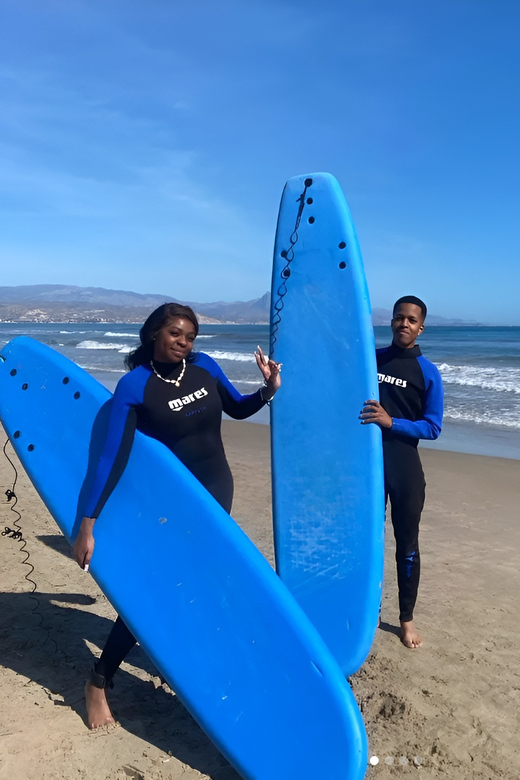
Book it if you want a well-organized first lesson, direct coaching, included equipment, and a backup plan for calm water. The strongest reasons are the certified instructors, the private-group format, and the clear beginner focus. Wilma and Sergi have both been connected with the qualities you want at this stage: clear explanations, patience, and encouragement without unnecessary fuss.
Do not book it expecting guaranteed waves. The sea may be flat, and the session will then shift toward surf exercises, theory, balance work, technical practice, or paddleboarding in Alicante Bay. For $65, that is a fair arrangement if you value instruction and a complete two-hour activity. It is a weaker match if catching waves is the only result you care about.
My practical advice is simple: confirm the beach-based Sidi Blue Valley meeting point before you go. Once that is sorted, this looks like a sensible, flexible way to test surfing without buying equipment or committing to a longer course.
FAQ
Where does the surfing course meet?
The meeting point is Blue Valley Store. The beach-based Sidi Blue Valley location should be used, since the street address shown in some booking details may be confusing.
How long does the course last?
The Introduction to Surfing Course lasts two hours.
How much does the course cost?
The price is $65 per person.
Is the course suitable for complete beginners?
Yes. The course is designed for all levels and physical conditions, and it teaches the basics of surfing.
What happens if there are no waves?
The session is not canceled. It may include surf exercises, surf theory, technical practice, slackline, or paddleboarding in Alicante Bay.
Is paddleboarding included if the surf is flat?
Paddleboarding is offered as part of the alternative plan when there are no suitable waves.
What equipment is provided?
A surfboard and safety leash are included. A wetsuit is provided when necessary.
Are insurance costs included?
Yes. The course includes liability insurance and accident insurance.
Which languages are available?
Instruction is available in English and Spanish.
Can I cancel for a full refund?
Yes. You can cancel up to 24 hours in advance for a full refund.
Just added for surfers in Spain
- Valencia: Excursión en Moto de Agua + Paddle Surf★ 4.9 · 9 reviews
- Surf lesson on Valencia beach★ 3.5 · 5 reviews
- small group surf lesson in Playa de las Américas,Tenerife★ 5.0 · 31 reviews
- Surfing Lesson in La Mata Beach★ 5.0 · 51 reviews
- Surf Lessons at El Médano Beach★ 4.5 · 7 reviews
- Surfing lessons in Las Americas★ 5.0 · 32 reviews
- Tenerife Paddle Surf and Snorkeling Experience★ 5.0 · 4 reviews
- Paddle Surf★ 5.0 · 4 reviews
Spain Surf Lessons, compared.
Surfing Lesson for All Levels, Photos included
Read our review →
Group Surfing Lesson at Playa de las Américas, Tenerife
Read our review →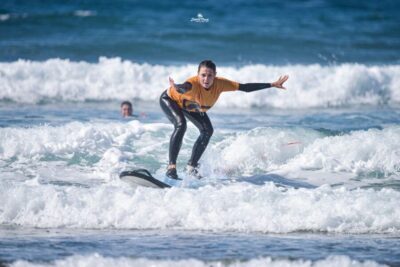
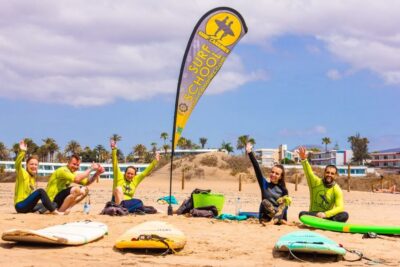
Playa del Inglés Maspalomas: High Quality Surf Classes
Read our review →

Lezioni di Surf per Beginner e Intermedi (6 persone a istruttore)
Read our review →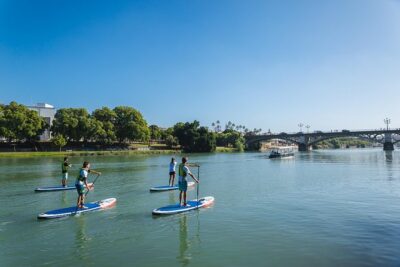
Browse the lists this tour appears in