
Review · THE HAGUE
Scheveningen Beach: 1,5 hour Surf experience for families
Scheveningen turns a family beach day into a hands-on lesson in surfing basics. At Aloha Surf, a certified instructor explains water safety, shows you how to handle the board, and gets you into the waves for a real attempt at standing up.
I like the patient teaching, especially for children, and the fact that the lesson is long enough to include both instruction and plenty of water time. I also like the flexible format, with private-group options and lessons limited to as many as eight surfers. The main catch is the North Sea itself: if there are no waves or a storm rolls in, the lesson can be canceled.
Key points
- A 1.5-hour first surf lesson: You get basic instruction, safety guidance, and time in the water rather than a quick taster.
- A family-friendly learning pace: Children and adults can learn together, with patient explanations designed for beginners.
- Aloha Surf meeting point: Your lesson begins at Aloha on Scheveningen Beach, where you meet the instructor and receive your surf gear.
- Small-group or private format: Group lessons can include up to eight surfers, while the activity is also described as a private-group experience.
- Languages for international families: Instruction is offered in Dutch, English, German, and Spanish, though a specific language cannot be guaranteed at every time.
- Weather-dependent waves: The school may cancel if there are no waves or a storm in Scheveningen.
Your first look at surfing on Scheveningen Beach
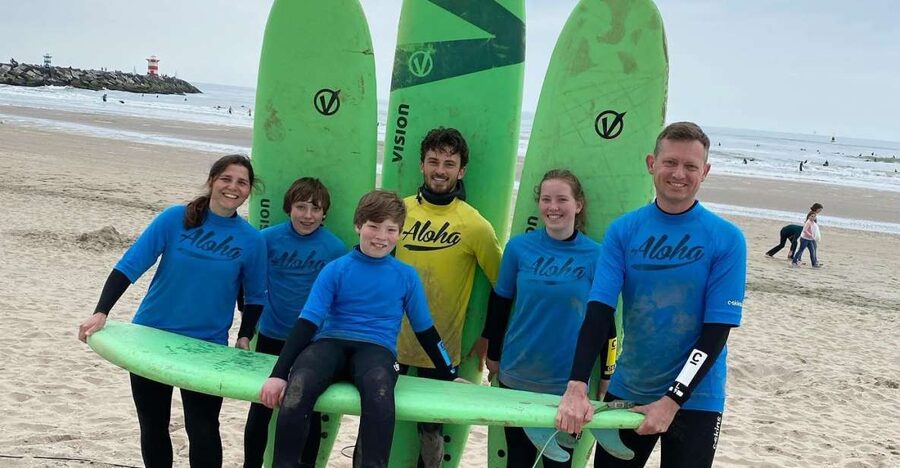
Scheveningen is The Hague’s seaside district, and this lesson gives you a reason to do more than walk along the sand. You meet at Aloha Surf, where the instructor introduces the basic idea of surfing and explains how to stay safe in the water.
That opening matters. Beginners often worry less about catching a wave than about looking foolish, losing the board, or not knowing what to do when the water moves beneath them. Clear safety instructions take away some of that uncertainty before you enter the surf.
The lesson is made for children and adults, so you do not need to arrive as an athletic family. You need the willingness to try, listen, and accept that falling off is part of the lesson. The goal is not polished technique in 90 minutes. The goal is to learn the first steps and feel what it is like to ride a wave.
More Family and Kids Surf Lessons in the world:
- Family, Private & Group Surfing Lessons, Waikiki Courtesy Shuttle
★ 5.0 · 216 reviews - Oahu: Kids Surfing Lesson in Waikiki Beach (up to 12)
★ 5.0 · 59 reviews - Family, Private & Group Standup Paddle Lessons in Waikiki
★ 5.0 · 143 reviews
Meeting the instructor at Aloha Surf
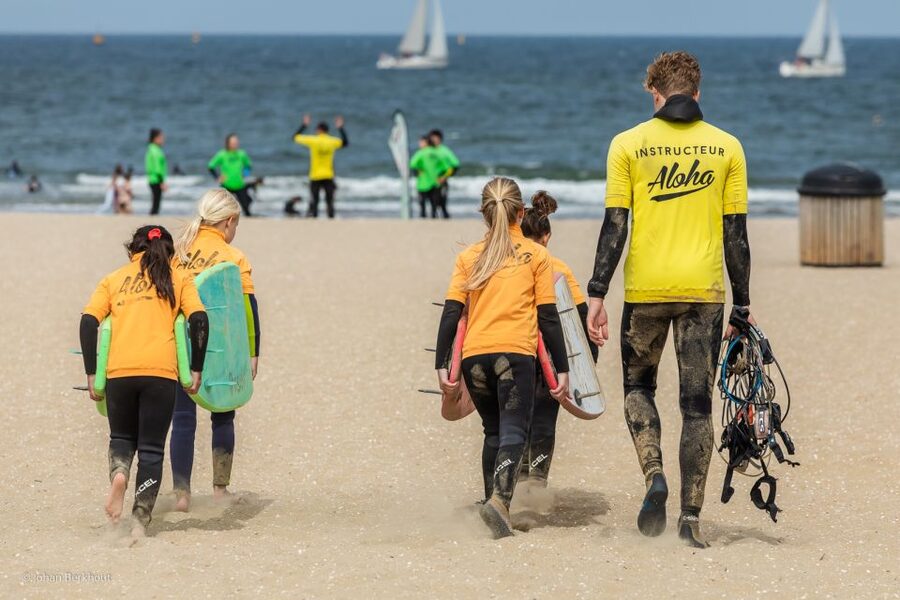
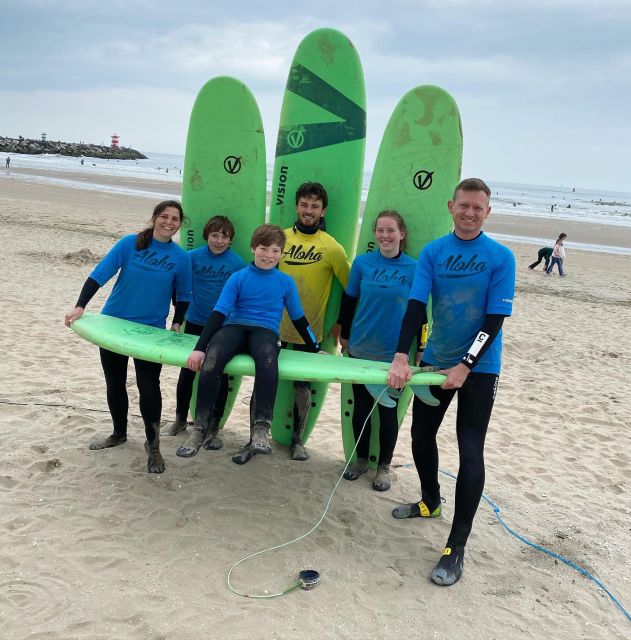
Your starting point is Aloha Surf at Scheveningen Beach. This is where the instructor gives the introduction, explains the basics, and gets the group ready with the supplied surf equipment.
The instructor team is certified, and lessons are available in Dutch, English, German, and Spanish. If language matters to your family, check the available option before booking. German, French, and Spanish-speaking instructors are not guaranteed at every lesson time, and French is not listed among the standard activity languages.
You are not given a named instructor in the booking information, so do not book expecting a particular teacher. What you can count on is certified instruction and a lesson aimed at new surfers. One especially useful detail comes from the Dutch feedback: the instructor was described as a friendly, patient young man who gave children clear directions. That is the sort of teaching style you want when a child is balancing on a board for the first time.
The lesson can be arranged as a group of up to eight surfers, and private-group wording is also used for the activity. If you are choosing this because you want only your own family in the lesson, confirm the exact group arrangement with Aloha Surf before you pay. Eight people is still a manageable number, but it is different from having an instructor focused only on your family.
Safety and surf basics before the water
Before you try to stand, you learn how to behave around the surfboard and how to stay safe in the water. The instructor also covers the history of surfing, which gives the lesson a little context without turning it into a classroom talk.
The safety section is especially useful for families. Children may be excited to run straight into the waves, while adults may hesitate because they do not know how the board will react. A short explanation gives everyone a shared plan.
You then learn the basic action of riding a wave. The instruction is built around a simple sequence: get on the board, find your balance, try to stand, and guide the board left, right, or straight. That sounds easy on paper. In practice, the board moves, the water changes, and your first successful stand may last only a moment.
That is fine. The lesson is designed around trying again. The instructor helps you build confidence as you practice, and the atmosphere is meant to stay light when someone falls into the water.
Handling the board and finding your balance
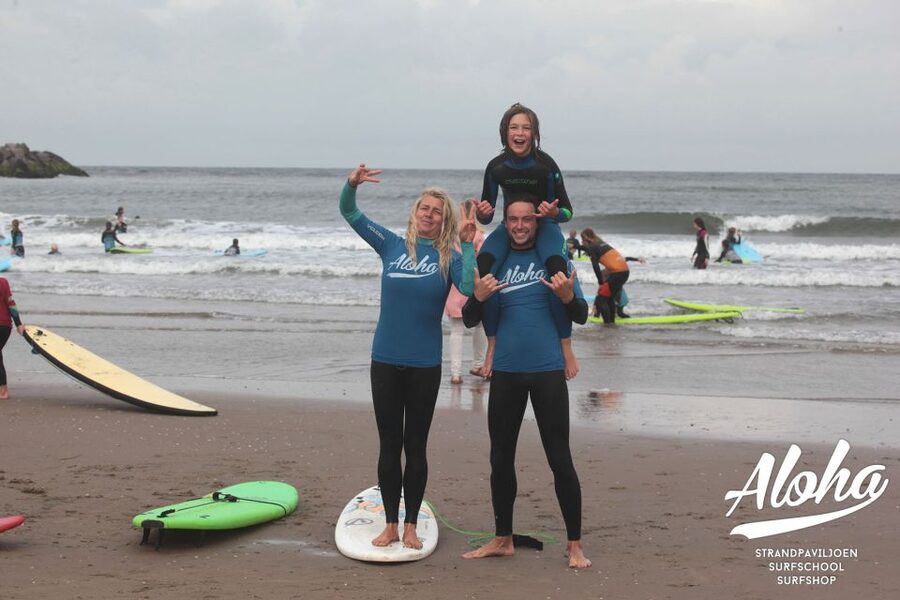
The central moment of the experience is the first attempt to stand on a surfboard. You begin by feeling how the board sits on the water, then work toward a standing position as a wave carries you forward.
For children, this is often the most exciting part. They can see the result right away: a few seconds of balance, a short glide, and then a splash. Adults may appreciate the same thing for a different reason. Surfing is a sport where progress is easy to feel, even when it is modest.
You are also encouraged to steer. You can try moving left or right, or keep the board going straight as the wave pushes you along. These first steering attempts matter because they turn the lesson from simply standing up into learning how the board responds.
Do not expect a long ride every time. Dutch waves can be gentle, uneven, or affected by weather, and the school can cancel when there are no waves or a storm. The conditions are part of the experience, not a detail the instructor can control.
More Surf Lessons in the world:
- Tenerife: Surfing Lesson for All Levels, Photos included
★ 4.9 · 1,314 reviews - Group Surfing Lesson at Playa de las Américas, Tenerife
★ 5.0 · 1,072 reviews - Canggu: 2-Hour Surf Course
★ 4.8 · 1,053 reviews - Legian Beach, Bali: Beginner or Intermediate Surf Lessons
★ 4.9 · 1,019 reviews
The best part for families: falling without pressure
The lesson treats falling as normal. You will probably lose your balance, and your children may fall even more often if they are eager to try before listening to every instruction. That is not failure. It is part of learning how the board and water work together.
I like this approach because a family surf lesson can easily become too serious. Parents may focus on getting a good photograph or making sure a child succeeds on the first try. The better plan is to treat the first stand as a small victory and every attempt as useful practice.
The supplied equipment also removes one practical worry. You do not need to arrange a surfboard or other surf gear before arriving. Swimwear and a towel are not included, so pack both. Sunscreen is also recommended, which is easy to forget on a cool or cloudy day at the coast.
Alcohol and drugs are not allowed. That rule is straightforward, but it matters in any water activity where balance, judgment, and attention are important.
How the 90 minutes are likely to feel
The experience lasts 1.5 hours. That gives the lesson room for a briefing, equipment preparation, water practice, and repeated attempts to stand and steer.
The exact time spent in each part can change with the group and the sea conditions. A group of beginners may need more time for basic explanations, while confident children may move quickly toward the water. An eight-person group can also feel different from a private family lesson, since the instructor’s attention is shared.
The structure is useful for a first attempt because it avoids two common problems. You do not spend the entire time listening to instructions, and you do not get pushed into the waves without knowing what to do. The lesson moves between explanation and practice.
By the later part of the session, you should have had several chances to stand or attempt to stand, steer, and recover after falling. You may not leave as a skilled surfer, but you will have a clearer sense of whether surfing appeals to you and your family.
What the $47 price includes
At $47 per person, the value depends on what you want from the outing. The price includes surf gear and a certified instructor, so you are paying for both equipment access and guided teaching rather than simply renting a board.
That makes the price easier to justify for a first lesson. Buying or arranging equipment for a single beach visit would add cost and hassle, and an instructor gives you a safer starting point than trying to figure out the basics alone.
The 90-minute length also helps. A short demonstration followed by a few minutes in the water would feel thin, especially for children. Here, you have enough time to hear the instructions, try the technique, fall, and try again.
The price does not include swimwear, a towel, or sunscreen. Most families already own these items, so this is a minor extra rather than a major expense. Still, a missing towel can make the end of a wet lesson less pleasant, so pack one for every participant.
If you are booking several family members, the total cost rises quickly. I would choose this activity when everyone genuinely wants to try surfing. If only one person is interested and the others plan to watch, the value is less convincing because the fee is charged per person.
Group size, languages, and the private lesson question
A group lesson can include up to eight surfers. That is small enough to keep the activity focused, but it does not mean every participant receives constant one-to-one coaching.
The activity information also describes the group as private. These details can sound contradictory, so ask Aloha Surf how the selected time is organized if privacy is important to you. A private family session may suit parents who want a quieter pace or children who feel shy in front of strangers. A shared group can be more social and may work well for families who enjoy learning alongside others.
Instruction is listed in Dutch, German, English, and Spanish. English is the safest assumption for international visitors unless another language is confirmed. German and Spanish may be available, but they are not guaranteed at every lesson time, and French is not listed.
Weather, waves, and the need for a flexible plan
Surfing depends on the sea. If there are no waves or a storm affects Scheveningen, the school can cancel or change the lesson. The surf school will contact you if weather forces a change.
This is the main practical drawback. You can plan a family day around a 1.5-hour lesson, but you cannot guarantee that the North Sea will provide suitable conditions. Keep some flexibility in your schedule, especially if the surf lesson is the main reason for visiting Scheveningen.
The cancellation policy helps. You can cancel up to 24 hours in advance for a full refund, and you can reserve now and pay later. That makes it easier to book without locking up money far ahead of time, though weather changes close to the lesson may still require you to adjust your plans.
I would avoid placing this lesson immediately before a train departure or another fixed appointment. A weather change, a rescheduled start, or a wet family moving more slowly than planned can make a tight schedule stressful.
Who will enjoy this lesson most
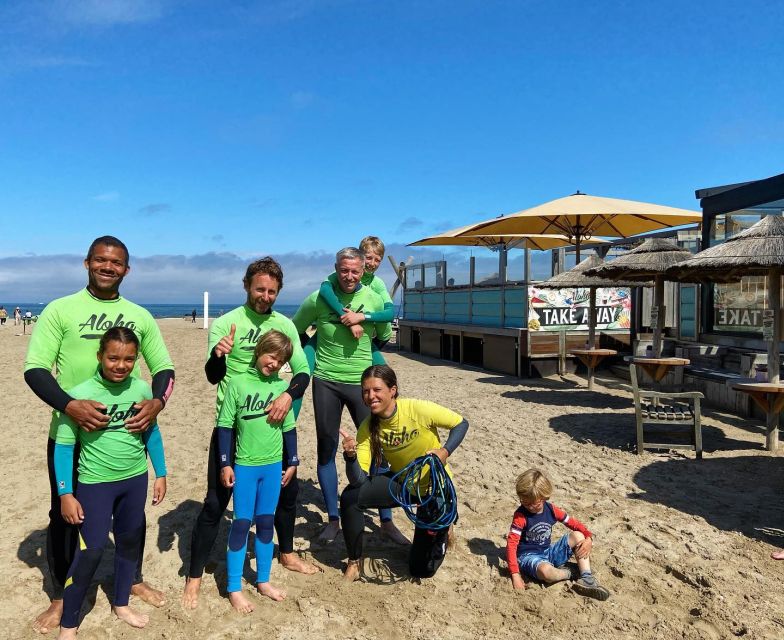
This experience fits families who want an active beach activity and are comfortable with a little uncertainty. It is a good choice for children and adults who enjoy trying something new, even if their first efforts end in the water.
It also suits families who want a shared activity rather than separate entertainment for parents and children. Everyone learns the same basic skills, and the first successful glide gives the group something to celebrate together.
You should think twice if you want a quiet beach visit, dislike getting wet, or need guaranteed conditions. Surfing includes repeated falls, and the sea may not cooperate. The lesson is also not suitable for pregnant women, people with mobility impairments, or wheelchair users.
What to bring to Scheveningen
The packing list is short:
- Swimwear
- A towel
- Sunscreen
Surf gear is supplied, so you do not need to bring your own board or arrange other surfing equipment. Wear swimwear that you can comfortably use for active movement in the water.
A towel is essential, not optional in practical terms. You will be wet after the lesson, and the activity specifically requires you to bring one. Sunscreen is also worth packing even on a cool Dutch day, since time outdoors near the water can add up.
Do not bring alcohol or drugs. They are not allowed during the activity.
Is the Scheveningen family surf lesson worth booking?
I would book this for a family that wants a beginner-friendly challenge, understands that falling is part of the fun, and can keep its schedule flexible for weather. The certified instructors, included gear, patient teaching approach, and 90-minute format give you a solid first introduction for $47 per person.
I would not book it for a family that needs a guaranteed start, private coaching without confirming the format, or an accessible activity for mobility limitations. Ask about the group setup and language before booking, then bring swimwear, sunscreen, and a towel.
If your family is ready to laugh at a few splashes and celebrate even a short glide, Aloha Surf offers a practical way to meet the Dutch waves.
FAQ
How long does the Scheveningen surf lesson last?
The surf lesson lasts 1.5 hours.
How much does the experience cost?
The listed price is $47 per person.
Is surf equipment included?
Yes. Surf gear and instruction from certified instructors are included.
What do I need to bring?
Bring swimwear, sunscreen, and a towel.
Can children take part?
Yes. The lesson is designed for both children and adults.
What languages are available?
Instruction is listed in Dutch, German, English, and Spanish. A German, French, or Spanish-speaking instructor cannot be guaranteed at every lesson time, and French is not listed among the standard languages.
Can the lesson be canceled because of weather?
Yes. The surf school can cancel if there are no waves or if a storm affects Scheveningen. The school will contact you if the lesson is canceled or changed.
Just added for surfers in the world
- Surf, Yoga & Glamping Weekend in Cornwall★ 5.0 · 33 reviews
- Cocoa Beach: Surfing Lessons & Board Rental★ 4.7 · 24 reviews
- Surfing and Yoga in Lisbon★ 5.0 · 15 reviews
- Muizenberg Cape Town: Private Surf Lesson★ 5.0 · 37 reviews
- 8 Day Outstanding Surf & Yoga Holiday in Tamraght, Agadir★ 5.0 · 18 reviews
- Surf, Stay and Yoga in Byron Bay 2 day 2 night★ 5.0 · 10 reviews
- Surf Rental★ 5.0 · 31 reviews
- Santa Barbara: Surfing Lessons★ 5.0 · 17 reviews
Family and Kids Surf Lessons, compared.
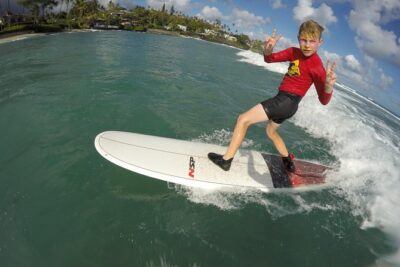
Family, Private & Group Surfing Lessons, Waikiki Courtesy Shuttle
Read our review →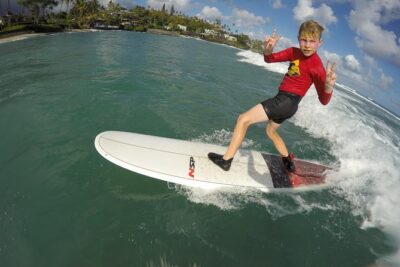
Family, Private & Group Standup Paddle Lessons in Waikiki
Read our review →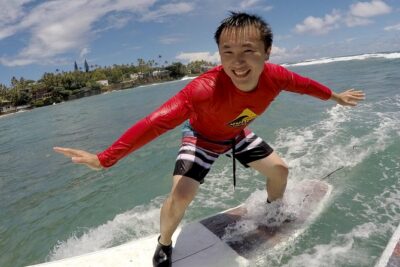
Family, Private & Group Bodyboard Lessons in Waikiki
Read our review →Family, Private & Group Bodyboard Lessons in Waikiki
Read our review →
Kids Surfing Lesson in Waikiki Beach (up to 12)
Read our review →Browse the lists this tour appears in