
Review · GRAN CANARIA
San Agustín Surf lessons
San Agustín Surf lessons take you to the south coast of Gran Canaria for three hours of board work, beach practice, and patient instruction. I like the small-group format, which gives you a better chance of getting help when your balance goes wrong, and I like that the lesson can move to another beach if the waves are poor. Courses are adjusted to your level, so a first-timer is not expected to keep up with an experienced surfer.
The price is $58 per person, a fair deal when it includes the board, instructor, insurance, and hotel transport in the south of the island. The main thing to watch is the pickup service: it is advertised for southern hotels, but one booking did not receive pickup at the stated address. Confirm the meeting point and transport before setting out.
Key points at a glance
- Three hours in the water: This is a proper lesson, not a quick tryout with a short beach briefing.
- Beach choice depends on conditions: Classes usually use Playa del Inglés or Maspalomas Beach, but the instructor can change locations when the sea is not suitable.
- Small groups mean useful coaching: The course description allows up to eight people, while the activity details list a maximum of ten, so check the final group size when booking.
- Tony is one named instructor: He has been praised for finding better waves when the first beach was too calm.
- Transport is limited to the south: Hotel transfers are included for stays in the south of Gran Canaria, but pickup details should be confirmed.
- Suitable for all levels: The teaching is adapted to beginners and more confident surfers rather than using one fixed lesson for everyone.
Starting near Maspalomas Lighthouse
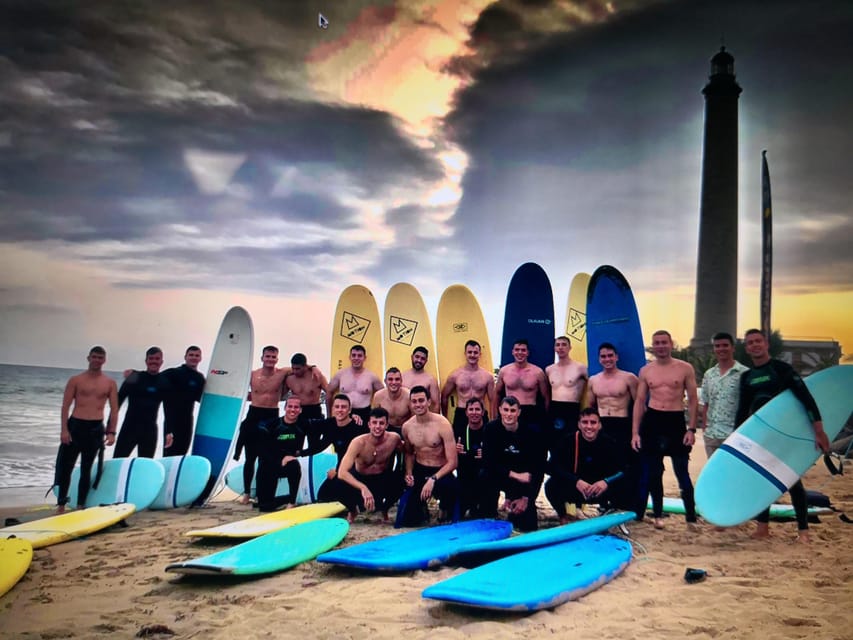
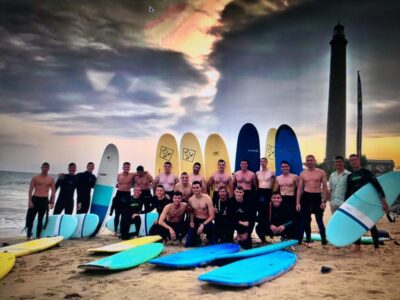
Your day begins at Faro de Maspalomas, the tall lighthouse at the southern end of Gran Canaria. This is where Canary Wave Surf School gathers the group and hands out the equipment before taking you to the beach.
You can make your own way to the meeting point or use the included transfer if you are staying in the south of the island. That sounds simple, but the transport wording deserves attention. The advertised service covers southern hotels, yet an actual booking had no pickup at the listed address. I would contact the provider before the activity and get clear instructions for your hotel, pickup time, and fallback meeting point.
The morning start is common, though it is not fixed. The school sets the time according to sea conditions and contacts you to confirm it. This is sensible for surfing, since the best lesson time depends on the waves rather than a rigid timetable. It also means you should avoid booking another early activity on the same day until your start time is confirmed.
At the lighthouse, you meet the instructor and the rest of the group. The school supplies a surfboard and takes you to the beach chosen for that day. The usual locations are Playa del Inglés and Maspalomas Beach, close to the lighthouse, but conditions can send the class elsewhere.
More Surf Lessons in Gran Canaria:
- Playa del Inglés Maspalomas: High Quality Surf Classes
★ 4.9 · 363 reviews - Puerto Rico, Gran Canaria: boat trip, drinks, food, paddle surfing, snorkeling
★ 4.6 · 310 reviews - Gran Canaria Maspalomas: Surf lessons all levels
★ 5.0 · 197 reviews
Choosing the right beach for the waves
The beach choice is one of the most useful parts of this experience. Surfing depends on the sea, and a beach that looks perfect from shore may offer weak or unsuitable waves once the class begins.
The school commonly runs lessons at Playa del Inglés or Maspalomas Beach. Both are practical southern Gran Canaria locations, and their proximity to the lighthouse makes the meeting arrangement fairly easy to understand. If the conditions are not right, the instructor may move the group to another beach.
That flexibility proved valuable for one class led by Tony. The first waves were too small, so he took the group to a different beach where the waves were better. This is exactly the kind of decision you want from an instructor. You are paying for time spent learning to surf, not for loyalty to one patch of sand.
Still, a change of beach can affect the day. The exact location may not be known far in advance, and the usual morning timing can shift with the sea. Think of the schedule as weather-dependent rather than fixed. Bring enough time around the lesson and wait for the provider’s final message.
What the three-hour lesson includes
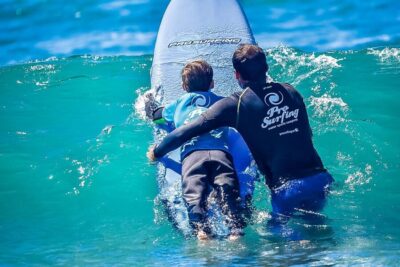
Once you reach the beach, the instructor gives you the board and begins the course. The teaching covers how to handle the board and how to move on it, with attention to sound technique as well as enjoyment.
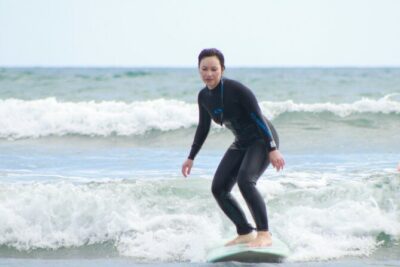
For a beginner, the first challenge is often simply controlling the board and understanding how your body should move. The instructor’s job is to break that down into manageable steps. You can expect help when you need it rather than being left to copy someone else in the water.
The course is designed for different ability levels. A first lesson will focus on the basics, while someone with prior experience can receive advice suited to their current skills. The supplied information does not promise advanced coaching or a specific progression, so I would view this as an all-level introduction rather than a specialist performance clinic.
Three hours gives the lesson enough time to include instruction and practice. That matters because surfing rarely clicks on the first attempt. You need repeated tries to understand the board, timing, and balance. A shorter session might leave you just as you begin to make progress.
The course also aims to keep the mood light. That is not a minor point. Surfing involves plenty of falls and awkward attempts, especially at the start. A friendly teacher can make it easier to keep trying instead of treating every missed wave as a failure.
Why the small group matters
The course description limits classes to eight people, while the broader activity details list a maximum of ten. That difference is worth checking when you reserve, but either figure still indicates a small-group lesson rather than a large beach class.
A smaller class gives the instructor more chances to watch your technique. You can ask for help with the board, body position, or the next attempt without waiting behind a long line of students. The benefit is greatest for beginners, who often need quick corrections while they are still learning what the correct movement feels like.
The instructor can also adjust the pace. Some people may stand quickly, while others need more time to get comfortable. The course is advertised for all levels, and the small-group structure supports that promise better than a one-size-fits-all class would.
The tradeoff is that the quality of your session depends partly on the final group size and mix of abilities. A class at the upper limit may feel less personal than one with only a few participants. Since the supplied details give two different limits, ask for clarification if close individual coaching is your main reason for booking.
Same break, a different way into the water:
- Small-Group Surf Lessons in Gran Canaria
★ 5.0 · 138 reviews - Playa del Inglés surf lessons
★ 4.8 · 121 reviews - Gran Canaria: Maspalomas Surf Lessons
★ 4.6 · 113 reviews - Premium Surf Course in Gran Canaria
★ 5.0 · 89 reviews
The instructors and teaching style
Instruction is available in Spanish and English. That makes the course practical for international visitors, and it removes one common worry for a first surf lesson: not understanding the safety or technique explanation.
One instructor named in the available feedback is Tony. He was described as friendly and willing to relocate the class when the waves at the first beach were too small. That choice tells you something useful about the teaching style: the lesson is not simply a fixed routine carried out regardless of conditions.
Other direct comments praise the teachers as friendly, helpful, and clear. The strongest praise centers on explanations and encouragement, not on flashy tricks or advanced instruction. I would book this course if you want a supportive introduction and a teacher who stays involved.
The information does not identify every instructor by name, so you should not assume Tony will lead your class. You can expect an instructor from the school who speaks Spanish or English, with the assigned teacher confirmed by the provider.
Equipment, insurance, and value at $58
At $58 per person, the price includes the surfboard, the instructor, insurance, and return hotel transport for qualifying stays in the south of Gran Canaria. That makes the cost easier to judge than a lesson price that covers only coaching.
You are paying for three hours, not a brief demonstration. The board is provided by the school, so you do not need to arrange rental equipment separately. Insurance is also included, which is an important practical point for an activity where falls are part of learning.
The value is strongest if you are staying in the south and can use the transfer. In that case, the price combines transport, equipment, teaching, and insurance. If you are staying elsewhere, the transport benefit does not apply, and you need to reach the meeting point on your own.
The one caution is the pickup discrepancy. One booking did not receive the promised hotel collection despite the address appearing in the reservation. That does not erase the value of the package, but it does mean you should confirm the arrangement instead of assuming a vehicle will arrive automatically.
Free cancellation up to 24 hours before the activity adds useful flexibility, and you can reserve now and pay later. Those terms help if your Gran Canaria plans are still changing, though they do not remove the need to confirm the exact start time.
Who will get the most from this course
This lesson suits a first-time surfer who wants a proper three-hour introduction rather than a short activity squeezed between sightseeing stops. You will receive equipment, coaching, and practice in a class built for several ability levels.
It also works for a mixed group. If one person is new to surfing and another has some experience, the adaptable teaching can make the booking more practical than a fixed beginner-only session. The final group size and instructor will still affect how personal the coaching feels.
The course is a good fit if you are staying in the south of Gran Canaria, especially if the hotel transfer is confirmed. It is less convenient if you are based elsewhere, since the included transport does not cover the whole island.
You should also be comfortable with a flexible schedule. The start time is usually in the morning, but the sea decides. The beach can change, too. That flexibility improves the chance of useful waves, but it asks you to keep part of your day open.
Details to settle before you go
The provider will contact you with the confirmed starting time. Read that message carefully, especially if you plan to use hotel transport.
Before the lesson, confirm:
- Your exact pickup address, if you are staying in southern Gran Canaria
- The pickup time or the direct meeting instructions at Faro de Maspalomas
- The final start time, since it depends on sea conditions
- The beach being used, knowing that it can change
- The group size, since the supplied details give limits of eight and ten people
Wear practical beach clothing and allow room for a wet activity, though the supplied information does not specify a required packing list. The important point is to arrive ready for a three-hour surf course rather than a quick photo stop.
The school provides the surf equipment and insurance. You do not need to add a separate board rental to the advertised price.
My verdict on San Agustín Surf lessons
I would book this course if you want a friendly, well-supported introduction to surfing near Maspalomas. The strongest reasons are the full three-hour format, the included equipment and insurance, and the instructor’s ability to move the class when the waves are poor.
The $58 price is good value for a southern Gran Canaria hotel when the transfer works as planned. If you are staying outside the south, factor in your own route to the lighthouse. Confirm pickup, start time, and meeting instructions before the day.
This is not the choice for someone demanding a fixed schedule, a guaranteed beach, or advanced specialist coaching. For most beginners and mixed-ability groups, though, it offers a sensible way to get on a board, receive real help, and spend a substantial part of the morning learning in the sea.
FAQ
Where does the surf lesson take place?
The course is usually held at Playa del Inglés or Maspalomas Beach, next to Faro de Maspalomas. The location can change according to weather and sea conditions.
How long does the activity last?
The surf course lasts three hours.
What time does the lesson start?
The course usually starts in the morning, but the exact time depends on sea conditions. The activity provider will contact you to confirm it.
Where is the meeting point?
The group meets at Faro de Maspalomas, where the surf school is located, unless you use the included transfer from a qualifying hotel in the south.
Is hotel pickup included?
Transfer to and from your hotel is included for people staying in the south of Gran Canaria. Confirm your address and pickup details with the provider before the activity.
Is surf equipment provided?
Yes. The surf equipment, including a surfboard, is included.
Is an instructor included?
Yes. A professional instructor leads the course and provides help during the lesson.
What languages are available?
Instruction is available in Spanish and English.
How many people can join the group?
The course description says groups can have up to eight people, while the activity details list a maximum of ten participants. Check the final group size when booking.
Can I cancel for a full refund?
You can cancel up to 24 hours in advance for a full refund. The activity also allows you to reserve now and pay later.
Just added for surfers in Gran Canaria
- Pack 2 People Surf Course in Playa del Inglés and Maspalomas★ 5.0 · 2 reviews
- Paddle Surf SUP at Anfi Beach★ 4.0 · 12 reviews
- Surf lessons in Las Canteras Beach★ 4.8 · 19 reviews
- Las Palmas: Learn to Surf with a Special Price for Two Group★ 4.8 · 30 reviews
- Las Palmas de Gran Canaria: Group surf lessons on La Laja beach★ 4.9 · 27 reviews
- Gran Canaria Playa del Ingles: Surf lessons all levels★ 4.7 · 11 reviews
- Gran Canaria: Meloneras Beach Surf Lesson★ 5.0 · 5 reviews
- Gran Canaria Surf Lessons: Playa del Inglés & Maspalomas★ 4.8 · 76 reviews
Gran Canaria Surf Lessons, compared.
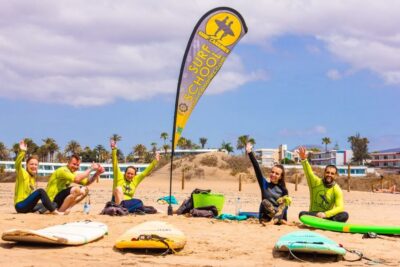
Playa del Inglés Maspalomas: High Quality Surf Classes
Read our review →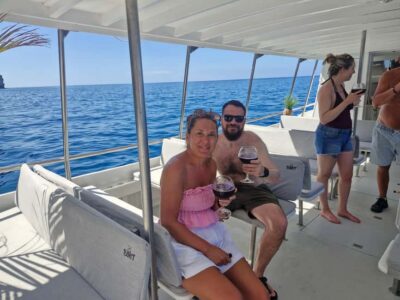
Puerto Rico, Gran Canaria: boat trip, drinks, food, paddle surfing, snorkeling
Read our review →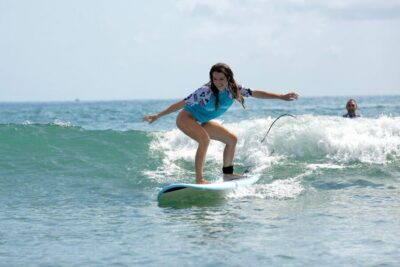
Gran Canaria Maspalomas: Surf lessons all levels
Read our review →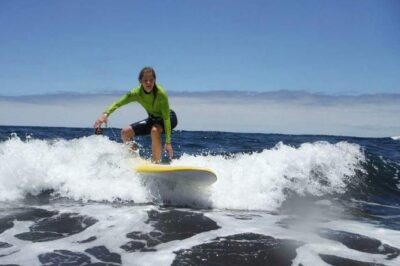
Gran Canaria Surf Lessons: Playa del Inglés & Maspalomas
Read our review →Browse the lists this tour appears in