
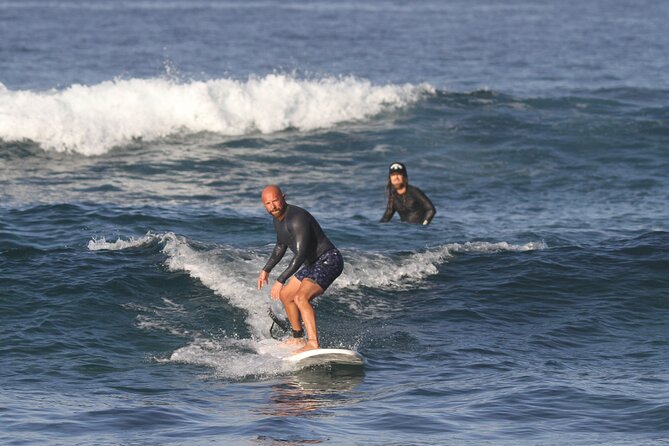
Review · BIG ISLAND OF HAWAII
Go Surf Hawai’i (Kona Coast)
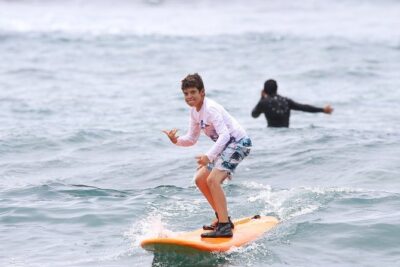
The best part of Go Surf Hawai‘i is simple: you get into the water quickly, with a coach close enough to give useful help. Jared, Jace, Rory, and Renee focus on basic technique, safety, and confidence rather than showing off. Even first-timers and nervous adults get a clear path from lying on the board to standing up.
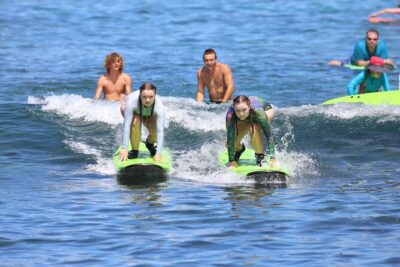
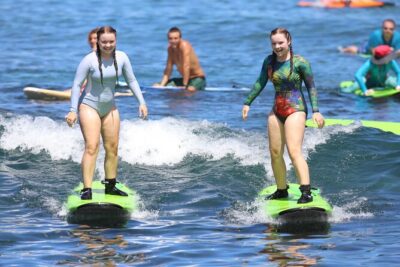
I like the four-person limit, which gives you more attempts and more direct coaching than a large beach lesson. I also like the local advice, from where to rent equipment to which beaches and places to eat may suit your plans. The main drawback is the ocean itself: wave conditions can be too flat or rough, and one scheduled session had to be changed because there were no waves.
Key points to know before you book
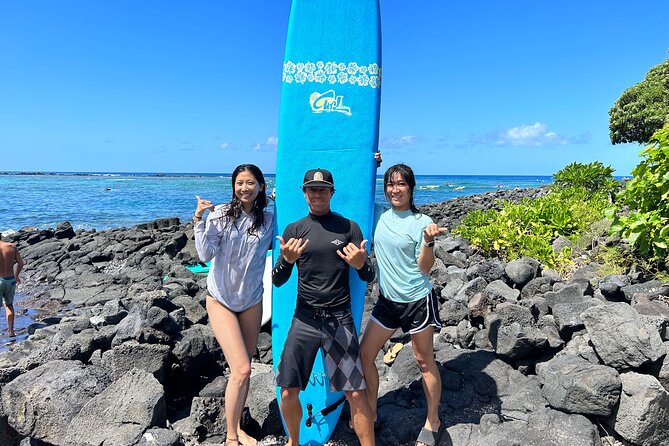
- Small groups make a real difference: The maximum is four people, so your coach can watch your form and give help in the water.
- Designed for first rides: You learn paddling, popping up, and balance on land before trying a mellow break.
- Gear is included: A soft-top board and rash guard are provided, with all the basic equipment covered.
- Several coaches are praised for patience: Jared, Jace, Rory, and Renee have worked with children, nervous adults, and mixed-skill families.
- Expect about 90 minutes: Most of the time is built around practical instruction and repeated attempts in the water.
- Weather and waves matter: Poor conditions can lead to a new date or a full refund, and flat water may limit what you can do.
Why this Kona surf lesson works for first-timers
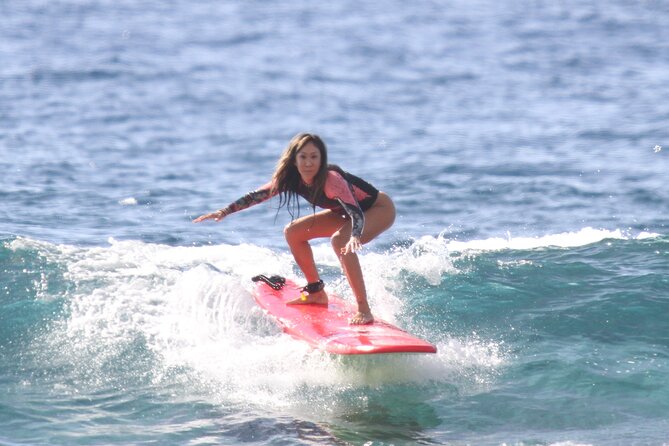
Surfing looks easy from the beach. Then you lie on a moving board, try to paddle at the right moment, and discover that standing up requires timing, balance, and calm instructions. Go Surf Hawai‘i handles that first hurdle in a sensible order.
You meet your coach at 78-6680 Ali‘i Drive in Kailua-Kona. The activity ends at the same place, and the meeting point is near public transportation. After getting organized, you receive a soft-top board and rash guard. The soft board is a practical choice for beginners because it is more forgiving than a hard performance board.
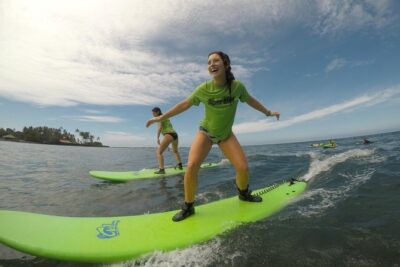
The lesson begins with dry-land coaching. You learn how to position yourself, paddle, push up, and bring your feet underneath you. This part may feel basic, but it saves time later. You are not trying to remember every instruction while balancing in moving water.
Then you head to a beginner-friendly break. Your coach helps you choose waves, gives you a push when needed, and corrects your position as you go. The goal is not to master surfing in one session. It is to give you enough successful attempts that the next lesson, rental, or beach session makes sense.
That structure suits families especially well. A 10-year-old, a 13-year-old, a teenager, and a less athletic parent can all work at different levels within the same small group. Coaches have also adjusted their help for adults who felt nervous about entering the ocean. That personal attention is the reason the session feels more useful than a quick board rental.
More Surf Lessons in the USA:
- Maui: Two Hour Beginner Group Surf Lesson in Kihei
★ 5.0 · 950 reviews - Open Group Surfing Lesson in Waikiki, Hawaii
★ 4.5 · 582 reviews - Outrageous Surf ScHool Lesson on Lahaina Side
★ 4.5 · 547 reviews
Jared, Jace, Rory, and Renee bring different strengths
You may be paired with Jared, Jace, Rory, or Renee, depending on the schedule. The coaching style described across the experience is friendly and direct, with an emphasis on keeping the lesson relaxed.
Jared has worked with families, children, and first-time adults. His instruction includes help with paddling, timing, and staying comfortable in the water. He has also offered advice about equipment rentals and local beaches for the rest of your stay. One memorable family session included help finding a lost pair of glasses after the lesson, a small detail that says something about the level of personal care you can encounter.
Jace is especially useful if you want a little more technique. He has helped students adjust form, spot waves, turn, and understand how body position affects the ride. He has also taught mixed-ability groups, helping an experienced surfer catch larger waves while giving a nervous beginner smaller ones.
Rory has worked with children and beginners who needed extra help paddling back out. Renee has also taught basic skills to a parent and a young child. Since the group is limited to four, the coach can change the amount of help each person receives instead of giving the same speech to everyone.
Do not expect a celebrity-style surf clinic. This is practical instruction, not a performance camp. The strength is patient coaching that gets you trying again after a fall.
What the 90-minute lesson feels like
The stated duration is about one hour and 30 minutes. The exact balance between land instruction and time in the water can vary with conditions and the group’s ability, but the central plan is clear.
First comes preparation. You get fitted with the provided gear and listen to the basic safety and technique instructions. Pay attention here, especially if this is your first ocean activity. Knowing how to lie on the board and when to stand helps you use your water time well.
Next comes repetition. You paddle, wait for a suitable wave, and try to rise. Most people will fall several times. That is normal, and the small group means you should have more chances than you would in a crowded class.
Coaches can help push or guide you into a wave when the timing is right. As you improve, they may give you more responsibility for paddling and catching the wave yourself. One student progressed from standing with help to catching a few independent waves during the lesson.
The water section is also where the coach can adjust the lesson. On a calm day, you might work on smaller waves and balance. On a more active day, you may need extra guidance with the tide, timing, or getting back to the starting area. A Christmas-season group dealt with a stronger tide and a crowded beach but still had many chances to stand and ride.
At the end, you receive tips for your next session. That follow-up matters. A surf lesson is better value when you leave knowing what to practice, not just remembering one lucky ride.
The small-group limit is the real value
No price is provided here, so I cannot judge the exact cost against other Kona lessons. I can still tell you where the value lies.
A maximum of four people is a strong feature. In a large class, you may spend much of the session waiting for a turn or trying to catch a coach’s eye. Here, you are more likely to receive corrections while the problem is still fresh. You also get more attempts, which is crucial for surfing.
The included board and rash guard make the booking easier. You do not need to arrange basic equipment before arriving. The soft-top board is suited to learning, and the rash guard offers some protection from the sun. If the day is bright, a long-sleeved rash guard may be more comfortable, either the provided one or your own if you prefer.
Optional photography can add value for a special occasion, but availability varies. You need to ask in advance, and it is not something to count on for every session. If photographs matter to you, confirm this before booking rather than assuming a photographer will be present.
The lesson also includes local knowledge. Your coach can suggest places to surf, eat, and explore beyond the usual tourist stops. Advice about equipment rental and beaches can be useful if you plan to continue surfing during your Big Island stay.
Same break, a different way into the water:
- Los Angeles: Surfing Lesson in Venice Beach
★ 4.8 · 442 reviews - Oahu: Beginner-Friendly Waikiki Beach Surfing Lesson
★ 4.9 · 425 reviews - Po’ipu Surf Lesson
★ 5.0 · 361 reviews - Private Hanalei Sandy Bottom Surf Lesson on Kauai
★ 5.0 · 339 reviews
Conditions can shape the whole experience
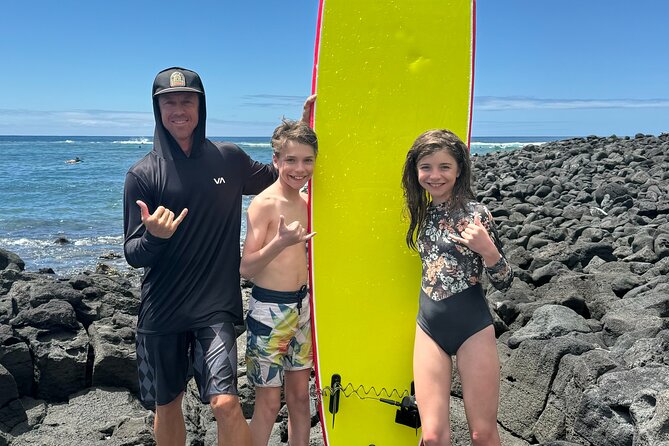
Surf lessons depend on waves. This is the one part no operator can fully control.
A flat day can reduce the number of good rides, though patient coaching may still produce a few successful waves. One family lesson went ahead in very small conditions, and all three students still managed to stand. That is encouraging, but you should keep your expectations sensible.
Poor weather or unsuitable conditions can lead to a cancellation, a different date, or a full refund. One scheduled group waited after communication problems connected with a third-party booking, so I would pay close attention to confirmation messages and make sure you have the correct meeting details. Direct communication with the operator may help avoid confusion.
The experience requires a moderate level of physical fitness. You need to paddle, climb onto the board, push up, and manage yourself in the water. You should also know how to swim. The lesson is beginner-friendly, but beginner-friendly does not mean effortless.
If you are prone to motion sickness, tire quickly, or feel uneasy in the ocean, tell the coach at the start. The instructors have worked with nervous adults and can adjust the pace. Still, you should be comfortable with a physically active ocean lesson before booking.
Children under nine require a private lesson. That is an important rule for families. Older children can join a small group when the other booking details and conditions fit.
Surfing near Kailua-Kona adds a sense of place
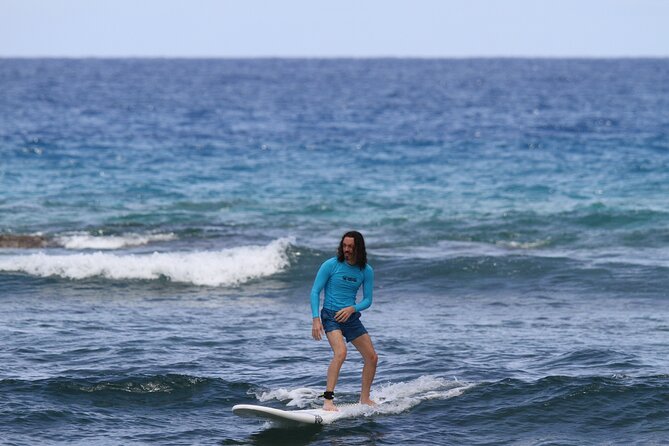
This is not just a generic board lesson moved to Hawaii. The Kona coast has a strong connection with surfing, and one of the lesson locations is described as being near the birthplace of the sport. That gives the activity a little more meaning than simply checking surfing off your holiday list.
The setting also makes the lesson memorable even when the waves are modest. You are learning a local ocean skill in a place where surfing is part of daily life. The coach’s suggestions about nearby beaches, food, and less obvious places to explore can help you shape the rest of your Kona stay.
Keep in mind that the lesson itself is the focus. You are not signing up for a sightseeing tour along the coast. The local tips come through conversation and instruction, not a separate guided tour.
At the end, some sessions have included fresh coconut juice. It is not the main reason to book, and you should not treat it as a guaranteed feature, but it is a pleasant local touch after paddling and practicing.
What to bring and how to prepare
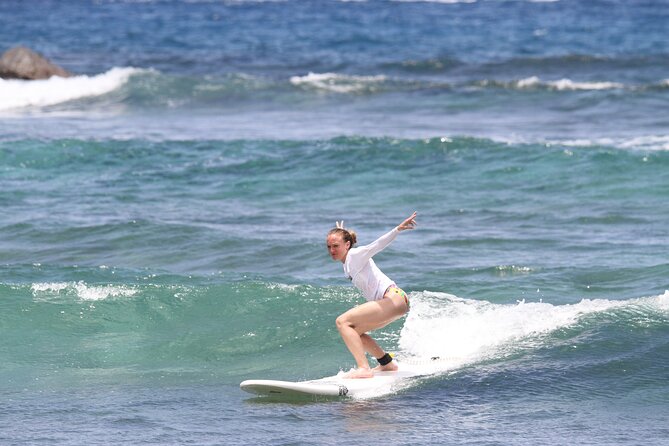
The operator supplies the board and rash guard, but you should arrive ready for an active beach session. Bring swimwear, sun protection, water, and a change of clothes. The provided rash guard helps with sun exposure, though a long-sleeved layer may still be useful on a bright day.
Wear something that stays secure while you paddle and stand. Keep valuables to a minimum. If you wear glasses, consider how you will protect them before entering the water, since dropped items can be hard to recover.
Arrive at the stated Kailua-Kona meeting point with enough time to find the group. The location is 78-6680 Ali‘i Drive, Kailua-Kona, Hawaii 96740. The activity returns there after the lesson.
You should be ready to listen, fall, and try again. Surfing success may mean standing once, riding several waves, or simply feeling more comfortable paddling. Setting that kind of goal will make the lesson more enjoyable than chasing a perfect ride.
Who should book this lesson
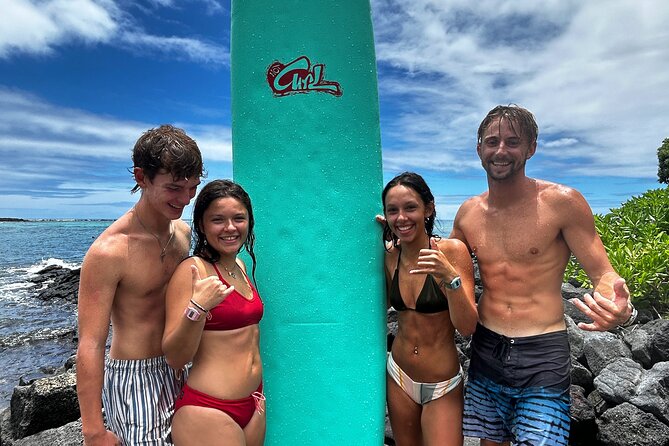
I would choose Go Surf Hawai‘i for a first surfing attempt, a family with mixed abilities, or a couple where one person is confident and the other is nervous. The instructors have experience helping children, teenagers, older beginners, and adults who do not consider themselves athletic.
It also suits you if personal coaching matters more than a low-cost, high-volume class. The maximum of four is the feature to prioritize. You will have a better chance of receiving timely help and repeating the skills enough to make them stick.
More experienced surfers may find the lesson useful if they want help with form, wave selection, or turning. Still, this is mainly a beginner and early-intermediate session. If you already surf confidently, ask about the exact level of instruction available before booking.
I would be more cautious if your schedule cannot handle a possible weather change. The ocean may force a new date, and a flat day can limit the number of rides. Also think twice if you cannot swim or are not comfortable with moderate physical effort.
Should you book Go Surf Hawai‘i?
For most first-time surfers on the Kona coast, yes. The combination of provided gear, a 90-minute lesson, beginner-friendly water, and a four-person limit gives you a fair chance to learn rather than simply pose with a board.
The strong points are the patient coaching from instructors such as Jared and Jace, the family-friendly approach, and the useful advice for continuing your surf time after the lesson. The main caution is that success depends on waves, weather, fitness, and clear communication about the meeting time.
Book it if you want a relaxed introduction and would value close help in the water. If you do, ask about photography ahead of time, confirm the meeting details, and leave room in your schedule in case the ocean calls for a change.
FAQ
How long does the surf lesson last?
The experience lasts approximately one hour and 30 minutes.
Where does the activity begin?
You meet at 78-6680 Ali‘i Drive, Kailua-Kona, Hawaii 96740.
Where does the activity end?
The lesson ends back at the same meeting point.
Is equipment provided?
Yes. A soft-top surfboard and rash guard are provided.
Is the lesson suitable for beginners?
Yes. The lesson covers paddling, popping up, balance, and catching waves at a beginner-friendly break.
How many people can join?
The activity has a maximum of four participants.
Are children allowed to participate?
Children can participate, but private lessons are required for keiki under nine.
Is photography available?
Optional photography may be available through a freelance photographer. Availability varies, so you should ask about it ahead of time.
What physical ability do I need?
You should have a moderate level of physical fitness. You should also know how to swim, since the activity takes place in the ocean.
What happens if weather or ocean conditions cancel the lesson?
You will be offered a different date or a full refund if the experience is canceled because of poor weather. You can also cancel for a full refund if you cancel at least 24 hours before the start time.
Just added for surfers in the USA
- Cocoa Beach: Surfing Lessons & Board Rental★ 4.7 · 24 reviews
- Surfing Lesson in Santa Barbara (2 Hours)★ 5.0 · 10 reviews
- Santa Barbara: Surfing Lessons★ 5.0 · 17 reviews
- Santa Barbara: 1.5-Hour Private Beginner’s Surf Lesson★ 4.7 · 23 reviews
- Private Surfing Lesson in Santa Monica★ 5.0 · 47 reviews
- Private Surf Lesson in Huntington Beach – Bolsa Chica State Beach★ 5.0 · 6 reviews
- 2 Hour Private Group Surf Lessons in Huntington Beach★ 5.0 · 4 reviews
- Surf Lesson★ 5.0 · 6 reviews
Big Island Surf Lessons, compared.
Browse the lists this tour appears in