
Review · MAUI
Semi-Private Surf Lesson – 3 Students 1 Instructor
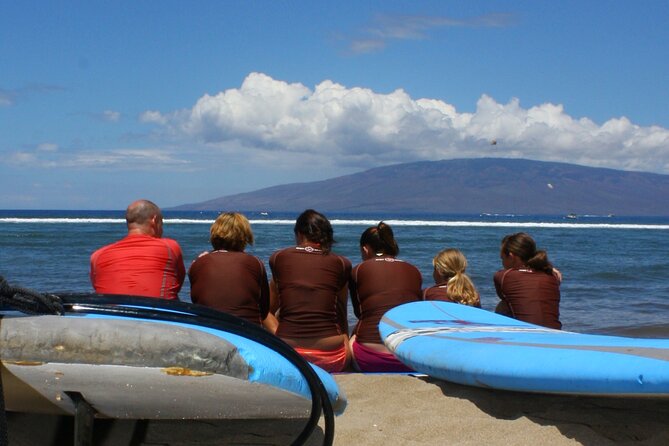
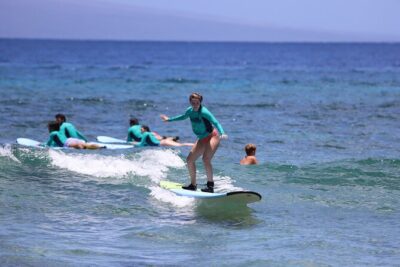
The best part of this Lahaina lesson is its simple promise: learn the basics on sand, then put them to work on real waves at the Breakwall. You get about 90 minutes in the water, with an instructor helping you paddle, time a wave, and pop up without turning the whole thing into a white-knuckle ordeal.
I like the small-group format, which gives beginners more attention than a large beach class. I also like the patient, upbeat teaching style reported from instructors including Kahala, Jake, Tiare, Trinity, Waio, and Waiola. The main drawback is that the surf area can feel crowded when several lesson groups gather nearby, and ocean conditions can affect how much riding you get.
Key points at a glance
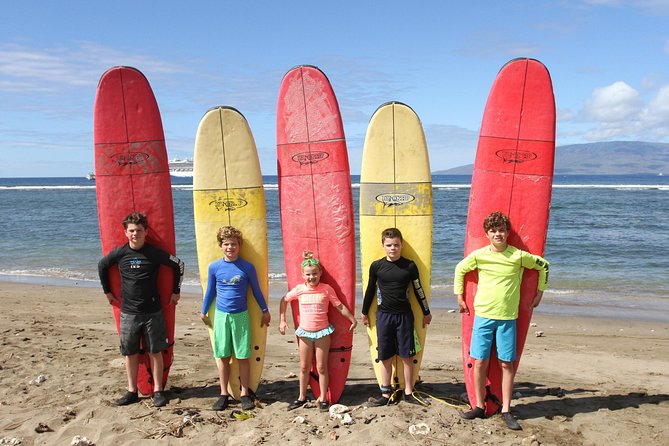
- Practice starts on land: You learn ocean safety, surf technique, and the pop-up before entering the water.
- The Breakwall is the goal: After a short walk, you paddle out near Lahaina to work on catching waves.
- Small groups matter: The experience is sold as three students per instructor, while the broader group limit is six.
- Beginners are welcome: The lesson also suits intermediate surfers who want help with timing and technique.
- Patient coaching is a strength: Instructors such as Kahala, Jake, Tiare, Trinity, Waio, and Waiola receive especially warm praise.
- Photos are optional: A professional photographer may capture your session, but the pictures cost extra.
Starting with sand practice before the ocean
You do not begin by being sent straight into the surf. The lesson opens with ocean safety, board handling, and basic surf technique on land. This is where you learn the position of your feet, how to paddle, and how to move from lying down to standing.
That short beach lesson matters. Beginners often lose more time worrying about what to do with their hands and feet than actually riding a wave. Practicing the motion first lets you focus on the ocean once you are on the board.
The instructor also helps you understand the basic rhythm of surfing. You paddle when the wave approaches, keep your weight balanced, and try to stand at the right moment. The goal is not polished style in the first session. It is to get comfortable and make a safe, controlled attempt.
You should pay close attention to the safety briefing, even if you are a strong swimmer. Surfing adds moving water, other boards, and shifting conditions. The instructors place clear emphasis on safety, and that is especially useful when currents are rough or several groups are sharing the same area.
More Private Surf Lessons in Maui
- Private Surf Lesson for Two Near Lahaina
★ 5.0 · 189 reviews - Semi-Private Surf Lesson at Kalama Park in Kihei
★ 5.0 · 102 reviews - 2 Hour Private Surf Lesson For Two In Lahaina
★ 5.0 · 102 reviews
Walking from the shop to Lahaina’s Breakwall
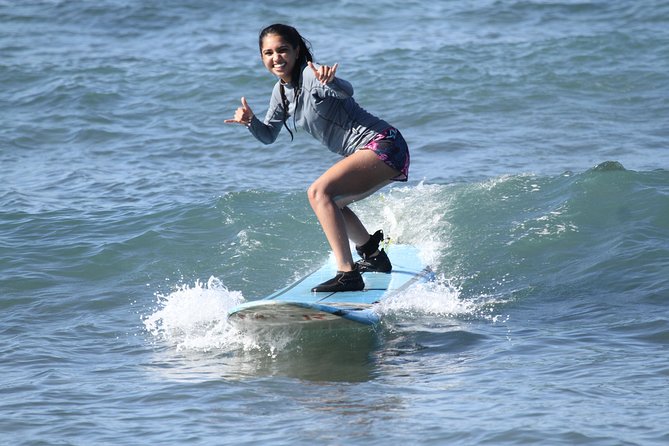
After the land practice, you carry the board toward the break. The meeting information gives a start point in Waikapu, while the activity itself is described as a Lahaina lesson at the Breakwall. Since those place names can create confusion when you are planning your day, confirm the exact meeting directions with the operator before setting out.
The surf spot is reached by a short walk from the check-in area, according to the supplied details. Public parking is nearby, and the location is also near public transportation. That makes this easier to fit into a day around West Maui than an activity requiring a long transfer.
The Breakwall gives the lesson a clear target. You are not just practicing on a board in shallow water. You are working toward catching actual waves in a known Lahaina surf area.
The setting can also be busy. Several instructors may be teaching in the same part of the beach, so you should expect other lesson groups nearby. That does not cancel out the personal coaching, but it can make the area feel less private than the small group size suggests.
What the 90-minute lesson feels like
The advertised duration is about one hour and 30 minutes. That includes the safety and technique session on land, the walk to the water, and the time spent practicing waves. It is long enough to give you repeated attempts, but short enough to remain manageable for children and first-time surfers.
Once you are in the water, your instructor works on the practical steps:
- Positioning the board
- Paddling at the right time
- Keeping the board straight
- Pushing up from your stomach
- Placing your feet correctly
- Bending your knees after standing
- Riding safely toward shore
You may not stand up on the first attempt. That is normal. The useful feature here is repetition. A good instructor gets you set up again, points out one fix, and sends you toward the next suitable wave.
The strongest part of the teaching seems to be the encouragement. Instructors have been praised for staying patient with beginners, including children and nervous adults. If you are ten years old, out of practice, or simply unsure about trying something new, that steady coaching can make a major difference.
The lesson is not only for complete beginners. Intermediate surfers can use the session to work on wave selection, timing, or the mechanics of standing smoothly. The instructor can adjust the advice to your level, though the experience is still built around fundamentals rather than advanced performance training.
Why the three-to-one format is worth the price
At $109 per person, this is not the cheapest activity on Maui. The value comes from the amount of direct instruction and the equipment included in the lesson setup. You are paying for an organized introduction, safety guidance, a surfboard, and a coach who can help you make useful corrections in real time.
The title describes three students with one instructor. The broader information also says groups are limited to six, and some sessions have included four or five people. I would confirm the exact group arrangement when booking if a three-to-one ratio is central to your decision.
Even with a group larger than three, a capped class is far better suited to learning than a big crowd where you spend most of the session waiting. You get more turns, clearer instructions, and a better chance of having the instructor notice why you are falling.
This format works particularly well for families. Several people can learn together without splitting into separate private sessions. Family members can encourage one another, and the achievement feels shared when everyone manages to stand up, even if it takes different amounts of time.
The price also looks more reasonable if you care about making real progress instead of simply trying a board for a few minutes. It is less attractive if you only want a quick novelty ride or if your main aim is to surf alone without instruction.
More Private Surf Lessons in the USA
- Private Surf Lesson for Group of 3-5 Near Lahaina
★ 5.0 · 93 reviews - 2 Hour Private Surf Lesson in Lahaina
★ 5.0 · 83 reviews - Semi-Private Surf Lesson at Ka’anapali Beach
★ 4.5 · 76 reviews - Semi-Private Surf Lesson 2 Students 1 Instructor
★ 4.5 · 68 reviews
The instructors make the biggest difference
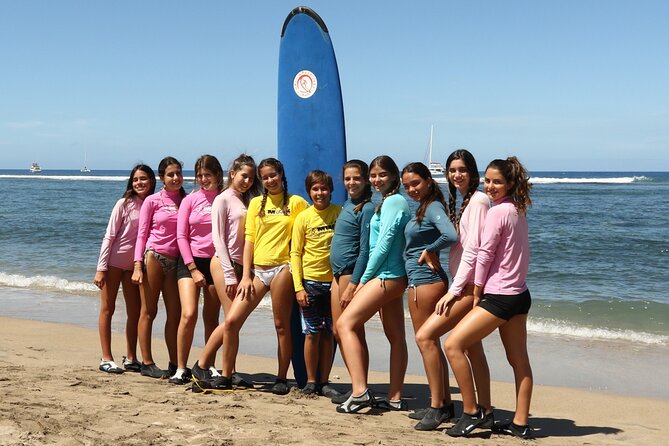
The specific instructor you receive is not guaranteed, but several names have been praised for the qualities that matter most in a first lesson.
Kahala has been described as wonderful with a young student. Jake receives praise for being helpful and making the experience feel worth the cost. Tiare and Trinity are noted for patient, kind instruction and clear surf technique.
Waio is described as an authentic surfer who offered useful tips while keeping the mood light. Waiola, who invited students to call him Wai, is remembered for patience with a family group. These details point to a teaching team that tends to combine firm direction with a friendly manner.
That balance matters. Surf instruction should not be so casual that safety gets ignored, but it should not feel like a drill session either. You need a coach who will correct your stance, tell you when to wait, and still keep you willing to try again.
One lower-rated experience described the instructor as unusual, even though the staff and overall activity were fine. That is a useful reminder that teaching styles vary. Most feedback is strongly positive, but no group lesson can promise a perfect personality match every time.
Getting the most from your board time
Wear or bring a swim shirt. It protects your skin from the sun and from rubbing against the surfboard, which can become uncomfortable during repeated attempts. The activity information specifically recommends this, so it is one item worth placing at the top of your packing list.
Some participants have also been provided with surf shirts and shoes along with the board. Treat that as something that may be available rather than something to take for granted, and ask what is included when you check in.
Arrive ready to listen before you think about riding. The land portion may feel basic, especially if you have watched surfing tutorials, but those minutes set up safer practice in the water.
You should also keep your expectations sensible. Standing up once is a fine goal. Staying upright for a long ride is a bonus. Ocean conditions, the number of people in the water, and your own balance all affect the result.
If you are nervous, say so. The instructors have experience working with first-timers and children, and direct feedback helps them give you the right kind of support. A calm explanation before you paddle out can be more useful than silently trying to copy someone else.
Family appeal and age considerations
This is a strong choice for families with children and teens, provided everyone has a moderate level of physical fitness. The activity requires paddling, pushing up from the board, balancing, and repeated attempts in the ocean.
The family-friendly appeal comes from the teaching approach. Young surfers have been coached wave after wave, with instructors encouraging them after each attempt. Teens who had never surfed before have managed to ride waves during the session, which is a good sign for families hoping to give surfing a fair first try.
Still, the lesson is not passive. You will get tired, especially in the shoulders and arms. A child who is eager to surf may enjoy the challenge, while someone uncomfortable in moving water may find the effort demanding.
The experience is also suitable for adults who feel nervous. You do not need to arrive with surfing skills. The instructor breaks the process into small actions, and the group format lets you see how others handle the same basic steps.
Optional photos and what they add
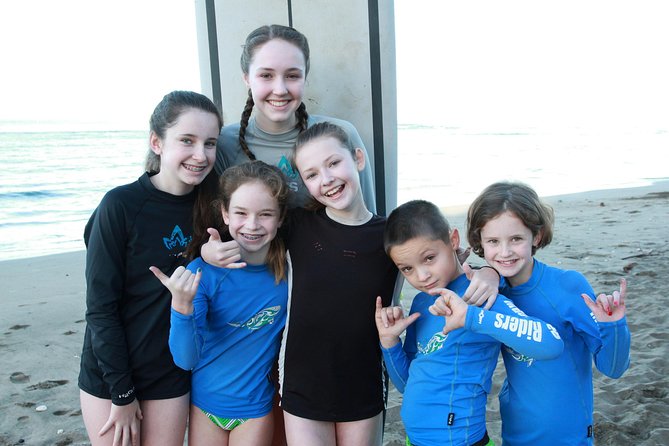
A professional photographer may be available during the session. The photos cost extra, but they can be worthwhile if you want clear pictures of the actual ride rather than distant shots from the beach.
This is especially useful for families. One parent cannot easily coach a child and take sharp action photos at the same time. A photographer can capture the moment when someone finally stands up, which is often the memory everyone wants afterward.
The photos are not part of the $109 price, so decide before the lesson how much that record matters to you. If your budget is tight, skip them and focus on the experience. If this is a first surf for your children or a major Maui memory, the added cost may feel justified.
Weather, safety, and the limits of the experience
Good weather is required. If poor weather causes a cancellation, you can choose another date or receive a full refund. That policy is helpful because ocean activities should not proceed simply to protect a schedule.
Conditions can also vary even when the lesson runs. Some sessions have had rough currents, and safety becomes even more important in those circumstances. Listen carefully to the instructor’s direction about where to paddle and which waves to attempt.
The lesson does not remove every ocean risk. It gives you instruction and supervision, but you still need to follow directions, manage your energy, and be honest about your comfort level.
A moderate physical fitness level is recommended. You should be able to handle basic movement in the water and repeated effort on the board. The activity is not designed as a sightseeing cruise where you remain seated and watch the coast.
Who should book this Lahaina surf lesson?
I would choose this for a first-time surfer who wants more than a quick demonstration. The land practice, repeated attempts, and close coaching give you a proper introduction to the sport.
It is also a good fit for families with children or teens, couples who want to learn together, and intermediate surfers who want to refresh their fundamentals. The small class structure helps keep the lesson active instead of turning it into a long wait between turns.
I would think twice if you dislike shared activities, need a guaranteed private instructor, or have limited physical fitness. I would also confirm the exact meeting location and group size before paying, since the supplied directions mention Waikapu while the surfing takes place in Lahaina, and the advertised ratio may vary within the six-person limit.
Book it if your priority is patient instruction, safe practice, and a genuine chance to stand on a surfboard. Skip it if you only want beach time or a fully private, high-performance coaching session. For most first-timers, $109 buys a well-structured introduction and a good shot at leaving Maui with a new skill.
FAQ
How much does the surf lesson cost?
The listed price is $109 per person.
How long does the experience last?
The lesson lasts approximately one hour and 30 minutes.
Where does the surfing take place?
The experience is described as a Lahaina lesson at the Breakwall in West Maui.
Where is the meeting point?
The listed starting point is QCW7+M5X, Waikapu, Hawaii 96793. Confirm the exact directions with Maui Waveriders Lahaina before leaving, since the activity description refers to Lahaina.
Where does the activity end?
The activity ends back at the meeting point.
Is the lesson suitable for beginners?
Yes. The lesson is designed for beginners and intermediate surfers, with ocean safety and technique practice before entering the water.
How many people are in each group?
The experience is advertised as three students per instructor, and the wider group limit is six people. Ask the provider to confirm the exact arrangement for your booking.
What should I bring?
Bring a swim shirt to protect your skin from the sun and rubbing against the surfboard.
Is professional photography included?
Photography is not included in the listed price. A professional photographer may be available, with photos offered for an additional charge.
Can I cancel for a refund?
Yes. You can cancel at least 24 hours before the start time for a full refund. Cancellations or changes made less than 24 hours before the start time are not refunded or accepted. If poor weather causes the operator to cancel, you can receive a full refund or choose another date.
Just added for surfers in Maui
- Group Surf Lesson for Beginners in Kihei at Kalama Park★ 5.0 · 11 reviews
- Paddle, Snorkel and Learn to Surf: All in a Day on Maui★ 4.5 · 26 reviews
- Semi Private Surf Lessons with Experienced Coaches★ 5.0 · 63 reviews
- Semi-Private Surf Lesson 2 Students 1 Instructor★ 4.5 · 68 reviews
- Semi-Private Surf Lesson at Ka’anapali Beach★ 4.5 · 76 reviews
- 2 Hour Private Surf Lesson in Lahaina★ 5.0 · 83 reviews
- Group Surf Lesson at Ka’anapali Beach★ 4.5 · 82 reviews
- Private Surf Lesson for Group of 3-5 Near Lahaina★ 5.0 · 93 reviews
Maui Surf Lessons, compared.




2 Hour Private Group Surf Lesson in Lahaina Maui
Read our review →Browse the lists this tour appears in