
Review · DESTIN
Learn to Surf – Destin
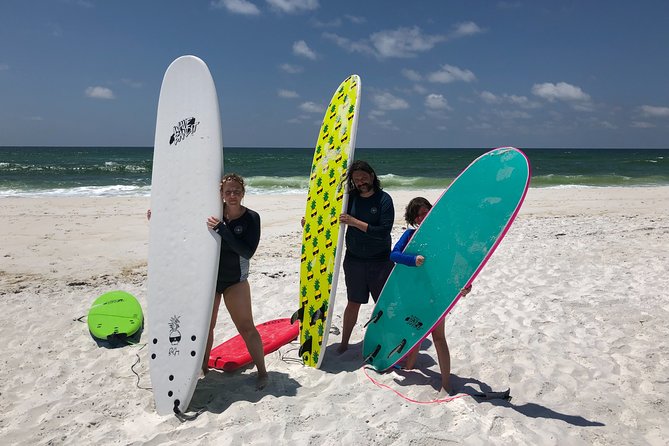
Okaloosa Island is a good place to learn the basics without turning your first surf lesson into a full-day project. Gulf Coast Surf School begins with safety, ocean conditions, and a short land class, then gets you into the water with a board and direct help from your instructor. The goal is simple: get you balanced, paddling, and ready to catch a small wave.
I like the small group limit of 10, since surfing takes hands-on correction. I also like that the lesson covers more than standing on a board: you’ll learn etiquette, paddling, the pop-up, stance, and how to move through the water. The main consideration is that surfing depends heavily on the weather and waves, so the day you choose may affect how much action you get.
The instructor named in the experience is AC, whose teaching focuses on setting each surfer up for a successful first wave. The lesson is open to beginners of all ages, but you should have a moderate level of fitness and be comfortable with active time in the water.
Key points before you book
- Meet at Okaloosa Island Pier: The lesson starts and ends at the pier, with the main surfing time taking place on Okaloosa Island.
- About 1.5 hours of instruction: Allow roughly two hours overall for the introduction, safety briefing, land practice, and water session.
- Beginner-friendly coaching: You’ll practice the prone position, paddling, pop-up, stance, and wave placement before trying to ride.
- Board rental is included: A surfboard and bottled water are provided, while sunscreen and a rash guard or wetsuit are your responsibility.
- Weather can change the plan: Poor conditions may lead to a new date or a full refund, and the school stays in contact if plans need to shift.
Starting at Okaloosa Island Pier
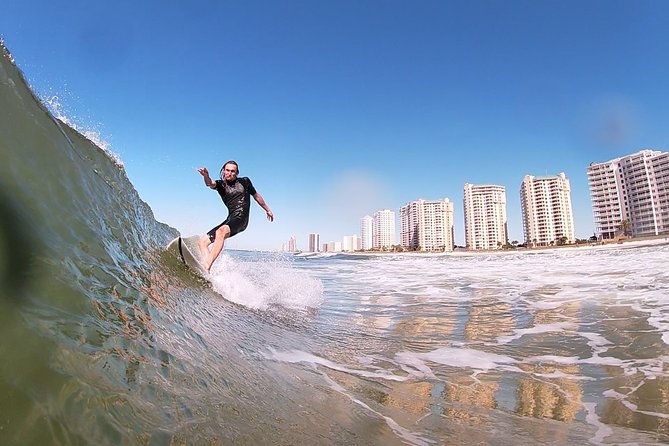
Your meeting point is Okaloosa Island Pier, Okaloosa Island, Florida 32548. This gives the lesson a clear, easy-to-find starting place, and the activity returns to the same point at the end.
The pier is more than a pin on a map. It gives the group a shared reference point before you head into the lesson, which is useful if you are arriving by public transportation or meeting the instructor separately. The experience is offered daily from 9:00 AM to 5:00 PM during its listed operating period, though your booked start time will determine the exact schedule.
Plan to arrive ready for the beach rather than treating this like a sit-down class. You will need clothing suitable for water activity, plus sunscreen. The school does not provide a rash guard or wetsuit, so bring one if you want extra sun or temperature protection.
A bottle of water is included, which is a small but useful touch. Surfing is more tiring than it looks, especially when you are repeatedly paddling, sitting up, repositioning, and trying to stand. Still, you should bring any other personal beach items you need because the included equipment is limited to the surfboard and bottled water.
More Beginner Surf Lessons in the USA
- Maui: Two Hour Beginner Group Surf Lesson in Kihei
★ 5.0 · 950 reviews - Oahu: Beginner-Friendly Waikiki Beach Surfing Lesson
★ 4.9 · 425 reviews - Oahu: Waikiki 2-Hour Beginner Group Surf Lesson
★ 4.9 · 191 reviews
The first lesson: safety, conditions, and etiquette
The class starts with a group introduction and a report on current conditions and marine life. That opening matters. A beginner lesson should not begin with someone simply handing you a board and pointing toward the waves.
You will go over water safety and surfing etiquette before stretching. Etiquette is especially useful for a first-timer because waves are shared, and knowing where to position yourself helps keep the session orderly. You will also get a sense of what the instructor sees in the water that day.
Conditions shape the lesson. The instructor decides how much time to spend on moving through the waves based on what is happening in the water. On a calm day, the focus may lean toward basic mechanics and catching manageable waves. On a more active day, you may spend more time learning how to get beyond the breaking water safely.
This is one of the strongest parts of the lesson for someone who wants more than a quick photo standing on a board. You are being introduced to the habits that make future surfing safer and less confusing.
Learning the pop-up on land
Before you paddle out, the instructor teaches the main movements on land. You’ll work on the proper prone position, paddling technique, the pop-up, and your stance.
The prone position is the way you lie on the board before you stand. It sounds basic, but where you place your body affects balance and how the board moves. Paddling also needs practice. Beginners often use too much upper-body effort or let their legs drag in a way that slows the board.
The pop-up is the quick movement from lying on the board to standing. You’ll practice getting your feet underneath you and finding a stable stance. This land work saves time in the water because you have already rehearsed the sequence before waves and nerves enter the picture.
The instructor can also correct the details that are hard to notice on your own. A board that looks properly positioned from the beach may feel awkward once you are on it. A short land class gives you a clear set of movements to repeat instead of asking you to guess.
The lesson is intended for beginners of all ages. That does not mean it is effortless. You should have moderate physical fitness, since the activity requires repeated paddling, pushing up, standing, and getting back on the board.
Moving from the sand into the water
The class may also cover ways to get through the incoming water, depending on the conditions. The listed techniques include ducking under waves, rolling the board, and moving over a wave with the nose raised.
The amount of instruction here is adjusted by the instructor. That is sensible because wave size and water movement can change the best approach. You may spend more time on these skills if getting to the starting area requires it, or less time if conditions allow a simpler route.
The instructor then helps each surfer with line-up placement. In plain terms, this means helping you find a workable position for catching waves. New surfers often sit too far outside the useful area, too far inside, or at an angle that makes catching a wave harder.
This personal positioning is where a small group matters. With no more than 10 people, you have a better chance of receiving individual corrections than you would in a large beach class. The instructor can also push you into waves if needed, which takes some of the pressure off during your first attempts.
Same break, a different way into the water:
- Open Group Surfing Lesson in Waikiki, Hawaii
★ 4.5 · 582 reviews - Outrageous Surf ScHool Lesson on Lahaina Side
★ 4.5 · 547 reviews - Los Angeles: Surfing Lesson in Venice Beach
★ 4.8 · 442 reviews - Po’ipu Surf Lesson
★ 5.0 · 361 reviews
Catching your first wave with AC
AC is the instructor named for this experience, and the coaching style is hands-on. You are not left to work out the most important part by yourself. After the safety briefing and land practice, the instructor helps place you and can give you the push needed to catch a wave.
That assistance is useful because timing is difficult at first. You have to lie in the right place, paddle at the right moment, keep the board pointed correctly, and then attempt the pop-up without losing speed. A small nudge from the instructor can help you feel how a wave carries the board.
The first successful ride is likely to be brief. That is normal. The value is not simply in how long you remain standing, but in learning what a moving board feels like and how your body responds. One particularly useful progression is feeling the board gain speed, then trying the pop-up while the wave carries you forward.
You should also expect some failed attempts. Falling is part of the lesson, and the class structure gives you repeated chances to try again. The experience is best approached as skill practice rather than a promise that every participant will surf perfectly by the end.
What makes the two stops useful
The itinerary names two points: The Island Pier and Okaloosa Island. The pier is the meeting and return point, while Okaloosa Island is the setting for the lesson itself.
The practical advantage is simplicity. You do not need to arrange a separate transfer between a meeting office and the beach. You start at the pier, take part in the instruction and water session on the island, and finish back at the original meeting point.
The pier also makes this easy to pair with other time on Okaloosa Island, provided you leave enough room before and after the lesson. Since the class lasts about two hours, it can fit into a morning or afternoon plan. I would avoid booking another fixed activity immediately afterward, since the lesson time is approximate and weather can alter the pace.
The experience does not promise a sightseeing tour of the island. Its purpose is learning to surf. If you want a beach outing with a clear physical activity, the two-stop structure works well. If you want a broad tour of local sights, this is not the right format.
Group size, age range, and physical effort
A maximum of 10 people keeps the class small enough for personal instruction while still giving it a group atmosphere. Surfing lessons work best when the instructor can watch several attempts and make quick corrections without managing a huge crowd.
All ages are welcome, but the fitness requirement deserves attention. Even a beginner class can be tiring because you will paddle, rise from the board, balance, fall, and repeat the process. You should be prepared for active time rather than a passive beach lesson.
The activity may suit families, couples, and solo visitors who want a first introduction to surfing. It also suits people who prefer learning through direct coaching. If you are mainly looking for a relaxed swim, this may feel more demanding than expected.
The small-group setting is also helpful if people in your party have different levels of confidence. The instructor can assist individuals with positioning and wave timing instead of requiring everyone to move at exactly the same pace.
What is included, and what should you bring?
The surfboard is included, so you do not need to arrange your own rental for the lesson. Bottled water is also provided.
You need to bring sunscreen. This is not a minor detail on a beach activity, since the water and open sand can leave you exposed for the full session. A rash guard or wetsuit is not included either, so bring your own if you prefer that extra layer.
The supplied details do not include a price, so I cannot judge the exact dollar value. Still, the package has a useful core: instruction, board rental, water safety guidance, help with wave placement, and direct coaching. When comparing this lesson with a simple board rental, remember that you are paying for the instructor’s time and the structure of the class, not just the equipment.
The best value comes if you actively use the coaching. Ask questions, repeat the pop-up, and pay attention to where the instructor places you. A person who only wants to borrow a board may not need this format, but a first-timer usually gets more from guided practice.
Weather, communication, and cancellation rules
Surfing cannot be separated from the weather. If poor conditions force a cancellation, you can be offered another date or a full refund. The activity also requires a minimum number of participants, and if that minimum is not reached, you can be offered a different date or experience, or receive a full refund.
You can cancel for a full refund if you do so at least 24 hours before the start time. Changes or cancellations made inside that window are not accepted for a refund, so check the local time carefully.
One useful sign from the available feedback is the school’s flexibility when weather required a schedule change. The staff kept in contact and helped rearrange the booking. That matters for a water activity, where a rigid promise of a particular time would be less useful than a safe and workable plan.
Who should book this Okaloosa Island lesson?
Book it if you want a structured first attempt at surfing, especially if you value safety instruction and personal help. It is a good fit for families and mixed groups because all ages are welcome and the instructor can work with individuals during the water session.
It is also a sensible choice if you do not own a board or do not want to spend time learning alone. The included equipment removes one practical hurdle, while the small group and push into waves help you get started sooner.
Think twice if you dislike physical activity, are looking for guaranteed wave conditions, or want a sightseeing tour instead of a lesson. The class depends on weather, and moderate fitness is required. You should also be comfortable bringing your own sunscreen and any rash guard or wetsuit you want.
FAQ
Where does the surf lesson begin?
It begins at Okaloosa Island Pier, Okaloosa Island, Florida 32548, USA.
Where does the activity finish?
The activity ends back at the meeting point at Okaloosa Island Pier.
How long does the experience last?
The experience lasts approximately two hours, including about 1.5 hours of instruction and board rental.
Is a surfboard included?
Yes. A surfboard is included in the experience.
Is bottled water provided?
Yes. Bottled water is included.
Are sunscreen, a rash guard, or a wetsuit included?
No. Sunscreen, a rash guard, and a wetsuit are not included.
Can I cancel for a full refund?
Yes, if you cancel at least 24 hours before the experience start time. Poor weather or failure to meet the minimum number of participants may also result in a new date or a full refund.
Should you book Learn to Surf in Destin?
I would book this lesson if your goal is to make a real first attempt, not simply pose with a board. The combination of safety instruction, land practice, board rental, small-group coaching, and help catching waves gives you a clear path from nervous beginner to first ride.
Choose a day with flexible plans, bring sun protection, and arrive ready to work. If AC can give you the same focused assistance described in the experience, you’ll get a useful introduction to surfing on Okaloosa Island without committing to a full-day course.
Just added for surfers in the USA
- Waikiki: Family, Private, and Group Surfing Lessons★ 5.0 · 4 reviews
- Waikiki: Surf Lessons Easy 60 min classes no crowds!★ 4.9 · 21 reviews
- Two- Hour Group Surfing Lesson in Cocoa Wrightsville Beach, NC★ 5.0 · 13 reviews
- 1-on-1 Private Surf Lesson in Santa Barbara★ 5.0 · 4 reviews
- Astonishing Scavenger Hunt: Surf, Sand and Sculptures!★ 3.0 · 2 reviews
- Electric Bike Rentals in Topsail Island and Surf City★ 5.0 · 2 reviews
- Surf Lesson in Santa Barbara★ 3.0 · 2 reviews
- Surf lesson with KTO Yoga Surf★ 4.0 · 5 reviews
USA Surf Lessons, compared.


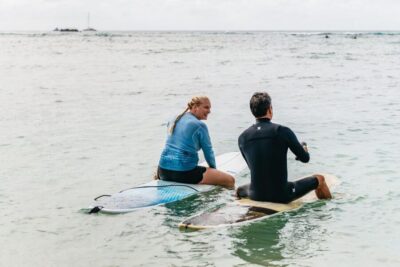
Beginner-Friendly Waikiki Beach Surfing Lesson
Read our review →

Private Hanalei Sandy Bottom Surf Lesson on Kauai
Read our review →
Browse the lists this tour appears in