
Review · OAHU
Surfing Lessons On Waikiki Beach
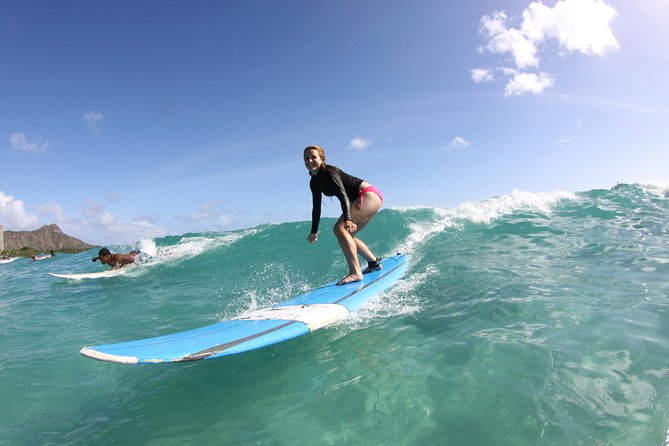
Waikiki is one of the easiest places in Hawaii to try surfing, and this lesson gets you onto the water without buying gear or figuring out the beach on your own. You’ll start with about 20 minutes of land instruction, then practice paddling, turning, standing, and riding small waves with an instructor nearby.
I like the small advertised group size of five, since first-time surfers need more than a quick demonstration. I also like the simple setup: board, leash, and locker are included, and the meeting point at Big Wave Dave Surf & Coffee is close to Waikiki hotels. The main concern is consistency. Instructor quality and group size appear to vary, so confirm those details before paying $129.
Key points at a glance
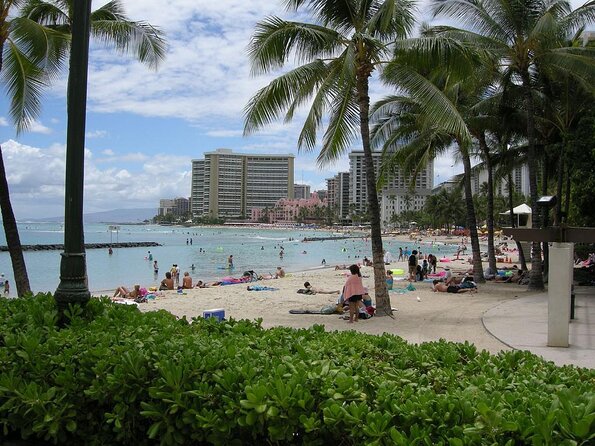
- Beginner-friendly Waikiki water: The south-facing beach has a sandy bottom and shallow water, making falls less intimidating for first-time surfers.
- About 20 minutes on land: You’ll learn safety rules, paddling, board control, and wave technique before entering the water.
- Board, leash, and locker included: You do not need to bring your own surf equipment or leave your valuables on the beach.
- Advertised maximum of five people: This should allow useful one-on-one help, though some sessions have reportedly been larger or reassigned.
- Instructor names vary: Joshua, Josh, Derek, Tanner, Mouse, Alex, and Cody have all been praised for patience and encouragement in different sessions.
- You must be able to swim: This is a physical activity, not a dry-land demonstration, and returning to shore can take real effort.
Starting at Big Wave Dave Surf & Coffee
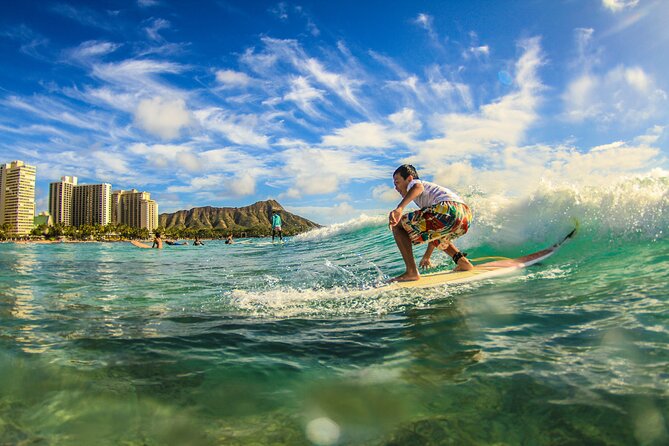
You meet at Big Wave Dave Surf & Coffee, at 226 Lewers Street, unit 154, near Waikiki Beach Walk. The shop is close to the beach and public transportation, and its coffee-and-surf setting gives you a practical place to check in before heading out.
Arrive about 20 minutes early. That time matters because you need to store your belongings, collect your board and leash, and get ready without rushing through the safety briefing. The locker is included, which is useful in Waikiki. You can leave a phone, wallet, and dry clothes behind instead of trying to hide them under a beach towel.
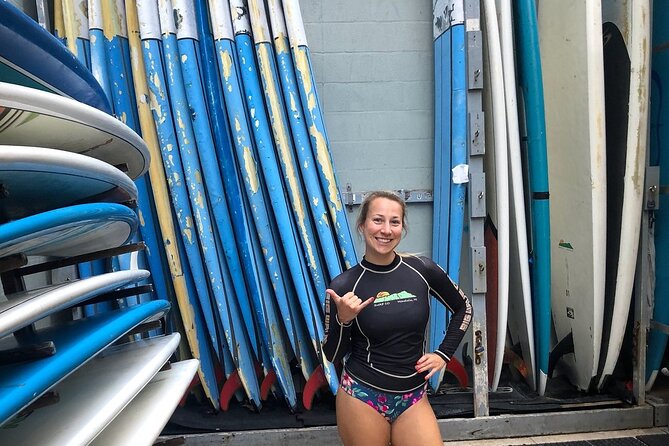
Bring a swimsuit and consider bringing your own rash guard. A rash guard is not included, though one can be rented for $5. You may also rent a lock for $5 or bring your own. Photography is available only with advance arrangements, so do not assume someone will automatically document your first wave.
The activity ends back at the same meeting point. The walk from the shop to the beach is short, but the beach access point can be busy and is shared with other ocean activities. That is normal for Waikiki, though it means you should listen carefully and keep aware of boats, boards, and other groups.
More Surf Lessons in Oahu:
- Open Group Surfing Lesson in Waikiki, Hawaii
★ 4.5 · 582 reviews - Oahu: Beginner-Friendly Waikiki Beach Surfing Lesson
★ 4.9 · 425 reviews - Waikiki Private Group Surf Lesson
★ 5.0 · 298 reviews
The 20-minute beach lesson
The first part takes place on the sand. Your instructor covers basic water safety, surfing etiquette, paddling, turning the board, and how to handle a wave. You will also practice the movement used to stand up.
This short lesson is more important than it may sound. A first-time surfer is managing several tasks at once: staying balanced, reading the wave, keeping the board pointed in the right direction, and remembering when to stand. Practicing the movement on land gives you a better chance of reacting quickly in the water.
The safety talk should also explain where to paddle, how to avoid other surfers, and what to do after a fall. That information is especially useful in Waikiki, where the beginner areas can be crowded. A good instructor will give each student a clear route and prevent boards from crossing in front of one another.
The quality of this section depends heavily on the instructor. Joshua, Josh, Derek, Tanner, Mouse, Alex, and Cody have each been singled out for being patient, clear, encouraging, or attentive in different sessions. Since assignments change, I would ask at check-in who is leading the group and how many people are going out.
Why Waikiki works for first-time surfers
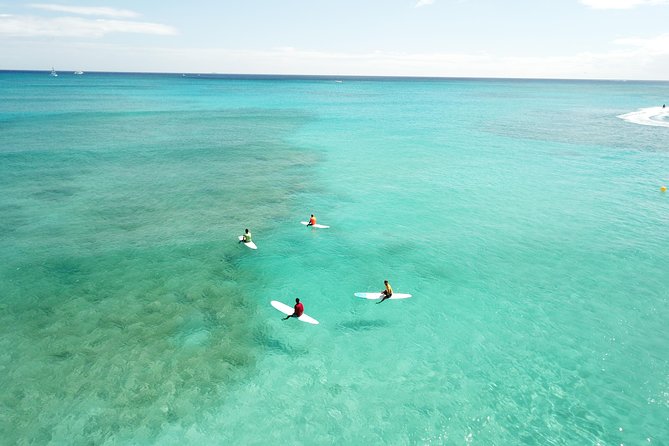
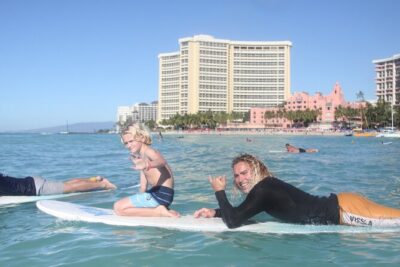
Waikiki’s south-facing coast is well suited to a first lesson. The bottom is described as soft and sandy, and the water near the beginner area is shallow enough that you can often stand. That makes falling less frightening than landing over a rocky or reef-covered bottom.
You should still treat the ocean seriously. Shallow water does not remove every risk, and waves can push you toward other people, boats, or hard structures. One account describes a nervous beginner struggling to turn and becoming distressed near a concrete wall. That is a serious reminder to stay close to the instructor, ask for help early, and tell the instructor if you are tired or uncomfortable.
Conditions change by the day and by the hour. One useful tip is to consider a morning lesson if you want higher tides. Afternoon sessions may offer smaller waves that feel less intimidating at first. Neither time guarantees perfect conditions, but the choice can affect how demanding the lesson feels.
The water can also be noisy. Several people have found it hard to hear instructions once waves and beach traffic pick up. If you cannot hear, stop and ask the instructor to repeat the direction. Guessing where to paddle is not a good shortcut.
From paddling practice to your first wave
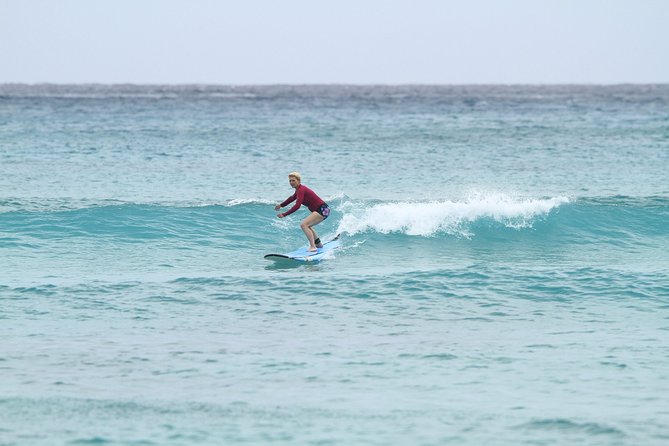
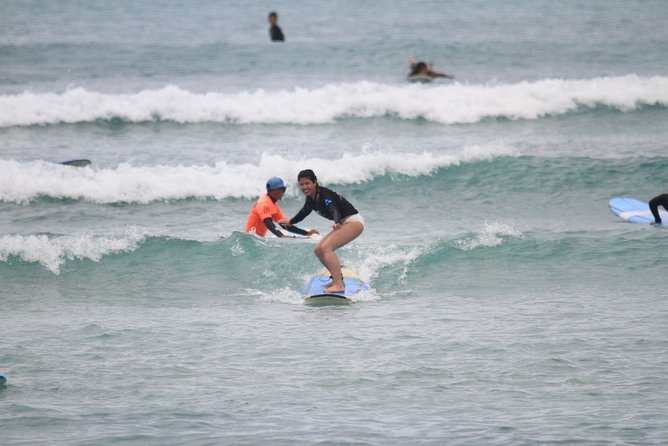
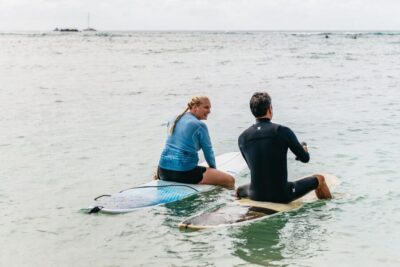
After the sand lesson, you carry your board into the water and begin practicing. The instructor helps you position the board, paddle into a wave, and attempt the stand-up motion at the right moment.
This is where a small group matters. A beginner lesson is not only about hearing instructions. You need repeated attempts, quick corrections, and enough space to try again. The best sessions described here had instructors pushing at the right time, choosing safe lines, and helping each person get a fair turn.
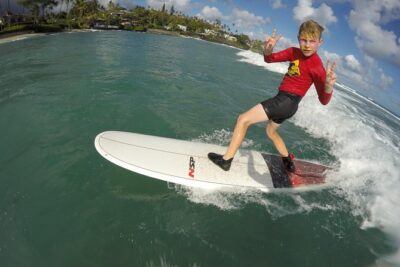
Many first-timers manage to stand at least once, and some get up several times. That result depends on your balance, fitness, timing, and the waves that day. Do not judge the lesson only by whether you ride a long wave. A useful first session teaches you how to position the board, fall safely, paddle back, and try again.
The activity lasts about 90 minutes. Since roughly 20 minutes are spent on land, much of the remaining time is intended for water practice, though the exact amount depends on preparation, beach conditions, group size, and how efficiently the class moves. If a group is larger than advertised, each person may receive fewer quality attempts.
The board is included, and the equipment has generally been described as suitable for beginners. One person questioned the quality of the foam boards, but that is difficult to judge without surfing experience. For you, the more important issue is whether the board is stable, the leash is secure, and the instructor explains how to use both.
Same break, a different way into the water:
- Surf Lessons on the North Shore of Oahu
★ 5.0 · 267 reviews - Family, Private & Group Surfing Lessons, Waikiki Courtesy Shuttle
★ 5.0 · 216 reviews - Oahu: Waikiki 2-Hour Beginner Group Surf Lesson
★ 4.9 · 191 reviews - Private Surfing Lessons in Waikiki
★ 5.0 · 176 reviews
The people matter more than the postcard setting
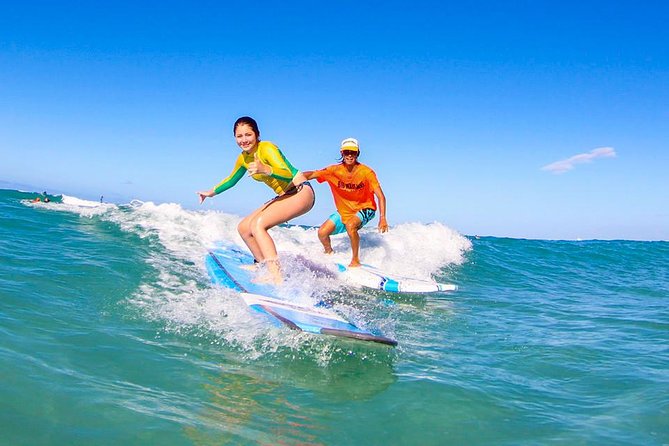
The beach is attractive, but the instructor determines much of your experience. A patient coach can make a nervous beginner feel capable in minutes. A distracted or unclear coach can leave you unsure about where to paddle and when to turn.
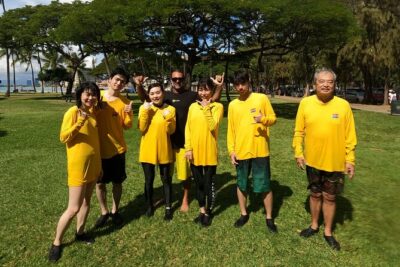
Positive sessions have included instructors who helped nearly everyone stand, gave clear explanations, and made children, teenagers, older adults, and first-time surfers feel at ease. One older participant received instruction adjusted to their ability. Families with children aged 10, 15, 16, 17, and 18 have used the lesson, with strong reports of the kids enjoying the experience.
That does not mean every session is equally smooth. One serious complaint describes an instructor moving too far ahead, leaving two struggling beginners without close help, and failing to communicate clearly when one person headed back toward shore. Another account says a group was reassigned to a different company, received less time, and did not get the private experience expected.
Those problems may be isolated, but they matter because ocean safety is not optional. Before entering the water, ask where the group will surf, how the instructor will keep everyone together, and what you should do if you want to return to shore. If you feel ignored or unsafe, say so directly and head back with guidance.
The experience provider is Big Wave Dave Surf & Coffee, but at least one complaint says the instructor was a contractor rather than a direct employee. That is another reason to confirm who is actually leading your class. The shop staff may handle check-in while a separate instructor runs the water session.
Group size, timing, and the real value of $129
At $129 per person, this is not a cheap beach activity. You are paying for instruction, equipment, a leash, a locker, and the convenience of meeting close to Waikiki. You do not need to buy a board or arrange a separate rental, and the lesson gives you a structured first attempt rather than sending you into the surf alone.
The price makes the most sense if you value personal help. A small class can save you hours of guessing about paddling and standing. It is also a good choice if you want to feel confident enough to practice later with a partner.
The value drops if your class is larger than expected or if you receive only a few useful waves. One account describes six people in a session and only three or four poor-quality attempts per person. Other sessions had seven or even nine participants, despite the advertised maximum of five. Since class sizes may vary, confirm the number before booking and ask what happens if the group is combined.
You should also ask whether the lesson is private, semi-private, or shared. Some family bookings have had two instructors for five surfers, which is a strong arrangement. A larger group with one instructor is a different product at the same price.
The lesson is also physically demanding. Paddling is tiring, getting repeatedly back on the board takes effort, and swimming back to shore may be harder than expected. You need moderate physical fitness and must be able to swim. If you are nervous in open water, say so before the class begins rather than trying to hide it.
Who will enjoy this lesson most
I would consider this lesson a good match for:
- First-time surfers who want a guided introduction
- Families with older children and teenagers who can swim
- Couples who want to learn together
- Solo visitors who prefer an instructor to a rental-only experience
- Adults who want a gentle first step rather than a full surf course
- People staying near Waikiki Beach Walk who value an easy meeting point
It is less suitable if you want a private instructor guaranteed for your group, a long water session, or advanced surfing technique. It may also be a poor fit if you dislike crowded beaches or find it difficult to swim and paddle for an extended period.
For a nervous beginner, I would put safety and communication ahead of getting a photograph or standing on the first try. Ask for help, stay within sight of the instructor, and do not let embarrassment keep you in the water when you are exhausted.
Practical details before you book
The lesson is offered in English and uses a mobile ticket. Confirmation is provided when you book. The activity requires good weather. If poor weather cancels it, you can choose another date or receive a full refund.
You can cancel for a full refund up to 24 hours before the start time. Changes or cancellations within 24 hours are not accepted and are not refunded. The cut-off uses local Honolulu time.
The listed duration is about one hour and 30 minutes. Plan extra time before and after for check-in, changing, returning equipment, and walking between the shop and beach. The activity ends where it starts.
If you want photos, reserve that service in advance. If you want a rash guard, budget $5 or bring your own. For the locker, bring a lock or budget another $5 to rent one.
My booking advice
I would book this if you want a convenient first surf lesson in Waikiki and you confirm that your session has no more than five people, or that two instructors will be present for a larger family group. The sandy bottom, shallow beginner area, included equipment, and strong record of patient instruction make the basic idea appealing.
I would not book it blindly at $129. Ask the shop who your instructor is, whether the instructor works directly for the provider, how many people are booked, and how much water time you should expect. If the answer is vague, choose another company with a clearly stated private or small-group format.
For the best chance of a relaxed lesson, consider a morning tide if you want more active waves, or an afternoon session if you prefer smaller waves. Most important, choose the experience only if you can swim, accept that surfing is tiring, and feel comfortable speaking up about safety.
FAQ
Where does the surfing lesson meet?
The lesson meets at Big Wave Dave Surf & Coffee, 226 Lewers Street, unit 154, Honolulu, near Waikiki Beach Walk. The activity ends back at the same meeting point.
How long does the lesson last?
The activity lasts approximately one hour and 30 minutes. About 20 minutes are spent on land learning safety, paddling, board control, and wave technique before water practice begins.
Is surf equipment included?
Yes. A surfboard and leash are included. A rash guard is not included, but you can rent one for $5.
Is a locker provided?
Yes. You can use a locker to store belongings during the lesson. A lock is optional and costs $5 to rent, or you can bring your own lock.
How many people are in the group?
The advertised maximum is five participants. Because some sessions may be combined or reassigned, confirm the actual group size before booking.
Do I need to know how to swim?
Yes. You must be able to swim, and the activity requires a moderate level of physical fitness.
What is the cancellation policy?
You can cancel up to 24 hours before the start time for a full refund. Cancellations or changes made less than 24 hours before the start time are not refunded. If poor weather cancels the activity, you can choose another date or receive a full refund.
Just added for surfers in Oahu
- Surf lessons for beginners in Waikiki★ 4.0 · 40 reviews
- 1.5-Hour Private Surfing Lesson in Honolulu★ 5.0 · 57 reviews
- Oahu: Kids Surfing Lesson in Waikiki Beach (up to 12)★ 5.0 · 59 reviews
- Surf HNL: Surf Lessons near Ko’olina!!!!!★ 5.0 · 64 reviews
- Surf Lesson in Haleiwa★ 5.0 · 60 reviews
- North Shore Surfing Lessons Oahu Hawaii★ 4.5 · 68 reviews
- Group Surf Lesson with Videos and Photos★ 5.0 · 69 reviews
- Oahu Semi Private Surfing Lesson★ 5.0 · 73 reviews
Oahu Surf Lessons, compared.
Beginner-Friendly Waikiki Beach Surfing Lesson
Read our review →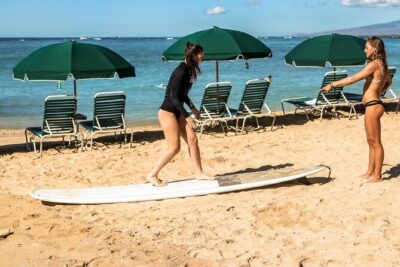

Family, Private & Group Surfing Lessons, Waikiki Courtesy Shuttle
Read our review →
Surf Lesson Without the Crowds Including GoPRO Videos
Read our review →Browse the lists this tour appears in