
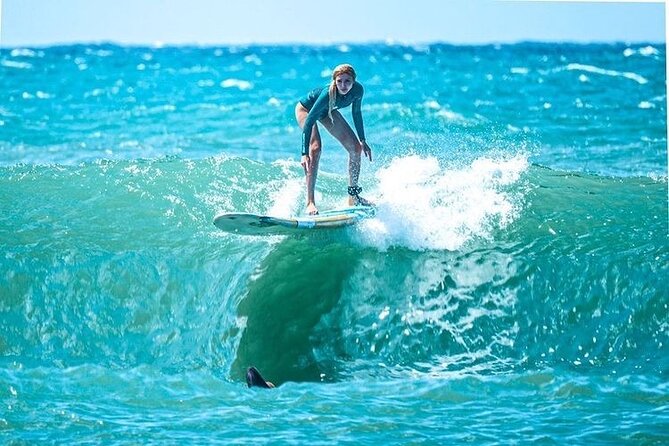
Review · OAHU
Learn to surf with a local big wave rider on the North Shore of Oahu
The best part of this North Shore lesson is the chance to learn from Chance King, a Haleiwa local, big wave surfer, and expert tube rider who grew up around these waters. You begin with a 15 to 20 minute beach briefing, learn how to stand and handle the break, then head into the water with a clear plan. The school promises that you will get up and ride, with a full refund if you are not enjoying the session.
I like the beginner-friendly beach choice and the personal coaching. The instructors, including Caleb and Charlotte, give direct advice rather than burying you in a large class. I also like that safety is part of the lesson from the start, which helped younger students and a participant who became seasick.
The main consideration is time. The session lasts about 90 minutes, and a four-person group may mean only four or five rides per person as you take turns. Book an early time if you can, and leave room in your day because once you catch a wave, you may want another lesson.
Key points to know before you book
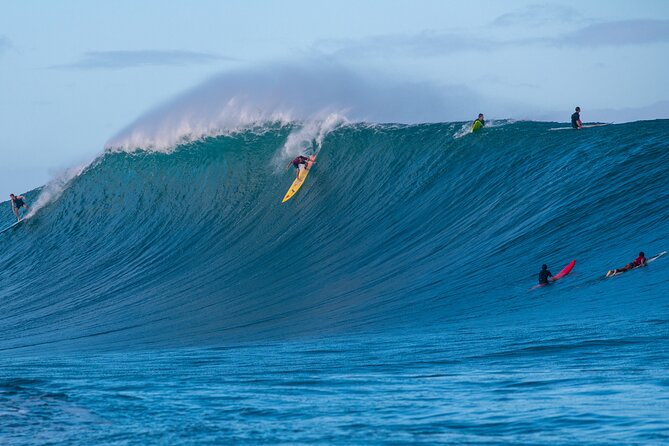
- Learn from a North Shore waterman: Chance King was born and raised on Oahu’s North Shore and brings a lifetime of ocean experience to the lesson.
- Start on the beach: Expect 15 to 20 minutes of instruction on safety, board position, standing technique, and how to read the break.
- Designed for first-timers: The lesson focuses on helping you stand and ride, not showing off difficult maneuvers.
- Private group format: Only your party takes part, though the number of people in your group affects how often you get a wave.
- Patient support for children: Chance stayed with an eight-year-old student who was nervous, while Charlotte helped a seasick student back to shore.
- Wear coverage under your swimsuit: One student specifically advised wearing a one-piece suit or covering your thighs to help prevent board burn.
Why this North Shore surf lesson works for beginners
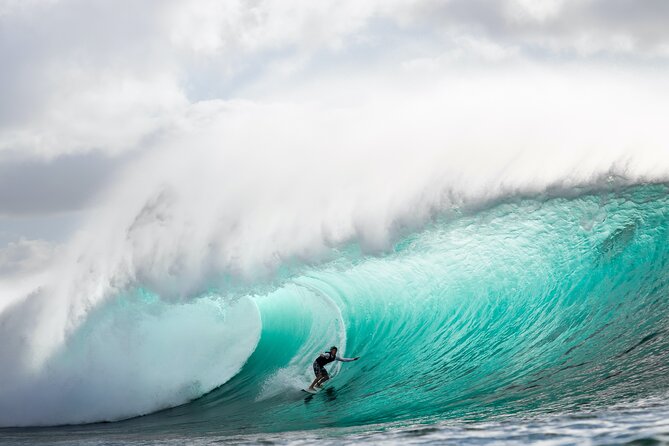
The North Shore has a famous reputation for powerful surf, but that does not mean every lesson takes place in intimidating conditions. The instructors choose a break suited to beginners, and the lesson begins with basic ocean safety rather than throwing you straight into the water.
That first beach session matters. You learn how to lie on the board, where to place your hands, how to push up, and how to put your feet under you. You also get an introduction to navigating the break. For a first lesson, these few minutes can make the difference between scrambling in the water and knowing what to do when a wave arrives.
I appreciate the promise of getting up and riding because it sets a clear goal. You are not signing up for a general ocean activity with a vague hope of standing. The entire lesson is built around giving you a real chance to catch a wave, rise on the board, and ride it toward shore.
That promise should still be understood in context. Surfing depends on weather, waves, timing, balance, and your comfort in the water. The school can provide instruction and choose a suitable spot, but you still need to listen carefully and take part actively.
More Beginner Surf Lessons in Oahu
- Oahu: Beginner-Friendly Waikiki Beach Surfing Lesson
★ 4.9 · 425 reviews - Oahu: Waikiki 2-Hour Beginner Group Surf Lesson
★ 4.9 · 191 reviews - North Shore Beginner Surf Lesson, Hawaii
★ 4.5 · 114 reviews
Meeting Chance King in Haleiwa
You meet at Kahalewai Place in Haleiwa, at Kahalewai Place, Haleiwa, Hawaii 96712. The activity also ends back at the meeting point, which keeps the plan simple and avoids arranging a separate pickup location.
Haleiwa is the right setting for this kind of lesson. It is closely tied to North Shore surf culture, and Chance’s connection to the area is more than a business detail. He was born and raised here, and his background includes ocean safety, big wave surfing, and tube riding.
You do not need to be an experienced surfer to benefit from that background. In fact, beginners often need an instructor who can explain ocean conditions in plain terms. A skilled surfer who also knows how to teach can help you understand where to sit, when to paddle, and how to stay calm when a wave approaches.
The available information names Chance as the owner and identifies Caleb and Charlotte as instructors who may also help with lessons. That gives the school a small, personal feel rather than the setup of a large operation with a rotating crowd.
The 15 to 20 minute beach briefing
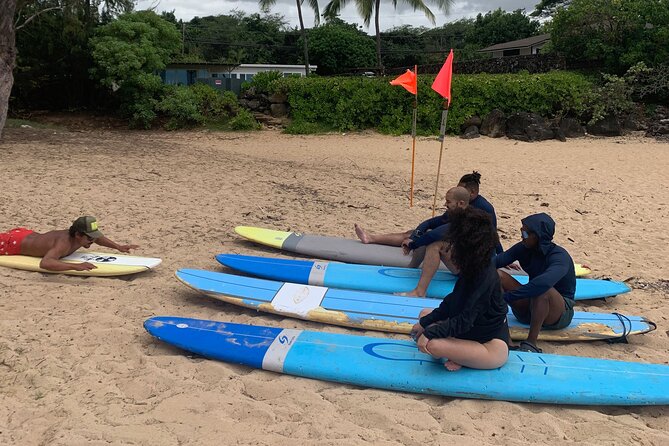
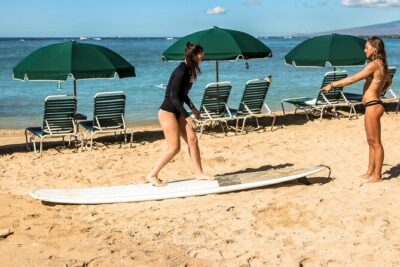
The lesson starts on land with a short instruction and safety session. This is where you practice the standing motion before dealing with moving water.
The basic sequence is important: lie on the board, place your hands correctly, push up, bring your feet underneath you, and find your balance. It sounds simple, but poor foot placement can send a new surfer straight into the water. A few dry runs give you muscle memory before the board begins moving.
The instructors also explain how to navigate the break. That means you are not only learning to stand, but also learning how to move around the surf area with more awareness. For a first-timer, that may be just as useful as the standing technique.
The school’s approach appears practical. You get a short lesson, then enough water time to use it. A 15 to 20 minute briefing leaves the rest of the 90-minute session for riding, though the exact number of waves depends on group size and conditions.
What happens in the water
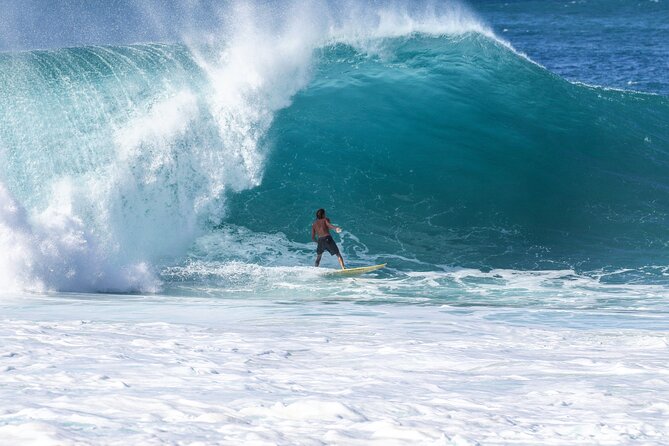
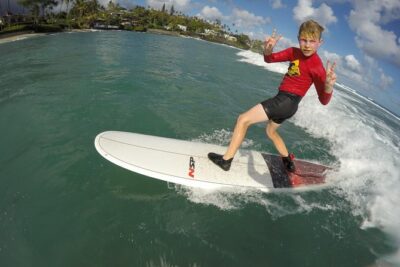
Once you head into the surf, the instructor helps you put the beach lesson to work. The early goal is not style. It is getting into position, catching a manageable wave, standing up, and staying balanced long enough to ride.
One useful feature is the level of individual attention. In a small private group, the instructor can give you specific advice after each attempt. Caleb was described as calm and direct, with pointed tips that helped a student improve. That kind of quick correction is far more useful than a generic speech repeated to an entire class.
You should expect to take turns. In a group of four, one student reported getting four or five rides, with enough rest between attempts. That is not constant action, but rest is useful when you are paddling, balancing, and getting knocked off the board.
A one-on-one lesson offers more rides because the instructor can focus on one person. A private group can still be a good value if you are sharing the experience with family or friends, especially when everyone wants encouragement and a relaxed pace.
The session is not designed to turn you into a polished surfer in one morning. It is designed to give you a first successful ride and enough instruction to understand what to practice next.
More Beginner Surf Lessons in the USA
- Surf lessons for beginners in Waikiki
★ 4.0 · 40 reviews - Group Surf Lesson: Two Hours Of Beginners Instruction
★ 5.0 · 32 reviews - Beginner Surf Lesson in North Shore, Oahu
★ 5.0 · 26 reviews - Beginner Surf Lesson at North Shore Haleiwa, Oahu
★ 5.0 · 19 reviews
Why instructor patience matters
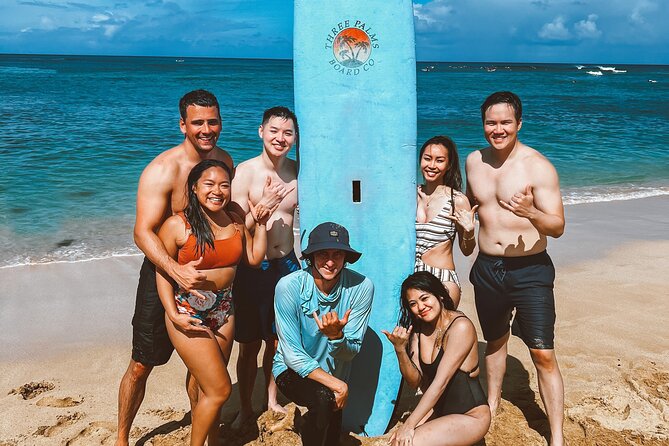
Surfing can make confident adults feel awkward within seconds. You have to manage the board, the wave, your balance, and your nerves at the same time. A patient instructor helps keep a beginner from turning one fall into a bad memory.
The lesson seems especially well suited to families. Chance stayed with an eight-year-old who was nervous, giving her support until she felt ready. She ended up standing several times and reportedly did the best of the three children in her group.
That detail matters if you are booking for children aged eight or older. The school can provide encouragement and close help, but children should still be comfortable participating in an ocean activity and able to follow instructions. The provided information says most people can participate, but it does not give a formal minimum age or swimming requirement.
Charlotte also helped a student who became seasick and made sure she was okay on shore. You should not treat this as a medical service, but it shows the instructors pay attention to how people are feeling rather than pushing them to continue.
The lesson’s friendly tone is part of its value. You want enough coaching to improve, but not so much pressure that you forget to enjoy the ocean.
Four or five rides can be enough
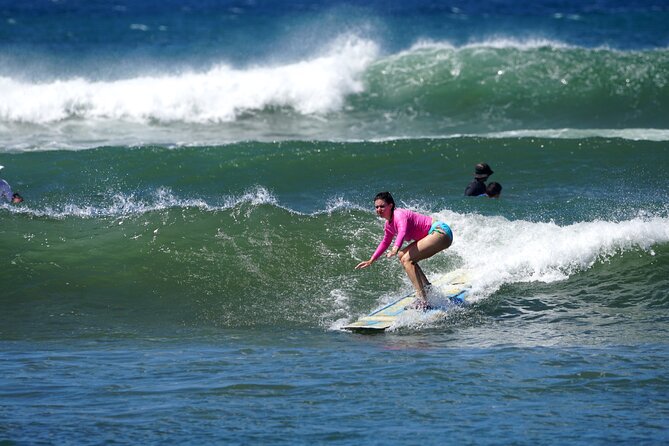
A common mistake is judging a surf lesson by the number of minutes spent standing. You will spend part of the session listening, paddling, waiting, falling, and resting. That is normal.
In a four-person group, four or five rides per person can be a sensible amount. Each turn gives you something to work on. Maybe your hands were too far forward. Maybe you stood too soon. Maybe you looked down instead of toward shore. An instructor can make the next attempt more useful.
The private format also prevents the lesson from becoming a crowded herd. You are not sharing the entire session with a large class, though other instructors and surfers may be using the same beach area. The key difference is that only your group is booked into the activity.
If you want the maximum number of waves, choose a smaller party or book one-on-one instruction if that option is available. If you are traveling with family or friends, sharing can make the experience more social and less intimidating.
Timing, clothing, and comfort
An earlier start is worth considering. The specific conditions change by day, but one participant recommended an early time and suggested leaving the rest of the day open. That is sensible for two reasons: you may find the session more comfortable earlier, and you may want to repeat the experience instead of rushing off to another appointment.
Do not pack your day too tightly. A 90-minute activity has a fixed teaching period, but ocean activities can leave you wanting extra time at the beach. The school’s own promise of a refund if you are not enjoying the experience also suggests that the lesson is meant to feel relaxed rather than forced.
Pay attention to what you wear. One surfer advised wearing a one-piece swimsuit and covering your thighs to reduce board burn. A rash guard or other suitable coverage may also be useful, but the supplied information only specifically confirms the advice about a one-piece and thigh coverage.
Bring the attitude of a beginner. Your first attempt may be clumsy, and that is part of the fun. The instructors are there to correct you quickly and help you try again.
Value for solo surfers, couples, and families
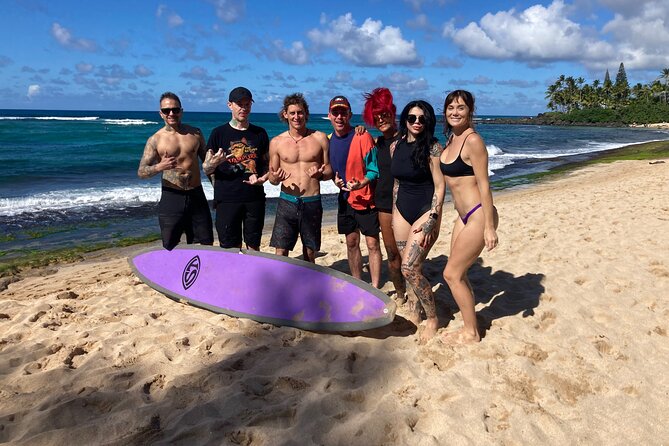
No price is provided here, so I cannot judge the exact dollar value. I would measure the cost against the amount of personal coaching, the private format, and the chance to ride a beginner-friendly break with a local instructor.
For a solo participant, one-on-one attention can make the lesson feel worthwhile because your turns come more often. For a couple, sharing the lesson can add a playful challenge without putting you into a large class.
Families may find the private format especially useful. Parents can see how the instructors work with children, and the teaching can adjust when one child is nervous or another is ready for more. The example of an eight-year-old standing several times shows that younger participants can have a real chance to succeed, though the activity does not publish a formal age rule.
A group of friends should think about the tradeoff. A shared booking may lower the cost per person, but each person receives fewer rides than someone in a solo lesson. If everybody mainly wants the memory of learning together, that is a fair exchange. If everybody wants lots of wave time, keep the group small.
Safety, weather, and cancellation details
Safety instruction is built into the opening beach session, and the instructors keep an eye on how participants are doing in the water. Service animals are allowed, and the activity is near public transportation.
The experience requires good weather. If poor weather causes cancellation, you are offered another date or a full refund. The same applies if the minimum number of participants is not met.
You can cancel for a full refund up to 24 hours before the start time. Cancellations made within 24 hours are not refunded, and changes within that window are not accepted. The cutoff follows local time in Hawaii, so check the clock before making a last-minute change.
These rules are standard for a weather-dependent ocean activity, but they still matter when planning a short Oahu visit. Leave some flexibility if your schedule allows.
Who should book this lesson
I would choose this lesson if you want a first surf experience with real instruction rather than a quick photo opportunity. It suits adults, families, couples, and small groups who want to learn together in a private setting.
It also fits anyone who values local guidance. Chance’s North Shore background gives the lesson a strong sense of place, while the named instructors provide hands-on support in the water.
You may want a different option if you are already an advanced surfer looking for challenging waves. The lesson is aimed at beginners, and its value comes from teaching the basics in a controlled, supportive way.
I would also think twice if you dislike shared turns or have a schedule packed from morning to night. Four or five rides can be satisfying, but a one-person lesson will give you more opportunities than a four-person group.
Should you book the North Shore lesson?
Book it if your goal is to stand on a surfboard, catch a real wave, and learn the basics from a North Shore local. The strongest reasons are the patient coaching, the small private format, and the attention given to nervous children and first-timers.
Choose an early time, wear coverage that protects your thighs, and do not schedule an important activity immediately afterward. If you are traveling with a group, keep it small if wave time matters most.
I would call this a good fit for a first lesson, especially for families and beginners who want a relaxed introduction to surfing with Chance King, Caleb, or Charlotte. It is not a guaranteed shortcut to expert surfing, but it gives you a practical start and a good chance of riding away with a genuine North Shore memory.
FAQ
Where does the surf lesson meet?
The meeting point is Kahalewai Place in Haleiwa, Hawaii, at Kahalewai Place, Haleiwa, HI 96712, USA.
Where does the activity end?
The activity ends back at the meeting point.
How long does the lesson last?
The session lasts approximately 1 hour and 30 minutes.
How much time is spent on beach instruction?
The opening beach instruction and safety briefing lasts about 15 to 20 minutes.
Who teaches the lesson?
Chance King owns the school and is a North Shore local, big wave surfer, and expert tube rider. Caleb and Charlotte are also identified as instructors who may assist with lessons.
Is the activity private?
Yes. Only your group participates in the private activity.
What language is offered?
The lesson is offered in English.
Can I cancel for a full refund?
Yes. You can cancel at least 24 hours before the experience starts for a full refund. Cancellations within 24 hours are not refunded.
What happens if weather cancels the lesson?
If poor weather causes cancellation, you will be offered a different date or a full refund. The same choice applies if the minimum number of participants is not met.
Just added for surfers in Oahu
- Surf Honolulu: Ala Moana Stand-up Paddleboard Lesson★ 5.0 · 3 reviews
- Semi-Private Surfing Lesson in Waikiki, Oahu★ 5.0 · 26 reviews
- Waikiki 2 Hours Private Guided Surf Lesson★ 3.5 · 8 reviews
- Surf Lessons on the North Shore Great for Families and all Ages★ 5.0 · 27 reviews
- Surf Activity on the Wai Kai Wave in Ewa Beach★ 5.0 · 8 reviews
- Private Group Surf Lesson★ 5.0 · 47 reviews
- Semi-Private Surf Lesson★ 5.0 · 17 reviews
- Group Surf Lesson: Two Hours Of Beginners Instruction★ 5.0 · 32 reviews
Oahu Surf Lessons, compared.
Beginner-Friendly Waikiki Beach Surfing Lesson
Read our review →

Family, Private & Group Surfing Lessons, Waikiki Courtesy Shuttle
Read our review →
Browse the lists this tour appears in