Review · OAHU
Group Surf Lesson: Two Hours Of Beginners Instruction
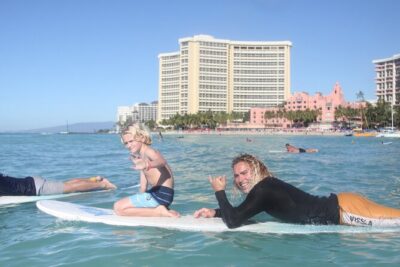
The best part of this Oahu lesson is that you get a real introduction to surfing, not just a quick push on a board. You’ll practice the basics on land, then work with an instructor in the water at a quieter Waikiki spot. Small groups and a two-hour session give you time to try more than once.
I like the careful attention to safety, including instruction on how to fall, and the patient teaching style reported with instructors such as Noah, Janelle, Max, and Kai. I also like the family-friendly age range: children can join from age 11, and several families had both children and adults standing on their boards.
The main thing to consider is group size. Six people with one instructor can feel crowded, especially if everyone needs close help at once. Some beginners may also prefer to paddle into their own waves sooner, since instructors may push you onto the first few.
Key points to know before booking
- Two hours on the water: You have enough time to learn, fall, adjust, and try again instead of rushing through one short attempt.
- A six-person maximum: The group is small by typical beach-lesson standards, though individual attention can vary when all six need help.
- A proper land lesson first: You’ll cover board position, paddling, standing, turning, balance, and safety before entering the waves.
- Suitable for first-timers age 11 and older: Families with children, teens, and adults can book together.
- Morning or afternoon choices: You can fit the lesson around the rest of your Oahu plans.
- Certified instructors: All instructors hold American Red Cross CPR and lifeguard certification.
Starting at Kaimana Beach Hotel
Your lesson begins at Kaimana Beach Hotel, at 2863 Kalākaua Avenue in Honolulu. This puts you on the eastern side of Waikiki, near a beach setting that feels more contained and relaxed than the busiest central stretches.
You return to the same meeting point when the two hours are over. That simple start and finish helps, especially if you are arranging the lesson around a hotel stay, a meal, or another Oahu activity.
The meeting point is near public transportation. Parking deserves some planning, though. One useful option reported for the area is valet parking outside the shop for $10 for three hours. Street parking may be available, but finding a space can take time, and one practical tip is to bring coins for meters.
I would arrive early enough to handle parking, find the meeting spot, and settle your child or yourself before the lesson begins. A few minutes matters when your first task is learning to stand on a moving board.
More Beginner Surf Lessons in Oahu
- Oahu: Beginner-Friendly Waikiki Beach Surfing Lesson
★ 4.9 · 425 reviews - Oahu: Waikiki 2-Hour Beginner Group Surf Lesson
★ 4.9 · 191 reviews - North Shore Beginner Surf Lesson, Hawaii
★ 4.5 · 114 reviews
The land lesson: learning before the waves
The first part takes place on land. This is where surfing becomes less mysterious.
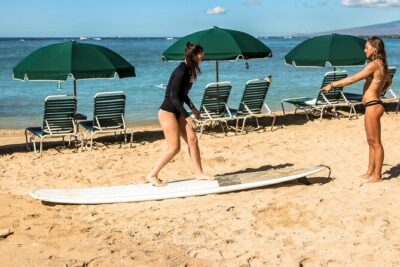
You’ll learn how to position yourself on the board, paddle correctly, move over waves, turn the board, and get your feet underneath you. The instructor also explains the proper surf stance and basic balance techniques.
That land practice is important for first-timers. Surfing asks you to do several things at once: read the water, keep the board straight, paddle at the right moment, push up quickly, and place your feet correctly. Trying to learn all of that while a wave is carrying you toward shore can feel like too much.
The lesson also covers safety rules and how to fall safely. That last point matters more than it sounds. A nervous beginner often stiffens up, reaches for the board, or tries to land awkwardly. Knowing what to do when you lose balance lets you focus on the fun instead of treating every wobble as a crisis.
You’ll likely hear repeated reminders about body position and balance. That repetition is useful. Surfing is learned through small physical corrections, not through one perfect explanation.
Entering the water at a quieter Waikiki spot
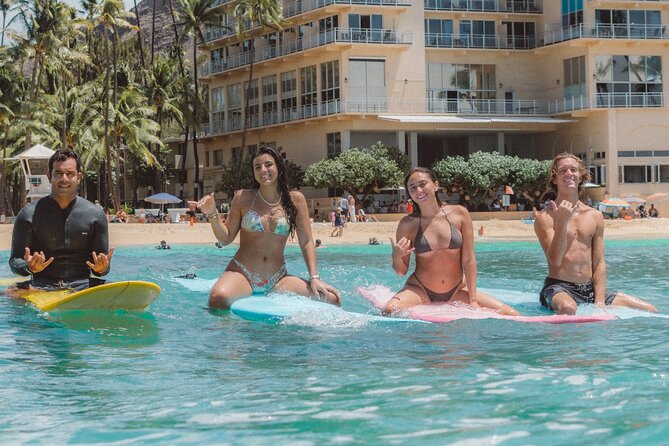
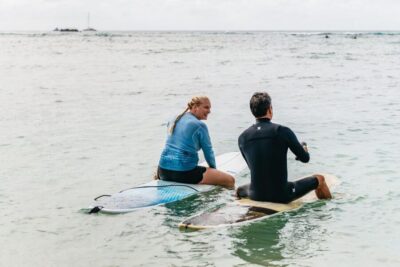
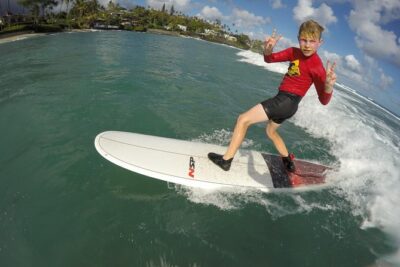
After the land instruction, you head into the water with your board. The lesson takes place at a more secluded Waikiki spot, which can make the first attempts feel less exposed than trying to learn in the busiest part of the beach.
Your instructor helps with positioning and timing. For a beginner, catching the wave is often the hardest part. You may paddle too early, too late, or at the wrong angle. The instructor’s job is to help you get lined up, tell you when to paddle, and help you rise at the right moment.
Several instructors have been singled out by name in past sessions, including Noah, Janelle, Max, Kai, Josh, Jake, and Sean. The teaching style described across those sessions is patient, relaxed, and focused on getting beginners comfortable. That matters for families, since an 11-year-old who is nervous in the water may need encouragement before technique.
One particularly useful part of the instruction is the balance between help and independence. At first, the instructor may give your board a push to help you catch a wave. Once you understand the feeling, you can try paddling and catching the wave with less assistance.
That approach can produce quick success, but it also creates the main limitation of the lesson. If you want to practice every part of the process alone from the first attempt, you may feel the instructor is doing too much. If your priority is to stand up and experience the thrill of riding a wave, the support is likely welcome.
What you’ll practice during the two hours
The session is built around several basic surfing skills:
- Board positioning: You’ll learn where to lie on the board so the nose is not too high or pushed underwater.
- Paddling: The instructor shows you how to paddle and how to prepare for an incoming wave.
- Moving over waves: You’ll learn basic ways to handle waves while keeping control of the board.
- Turning: The lesson introduces how to maneuver the board rather than simply riding straight.
- Standing up: You’ll practice bringing your feet under you in one quick movement.
- Surf stance: Your feet and body position affect balance and control.
- Falling safely: You’ll receive guidance on how to fall into the water.
- Wave timing: The instructor helps you understand when to paddle and when to let the wave carry you.
You should not expect to master surfing in two hours. You can, however, learn the basic sequence and get a clear sense of what to practice next. For many first-timers, standing up once is the main goal. A lesson that gives you several attempts is more useful than one that produces one lucky ride.
Past sessions have included beginners catching several waves each. That is not a promise for every group, since conditions, confidence, and coordination vary. Still, the two-hour length gives you a fair chance to improve after each attempt.
More Beginner Surf Lessons in the USA
- Surf lessons for beginners in Waikiki
★ 4.0 · 40 reviews - Beginner Surf Lesson in North Shore, Oahu
★ 5.0 · 26 reviews - Beginner Surf Lesson at North Shore Haleiwa, Oahu
★ 5.0 · 19 reviews - Group Surf Lessons for beginners on the North Shore of Oahu
★ 5.0 · 18 reviews
How the small group changes the lesson
The maximum group size is six people. That is small enough for an instructor to keep an eye on everyone, but it is not the same as a private lesson.
The group format has a few advantages. You can watch other beginners make the same mistakes you are making. Seeing someone else stand up can make the movement easier to understand. It also takes some pressure off, since nobody expects a polished performance from a group of first-timers.
The tradeoff comes when several people need help at once. One person may need a reminder about stance, another may need help with the board, and a third may be ready for a wave. With six participants, you may spend some time waiting for your turn or practicing while the instructor works with someone else.
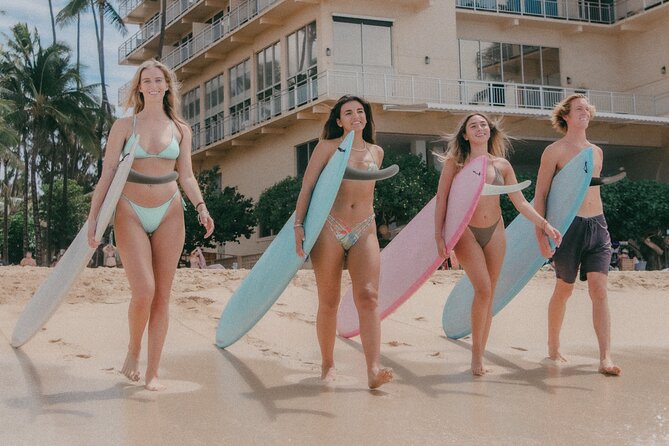
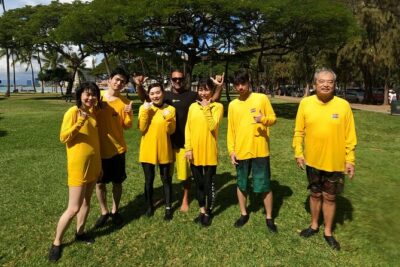
For a family of four or five, the setup can work well because you share the lesson and the memory. Several family groups with children aged 11, 15, and 16 managed to get up on their boards. Parents can also take part instead of standing on shore with a camera.
If you want constant one-on-one coaching, ask about a private option before booking. This particular activity is designed for small-group instruction, not personal coaching from start to finish.
Is two hours enough for a first lesson?
Yes, two hours is a sensible length for a first attempt. A shorter session might end just as you begin to understand what the board is doing.
The opening land lesson uses some of your time, but it prevents the water portion from becoming random trial and error. Once you enter the water, you can spend the remaining time repeating the same basic cycle: position, paddle, catch the wave, stand, fall or ride, then adjust.
Expect the first few attempts to feel clumsy. That is normal for this sport. Your arms may tire, and getting back on the board takes effort. The two-hour format lets you build familiarity instead of judging yourself on the first wave.
You may also find that the lesson changes pace as it goes. Early attempts tend to involve more direct help. Later attempts may include fewer pushes and more independent paddling, depending on your comfort and the instructor’s judgment.
A morning or afternoon choice makes the lesson easier to fit into a larger day. You can choose the time that works best with your plans, though the supplied details do not specify which session has better wave conditions.
Safety, ages, and physical demands
You must be at least 11 years old to join. That makes this a practical choice for families with older children and teenagers, but it is not an activity for younger kids.
All instructors are certified in CPR and lifeguarding by the American Red Cross. That does not remove the normal risks of ocean activity, but it gives you a clear safety standard for the people leading the lesson.
The lesson includes safety rules, wave handling, and falling technique. You should pay close attention during this part, even if you are eager to get moving. A safe fall and a controlled board can make the difference between a fun learning session and a stressful one.
Most people can participate, according to the activity information. Still, surfing requires paddling, balancing, getting up from a prone position, and repeated movement in the water. If you have a health concern or are unsure about the physical demands, ask before booking.
Families, couples, and first-time adults
This lesson fits families particularly well. Parents and children can learn together, and the instructors have experience helping nervous young surfers settle down and try again.
It also works for couples and friends who want a shared activity rather than a private beach day. The group setting keeps the mood informal, and you can encourage one another between attempts.
Adults should not assume the lesson is mainly for children. First-time parents and older beginners have also used the instruction to catch their first waves. The teaching is aimed at people who have never surfed or have tried a few times but still have not found the rhythm.
If you have already taken several lessons and can reliably paddle into waves, stand, and turn, this may feel basic. It is built for beginners, not intermediate surfers looking for advanced technique.
The value of the experience
No price is provided here, so I cannot judge the exact cost against other Oahu lessons. I can still explain what you are paying for.
The value comes from a focused two-hour session, an instructor-led land lesson, supervised water practice, and a group capped at six. Taxes and local taxes are included, so you should not be adding those charges to the advertised amount. Souvenir photos are not included and can be purchased separately.
For a family, the lesson may be especially worthwhile because everyone can take part. You do not need one parent to stay on shore supervising children while the rest of the group surfs. The chance to share the first successful ride has real value, even if nobody leaves looking like a professional.
The value is lower if you mainly want a quiet beach swim or already know how to surf. It is also lower for someone who dislikes group instruction or wants the instructor beside them at every moment.
Helpful details before you book
Confirmation arrives at the time of booking. The activity is offered in English, and you can select a morning or afternoon lesson.
The experience begins and ends at Kaimana Beach Hotel. It has mobile ticketing, and public transportation is nearby. Plan extra time for parking, since the area can be difficult during busy periods.
Cancellation is free up to 24 hours before the start time for a full refund. Cancellations or changes made less than 24 hours before the start time are not accepted for a refund, and the cut-off uses local Oahu time.
I would bring a calm attitude and a willingness to fall. The instructor can help with timing and positioning, but you still have to repeat the movements. The people who get the most from this lesson are not the ones who stand perfectly on the first try. They are the ones who listen, reset, and try again.
Should you book this Oahu surf lesson?
Book it if you are 11 or older, new to surfing, and want a guided first attempt at a quieter Waikiki location. It is especially well suited to families with children and teens, couples, and friends who want to learn together.
The strongest reasons to choose it are the two-hour length, land instruction, safety guidance, and patient coaching from instructors such as Noah, Janelle, Max, Kai, and Josh. You also have a good chance to stand up and ride at least a few waves, though nobody can promise a particular result.
Think twice if you want private coaching, dislike waiting your turn, or expect to paddle into every wave without help. For most first-timers, though, this is a practical and friendly way to turn a Waikiki beach day into a real Hawaiian experience.
FAQ
Where does the surf lesson start?
The lesson starts at Kaimana Beach Hotel, 2863 Kalākaua Avenue, Honolulu, Hawaii 96815.
Where does the activity finish?
The lesson ends back at the meeting point at Kaimana Beach Hotel.
How long does the surf lesson last?
The lesson lasts approximately two hours.
How old must participants be?
Participants must be at least 11 years old.
How many people can join the group?
The activity has a maximum of six participants.
Are instructors certified?
Yes. All instructors are certified in CPR and lifeguarding by the American Red Cross.
Are photos included?
No. Souvenir photos are not included, but they are available to purchase.
More Group Surf Lessons in the USA
- Group Surf Lesson with Videos and Photos
★ 5.0 · 69 reviews - Private Group Surf Lesson
★ 5.0 · 47 reviews - Group Surf Lesson in Honolulu
★ 5.0 · 45 reviews - Exclusive Group Surfing Lesson with Waikiki Courtesy Shuttle
★ 5.0 · 24 reviews
More Group Surf Lessons in Oahu
- Open Group Surfing Lesson in Waikiki, Hawaii
★ 4.5 · 582 reviews - Waikiki Private Group Surf Lesson
★ 5.0 · 298 reviews - Family, Private & Group Surfing Lessons, Waikiki Courtesy Shuttle
★ 5.0 · 216 reviews - Group Surf Lesson in the Heart of Waikiki
★ 5.0 · 107 reviews
Just added for surfers in Oahu
- Surf Honolulu: Ala Moana Stand-up Paddleboard Lesson★ 5.0 · 3 reviews
- Semi-Private Surfing Lesson in Waikiki, Oahu★ 5.0 · 26 reviews
- Waikiki 2 Hours Private Guided Surf Lesson★ 3.5 · 8 reviews
- Surf Lessons on the North Shore Great for Families and all Ages★ 5.0 · 27 reviews
- Surf Activity on the Wai Kai Wave in Ewa Beach★ 5.0 · 8 reviews
- Learn to surf with a local big wave rider on the North Shore of Oahu★ 4.5 · 10 reviews
- Private Group Surf Lesson★ 5.0 · 47 reviews
- Semi-Private Surf Lesson★ 5.0 · 17 reviews
Oahu Surf Lessons, compared.
Beginner-Friendly Waikiki Beach Surfing Lesson
Read our review →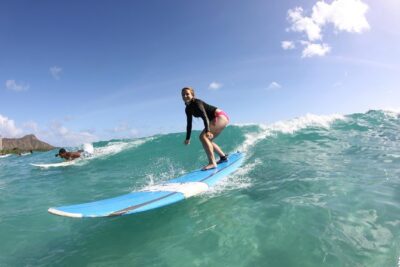

Family, Private & Group Surfing Lessons, Waikiki Courtesy Shuttle
Read our review →