
Review · AUCKLAND
Beginner Surf Lesson at Te Arai Beach
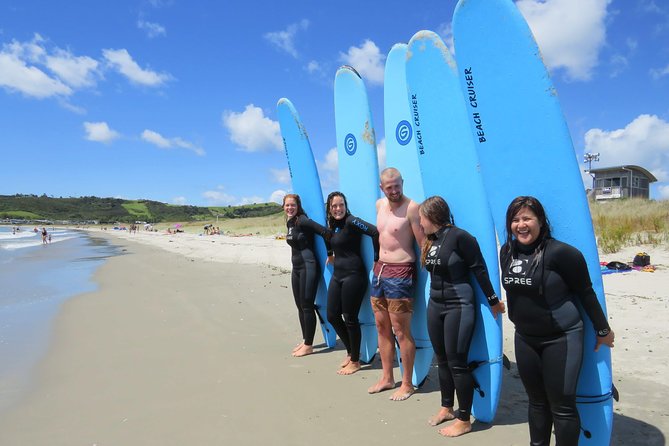
Catching your first wave is the whole point here, and Saltwater Eco builds toward it in sensible steps. You start on the beach with safety, board handling, paddling, and pop-up practice before taking your board into the water. Locke, Lydia, and Kirsty are praised for calm, patient teaching, especially with children and nervous first-timers.
I like the small groups of up to 12, which gives the instructors room to adjust their advice to your fitness and skill level. I also like that the lesson time is set around the tides, and that boards, wetsuits, and souvenir photos and videos are included. The main thing to consider is transport: you must make your own way to the meeting point, and the lesson depends on good weather.
Key points to know before you book
- Beginner-friendly instruction: You learn safety, board use, paddling, and pop-up technique before heading into the water.
- Small class size: Groups are capped at 12, allowing more personal help than a large beach class.
- Equipment included: A surfboard and wetsuit are supplied, so you do not need to bring your own gear.
- Tide-aware timing: Lesson times are planned around the tides, an important detail for safe and useful beginner waves.
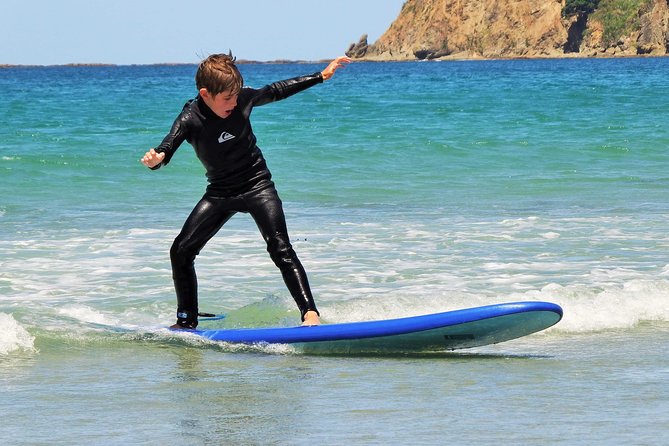
- Family appeal: Children aged 10 and 12 have taken the lesson, and the activity is presented as suitable for the whole family.
- Meeting point detail: The stated start point is 708 Te Arai Point Road, while the lesson information also refers to Omaha Beach. Confirm the exact beach location when you book.
Why this Auckland surf lesson works for first-timers
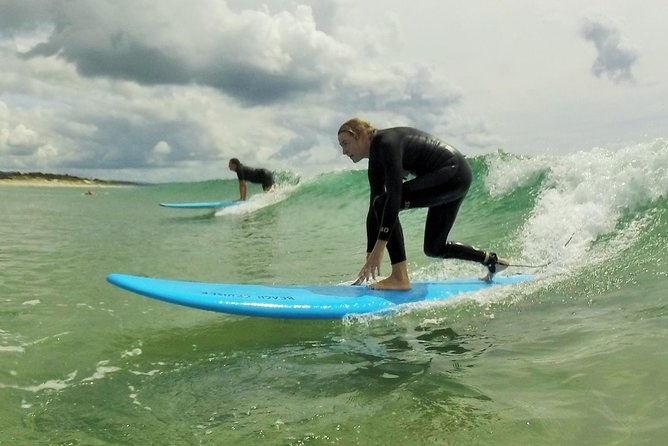
Surfing can look simple from the shore. Lie on the board, paddle, stand up, and ride. In practice, the first few minutes can feel awkward, especially when you are trying to remember where your feet go while a wave approaches.
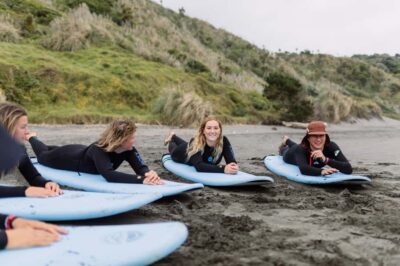
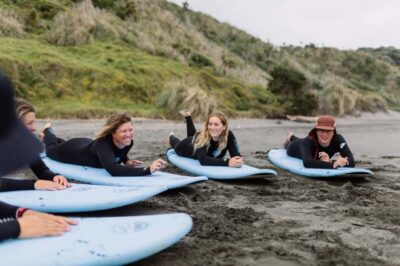
Saltwater Eco breaks the task into manageable pieces. The lesson begins with beach-based instruction, where you can learn the basic movements without the pressure of moving water. You are shown how to use the board, how to paddle, and how to pop up into a standing position. You also receive guidance on beach and water safety before you try to catch a wave.
That order matters. I would rather spend a little time practising the movement on sand than receive a rushed explanation beside the breakers. For a first lesson, the goal is not perfect style. It is to understand the equipment, stay safe, and get enough practice to make a first attempt feel possible.
The teaching also appears suited to mixed ability within a group. The instructors work on the technique that fits your ability and fitness, rather than expecting every person to learn at the same pace. That is useful if you are taking the class with children, a partner, or friends who have different levels of confidence.
More Beginner Surf Lessons in New Zealand:
- Mount Maunganui: Group Beginner Surf Lesson
★ 5.0 · 16 reviews - Group Beginner Surf Lesson in Mount Maunganui
★ 5.0 · 2 reviews - Greymouth: 2-Hour Beginner Surf Lesson
★ 4.5 · 2 reviews
Te Arai and Omaha Beach: check the location before leaving Auckland
The experience is connected with Te Arai, one of the Auckland region’s recognised beginner surf areas, and the meeting point is listed as 708 Te Arai Point Road, Te Arai 0975. The lesson description also refers to Omaha Beach, a broad white-sand beach with clear water and a clean setting for beginners.
Because both Te Arai and Omaha Beach appear in the information, I would confirm the exact water location and arrival instructions before setting out. Do not assume that the named meeting address and the beach entry point are identical. This is the most important practical detail to clear up before your day trip.
The area is described as being within reach of central Auckland, making the lesson a reasonable day-trip activity for people based in the city. Transport is not included, so you need to arrange your own way to the lesson. The tour is near public transportation, but no specific route or travel time is provided, so check your return plans before booking.
The beach itself is part of the appeal. A clean, white-sand shoreline and clear water make the first lesson feel less intimidating than a crowded urban beach. Still, the setting is not a promise of calm conditions every day. Surf lessons depend on the weather, and poor conditions can lead to a different date or a full refund.
The first 30 minutes: safety, boards, and beach practice
Your lesson lasts about two hours, with the opening section focused on preparation. Expect the instructors to cover the basics of beach and water safety before you head out. This is not filler. A beginner needs to know how to handle a board around other people, how to position it, and what to do when a wave reaches the board.
You receive a surfboard and wetsuit as part of the price. Having the equipment provided makes this easier to plan, particularly if you are visiting Auckland and do not want to carry specialist gear. You should still arrive ready for an active beach session, since the class includes paddling, standing, and repeated attempts in the water.
The beach work covers the two movements that matter most at this stage: paddling and popping up. Paddling helps you move into position, while the pop-up is the quick transition from lying on the board to standing on it. The instructors focus on effective technique suited to your ability and fitness, which should help you avoid wasting energy on a poor position.
I especially like this part of the format for nervous beginners. On land, you can ask questions and repeat the sequence before the ocean adds current, balance, and timing to the task. It also gives children a clear set of instructions before they begin.
Taking the board into the water
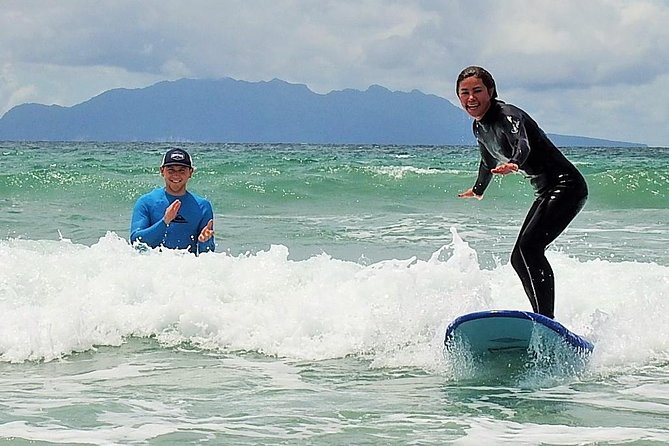
After the beach practice, you take the board into the ocean and begin applying the skills. The lesson timing is planned around the tides, which is a useful sign that the class is built around actual surf conditions rather than a fixed timetable that ignores the beach.
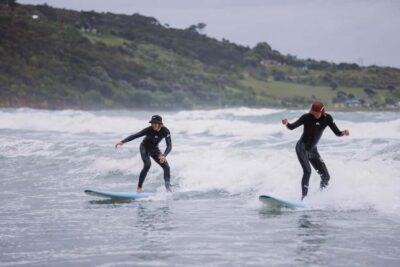
You will not simply be handed a board and sent toward the waves. The instructors aim to help you use the right technique for your ability and fitness. That may mean working on position, paddling effort, or the moment to attempt a pop-up. A small class helps here because the instructor can give more targeted advice than is possible in a very large group.
The experience is still a group lesson, not a private coaching session. The maximum is 12 people, so you should expect some waiting between attempts and some shared instruction. That is a fair trade for the lower price and the social feel of learning with others.
The strongest teaching quality described in the available feedback is patience. Locke is singled out for helping a child get up on the board quickly and for working calmly with beginners. Lydia is praised for targeted instruction during a women-focused lesson, while Lydia, Locke, and Kirsty are described as friendly and reassuring teachers. Those details matter because a calm instructor can make the difference between freezing up and trying again.
More Surf Lessons in New Zealand:
- 2 Hour Surf Lesson – Te Arai Beach
★ 5.0 · 119 reviews - Raglan: Group Surf Lesson
★ 5.0 · 79 reviews - Auckland: Group Surfing Lesson with Muriwai Surf School
★ 4.9 · 34 reviews - Queenstown: White Water Surfing Along the Kawarau River
★ 4.6 · 30 reviews
What the $49.03 price includes

At $49.03 per person, this is a reasonably contained way to try surfing without buying or hiring the main equipment separately. The board and wetsuit are included, as are souvenir photos and videos of the lesson. The photos and videos add value for families and first-timers who want a record of the day, though the exact number and delivery method are not stated.
The price is strongest if you are starting from zero. You get instruction, equipment, and a full two-hour session, rather than paying simply for access to a board. You also leave with skills you can practise later, including board handling, paddling, and the pop-up movement.
The value is less clear if you already surf regularly. An experienced surfer may not need a beginner safety briefing or basic pop-up practice. This class is designed for new surfers and people still building confidence, so advanced participants should look for a different type of coaching.
Group discounts are available, which can help if you are booking for a family or a small group of friends. Since transport is excluded, remember to add your own travel costs when comparing this with a lesson closer to Auckland.
How the lesson suits families and nervous adults
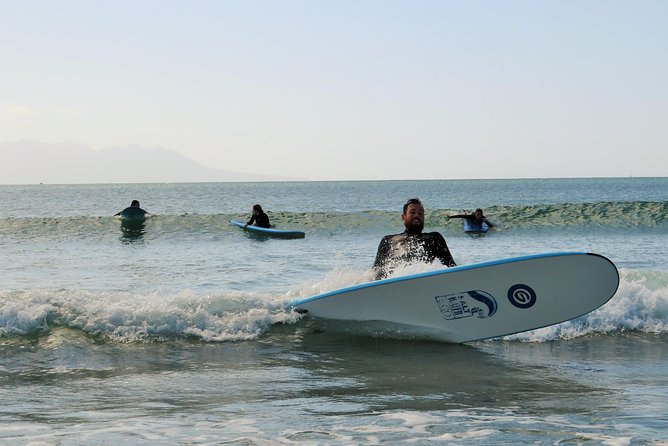
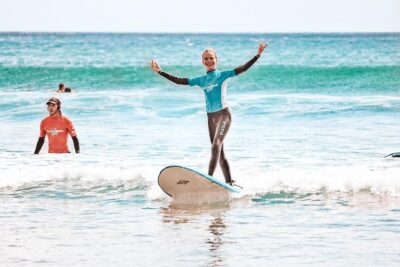
Surfing is presented as a family activity, and the available experience includes children aged 10 and 12. The lesson made their session fun and informative, with the instructors supplying both wetsuits and boards. That makes this a practical option for a parent who wants an activity the family can share without first building a kit of surf gear.
Children still need to be comfortable taking instruction and spending time in the ocean. The supplied information says most people can participate, but it does not give a detailed age limit, swimming requirement, or medical guidance. If you are booking for a child, confirm those points directly with Saltwater Eco.
Adults who feel nervous should find the gradual structure helpful. You begin with safety and land drills, then move toward the water with an instructor guiding the process. The teaching style described by past participants is patient and calm, rather than rushed or intimidating.
The group setting can also make the class more enjoyable. Learning alongside other beginners means you are not the only person wobbling, missing a pop-up, or needing a second explanation. If you want constant one-to-one attention, though, the group limit of 12 may not be enough for you.
Instructor style: patient, targeted, and calm
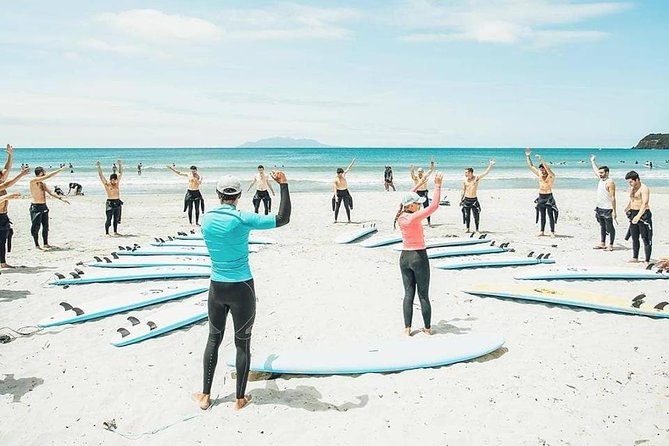
The individual instructors are one of the clearest strengths of this experience. Locke is praised for helping a child stand on the board quickly and for showing patience with people new to surfing. Lydia receives similar praise for focused teaching and for helping a nervous participant make progress.
Kirsty is also described as patient and calm. The teaching team’s approach appears to put emphasis on making surfing feel safe and manageable, not on showing off advanced skills. That tone is important in a first lesson, when a harsh or hurried instructor can make the ocean seem harder than it is.
You should still treat the lesson as an introduction, not a guarantee that you will ride a long wave. Surfing depends on your balance, timing, fitness, the group’s pace, and the conditions on the day. The lesson gives you a sound start and skills to practise again, but progress will take more than one session for most people.
A useful tip is to listen closely during the beach practice. The short instructions on board position and pop-up technique may feel basic, but they become much harder to remember once you are wet and trying to catch a wave. Ask questions early, while the group is still on the sand.
Timing, weather, and cancellation
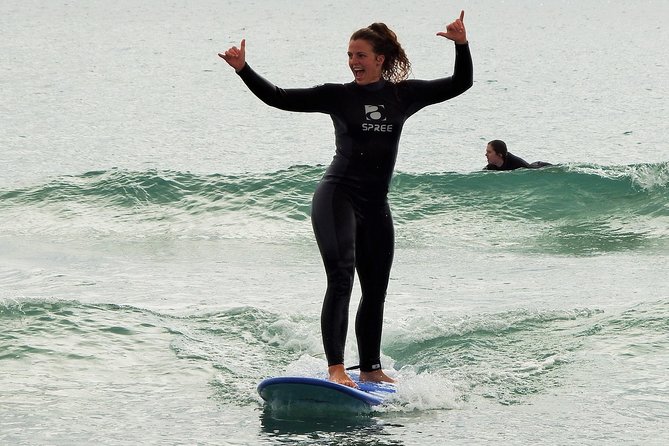
The advertised session runs from 11:00 a.m. to 1:00 p.m., Monday through Sunday, during the stated operating period. Lesson times are arranged around the tides, so the exact schedule may not always suit your wider Auckland plans. Allow room before and after the two-hour class rather than booking a tight connection or another fixed activity.
Good weather is required. If poor weather forces a cancellation, you can be offered another date or a full refund. That policy protects you from losing your money when conditions make the lesson unsuitable, but it also means you should keep some flexibility in your day-trip plans.
You can cancel for a full refund up to 24 hours before the start time. Changes or cancellations made within 24 hours are not accepted for a refund. The cut-off uses local time, so check the time carefully if you are booking from another country.
Who should book this lesson?
I would choose this for a first-time surfer based in Auckland, a family seeking an active beach day, or an adult who wants patient instruction without committing to a large course. The equipment is included, the session is short enough for a day trip, and the small group keeps the lesson from feeling like a mass activity.
It also suits people who want a first taste before deciding if they should book more lessons. You learn the basic movements and safety points, then leave with skills you can practise later.
I would hesitate if you need private coaching, have limited flexibility around the weather, or already know how to surf. I would also confirm the exact Te Arai and Omaha meeting details before paying, since the supplied information uses both locations.
FAQ
Where does the surf lesson start?
The listed meeting point is 708 Te Arai Point Road, Te Arai 0975, New Zealand. The lesson information also refers to Omaha Beach, so confirm the exact beach location when you book.
How long does the lesson last?
The beginner surf lesson lasts approximately two hours.
What time does the lesson run?
The stated opening hours are Monday through Sunday from 11:00 a.m. to 1:00 p.m. Lesson timing is arranged around the tides.
Is a surfboard included?
Yes. Surf equipment, including a surfboard, is included.
Is a wetsuit provided?
Yes. A wetsuit is included with the surf equipment.
How many people can join the lesson?
The activity has a maximum of 12 participants.
Is transport included?
No. You must arrange your own transport to the lesson location. The meeting point is near public transportation.
Are photos and videos included?
Yes. Souvenir photos and videos of the lesson are provided.
Can I cancel for a refund?
You can cancel at least 24 hours before the start time for a full refund. Cancellations or changes made less than 24 hours before the start time are not refunded or accepted. If poor weather cancels the activity, you can receive a different date or a full refund.
Should you book Saltwater Eco?
Book it if you want a well-priced first surf lesson with equipment included, a manageable two-hour format, and instructors who are patient with beginners. The strongest reasons are the small group cap, tide-aware scheduling, and calm teaching style associated with Locke, Lydia, and Kirsty.
Before booking, confirm the exact meeting beach and plan your own transport. If the weather forecast is uncertain, keep your Auckland schedule flexible. For a first attempt at surfing near Auckland, this lesson offers a practical introduction without requiring you to buy gear or sign up for a longer course.
Just added for surfers in New Zealand
- Group Beginner Surf Lesson in Mount Maunganui★ 5.0 · 2 reviews
- Private 2 Hour Surf Lesson★ 5.0 · 5 reviews
- Raglan: Private 1:1 Surf Lesson★ 5.0 · 2 reviews
- Raglan: 3 Day Surf Lesson Package★ 5.0 · 2 reviews
- Mount Maunganui: Group Beginner Surf Lesson★ 5.0 · 16 reviews
- Mount Maunganui: Private Surf Lesson★ 5.0 · 2 reviews
- Greymouth: 2-Hour Beginner Surf Lesson★ 4.5 · 2 reviews
- Raglan: Private Surf lesson 2:1★ 5.0 · 3 reviews
New Zealand Surf Lessons, compared.
Auckland: Group Surfing Lesson with Muriwai Surf School
Read our review →
Queenstown: White Water Surfing Along the Kawarau River
Read our review →
Browse the lists this tour appears in