
Review · AUCKLAND
Private 2 Hour Surf Lesson
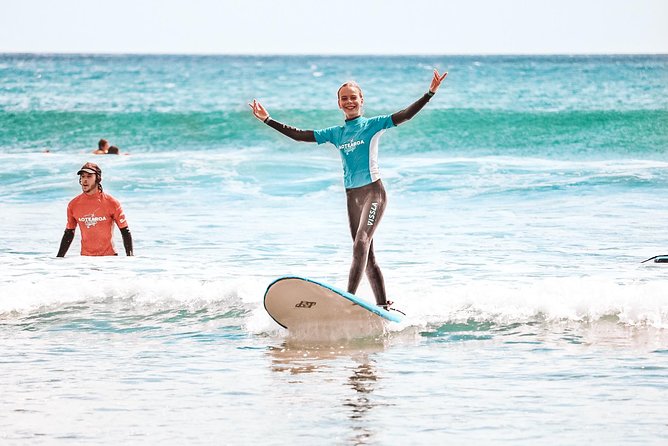
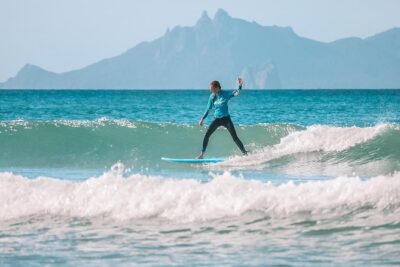
Te Arai gives you a proper beach setting for learning to surf, with sandy shores and calm, consistent waves along Auckland’s East Coast. The private format lets your instructor adjust the pace, spend extra time on the pop-up, or move ahead if you already know the basics.
I like the one-to-one coaching, especially for a first lesson when small corrections matter. I also like that the fee includes the board, leash, wetsuit, rash shirt, and sunscreen, so you can arrive without building a small surf shop in your luggage.
The main drawback is the price: $126.67 per person is more than a shared lesson. The experience also depends on suitable weather, and the published timing is about two and a half hours, with two hours devoted to the surf lesson itself.
Key points to know before you book
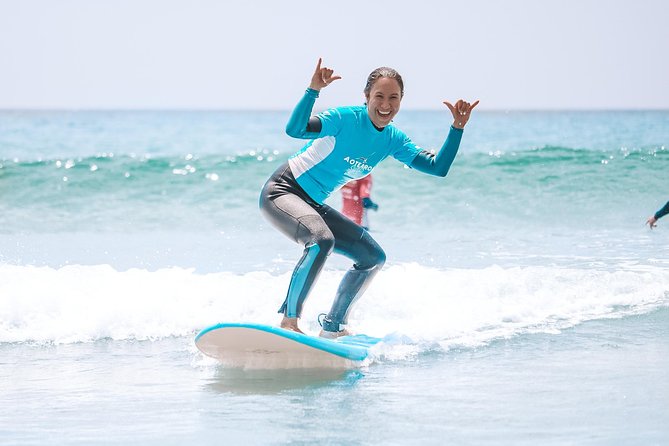
- Te Arai is the classroom: You learn on a sandy beach along Auckland’s East Coast, an area known for calm and consistent surf.
- Private coaching changes the lesson: Your instructor can teach at your pace rather than following a fixed group timetable.
- Beginners get a full foundation: Safety, equipment design, positioning, paddling, ocean awareness, timing, the pop-up, and wave riding are all covered.
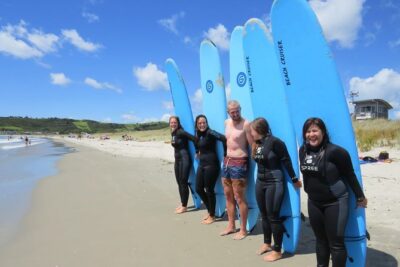
- The practical kit is included: You receive a surfboard, leash, wetsuit, rash shirt, and sunscreen.
- Children and families can fit in well: Instructor Lee received special praise for working with an eight-year-old, while Andrew helped two daughters enjoy their first lesson.
- Weather matters: You can cancel up to 24 hours ahead for a full refund, and a weather cancellation brings a new date or full refund.
Why Te Arai works for a first surf lesson
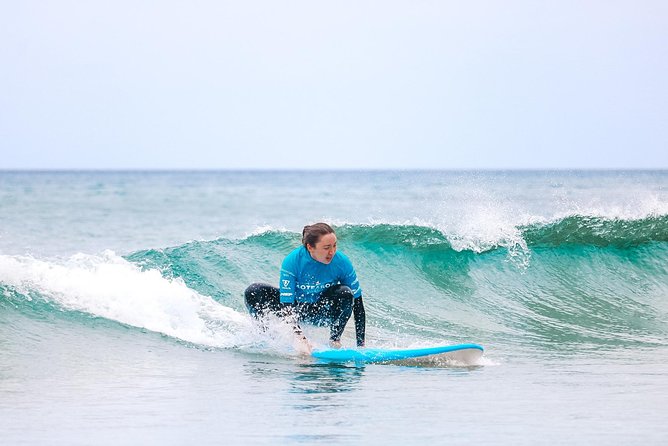
Auckland is not only a city-and-harbour destination. Head north toward Te Arai and the setting changes to a broad sandy beach with room to learn. The East Coast is known for surf that is calm and consistent, which matters when you are trying to coordinate your arms, legs, balance, and nerves at the same time.
You do not need to arrive as a surfer. This lesson is designed for complete beginners, but it also makes sense if you have stood on a board before and want better technique. A private instructor can focus on your exact problem instead of spending equal time with several people at different stages.
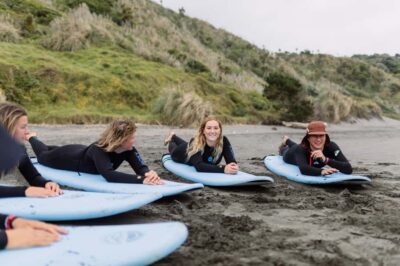
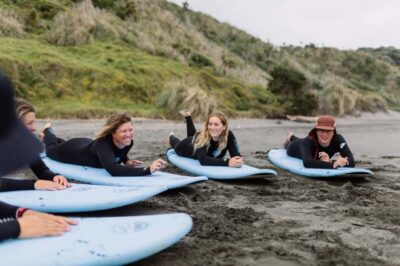
The beach setting also gives the lesson a useful progression. You can first learn the movements on shore, then take those skills into the water. That order is important. Surfing looks simple from the beach, but timing a wave and popping up cleanly takes more than enthusiasm.
More Two-Hour Experiences in New Zealand:
- 2 Hour Surf Lesson – Te Arai Beach
★ 5.0 · 119 reviews - Greymouth: 2-Hour Beginner Surf Lesson
★ 4.5 · 2 reviews - Canggu: 2-Hour Surf Course
★ 4.8 · 1,053 reviews
What the two-hour lesson teaches
The lesson begins with the basics of safety and ocean awareness. You can expect guidance on how to use your equipment, how the board is designed, and how to position yourself. These parts may sound less exciting than catching a wave, but they give you a better sense of what to do when the water becomes busy or a wave arrives sooner than expected.
You will work on your stance and body position, then learn the paddling technique needed to catch a wave. Paddling is not simply waving your arms at the water. Your position on the board affects speed, balance, and whether the board moves smoothly toward the incoming swell.
The lesson also covers how to get out the back, meaning beyond the area where waves are breaking. The supplied information does not promise a particular route or water condition on the day, so your instructor will need to adjust this part to the surf. The key value is learning how to read the water and move with more purpose.
Next comes timing and take-off. You will learn when to paddle, how to feel the board begin to move, and how to commit to the wave. That leads to the pop-up, the quick movement from lying on the board to standing. For many first-time surfers, this is the moment that determines whether the lesson feels rewarding or frustrating.
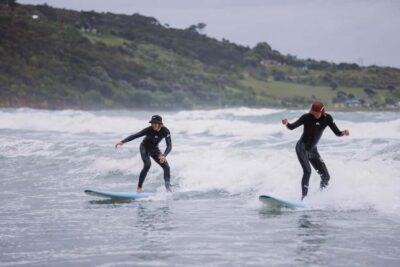
Finally, you work on riding waves. Your instructor can help you correct your stance, balance, and timing as you go. The aim is not simply to stand once for a few seconds. It is to understand the basic sequence well enough to keep improving after the lesson.
Private coaching is the main advantage
A private lesson is most useful when you need feedback right away. If your feet are too far apart, your weight is in the wrong place, or you hesitate during the pop-up, an instructor can focus on that one issue. In a large class, you may have to wait while several other people take their turn.
The private format also suits mixed ability within a family or small group. One person can work on standing up while another focuses on turning or wave selection. The lesson is still sold per person, and the experience is described as private, so only your group participates.
That privacy comes at a cost. At $126.67 per person, you are paying for personal attention rather than the lowest available entry price. I think the fee makes more sense if you value a focused first lesson, have limited time in Auckland, or want an instructor to address a particular weakness.
Group discounts are available, which may soften the total cost for a larger booking. The supplied experiences include groups that grew from nine to fourteen people, with booking changes made as the group expanded. That does not turn the lesson into a standard shared class, but you should confirm how a large private booking will be arranged before you pay.
Equipment is handled for you
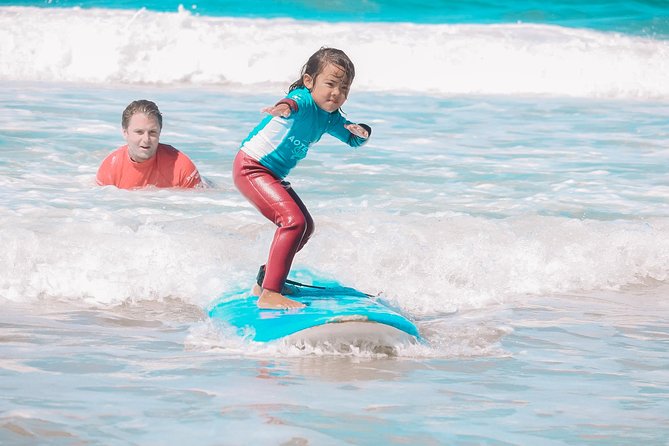
The included equipment removes several practical decisions. You receive:
- Surfboard
- Leash
- Wetsuit
- Rash shirt
- Sunscreen
For a first lesson, this is useful. You do not need to know what board size to choose or which type of wetsuit suits the conditions. The rash shirt adds a layer under the wetsuit and the leash keeps the board connected to you, while sunscreen is an easy item to forget on a bright beach day.
Equipment is included in the advertised price, along with taxes, fees, and handling charges. Souvenir photos are not included, but they are available to purchase. If having a picture of your first successful ride matters to you, budget for that separately.
You should still arrive ready for physical activity. A surf lesson involves paddling, getting up from a prone position, balancing, and moving through the water. The stated fitness requirement is moderate, so this is not a passive beach outing.
More Surf Lessons in New Zealand:
- Raglan: Group Surf Lesson
★ 5.0 · 79 reviews - Auckland: Group Surfing Lesson with Muriwai Surf School
★ 4.9 · 34 reviews - Queenstown: White Water Surfing Along the Kawarau River
★ 4.6 · 30 reviews - Mount Maunganui: Group Beginner Surf Lesson
★ 5.0 · 16 reviews
A look at the meeting point and timing
The lesson starts and ends at 708 Te Arai Point Road, Te Arai 0975, New Zealand. There is no separate end location, which keeps the arrangement simple. You return to the meeting point when the activity finishes.
The lesson itself lasts two hours, while the overall experience is listed as approximately two hours and thirty minutes. Treat that as a useful planning guide rather than a promise that every minute will be spent on the board. You may need time for equipment, preparation, and changing.
The straightforward meeting arrangement is helpful if you are fitting this into a day trip. It is less convenient if you are staying in central Auckland and hoping to walk over from your hotel, since the stated meeting point is at Te Arai. No transport is included in the supplied details, so you should plan your own way to the beach.
Confirmation arrives immediately after booking. Mobile tickets are accepted, which means you can keep the booking on your phone rather than printing paperwork.
What makes this suitable for children and families
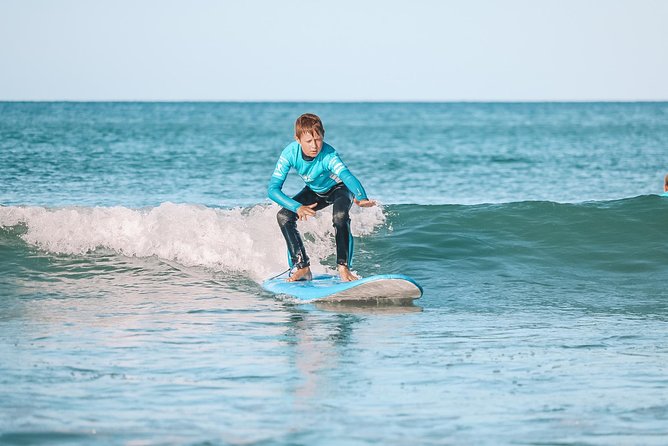
The lesson can work well for families, provided each participant is comfortable with moderate physical activity. Instructor Lee was singled out for his work with Sebastien, an eight-year-old, which suggests that the school can make the experience accessible to younger participants when the conditions and child are suitable.
That does not mean every child will find surfing easy. A child may need extra encouragement with paddling, waiting for a wave, or standing on the board. This is another reason the private format can help. The instructor can slow down, offer simpler instructions, and keep the focus on one child.
Andrew also worked with two daughters who finished keen to continue learning. That is a good sign for families hoping to turn a single holiday activity into an ongoing sport. Still, you should be realistic about the day. The goal is learning the foundations and having a safe introduction, not guaranteeing a polished surf performance.
Groups of teenagers can also enjoy the lesson, though keeping five teenagers focused in the water takes effort. The school’s teaching plan includes both skill work and active practice, which gives younger participants something concrete to do rather than simply waiting for waves.
Weather can shape the experience
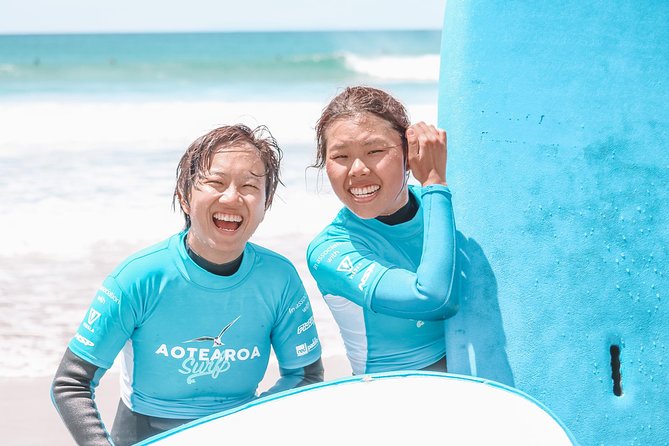
Surfing requires suitable weather and water conditions. If the school cancels because of poor weather, you are offered another date or a full refund. That policy protects you from paying for an activity that cannot run properly, but it also means you should keep some flexibility in your Auckland plans.
You can cancel for a full refund if you do so at least 24 hours before the start time. Cancellations made within 24 hours are not refunded, and changes during that period are not accepted. Cut-off times follow local time in New Zealand.
Weather can change the tone of the lesson. A warm, calm afternoon may feel easy and relaxed, while rough conditions can make the water work harder. One group even completed a lesson during stormy weather and still rated the experience highly, but I would not book this expecting dramatic conditions. The school’s ability to proceed depends on what is safe and suitable on the day.
How the price compares with the experience
At $126.67 per person, this is a premium beginner lesson rather than a budget beach activity. The price includes the two-hour lesson, all required surf equipment, a qualified and experienced instructor, sunscreen, and taxes and fees.
The strongest value comes from personal instruction. You are not only renting a board for two hours. You are learning how to use it, how to position yourself, and how to respond to the water. Those basics can prevent a lot of wasted effort if you choose to surf again.
The price is easier to justify for a first-time surfer, a parent booking for a child, or someone with only one chance to learn during a New Zealand holiday. It is harder to justify if you already surf confidently or simply want casual access to a board.
Large groups may benefit from group discounts, but the per-person price and exact discount should be confirmed before booking. The private setup is valuable when you want the instructor’s attention, not when you are mainly looking for the cheapest way onto the beach.
Who should book this Te Arai lesson?
I would point beginners here first, especially those who want a proper introduction instead of a quick attempt at standing on a board. The structured teaching sequence covers the parts that are easy to skip when you try surfing alone.
It also suits:
- Families with children who need patient, flexible coaching
- Couples or friends who want a private lesson for their own group
- New surfers who want to improve paddling, positioning, or the pop-up
- Visitors who value included equipment and a mobile booking
- Larger groups asking about a private session and group pricing
You may want another option if you dislike physical activity, need a fully weather-proof plan, or want a very short and inexpensive beach experience. This is an active lesson, not a sightseeing stop with a little surfing added.
Practical advice before you go
Wear clothes that are easy to change out of and bring only what you need to the beach. The school supplies a wetsuit and rash shirt, but the provided information does not specify changing-room arrangements, lockers, or shower facilities, so do not assume those services are available.
Keep sunscreen in mind even though it is supplied. You may spend time on the beach before and after the water session, and New Zealand sun can be strong. The school’s inclusion of sunscreen is helpful, but it does not remove the need to follow your instructor’s advice.
If you are booking for a child, think about attention span as well as swimming confidence. Tell the school the participant’s age and experience when arranging the lesson so the instructor can prepare appropriately. Lee’s work with an eight-year-old shows that younger children can take part, but the lesson still needs to suit the individual.
Service animals are allowed. The experience is private, and only your group participates, which gives you more control over the social side of the outing.
Should you book the private surf lesson?
Book it if you want a focused first step into surfing at a sandy East Coast beach, with all the equipment supplied and an instructor working only with your group. The strongest reasons are the one-to-one format, the clear teaching plan, and the school’s apparent ability to keep children and mixed-age groups involved.
I would hesitate only if the $126.67 price feels high for a two-hour lesson or if your schedule cannot handle a weather change. For everyone else, Te Arai offers a sensible setting, and the private coaching gives you a better chance of learning the basics rather than simply falling off a board and hoping for the best.
FAQ
Where does the private surf lesson begin?
The lesson begins at Aotearoa Surf School, 708 Te Arai Point Road, Te Arai 0975, New Zealand.
Where does the activity finish?
The activity ends back at the meeting point.
How long is the surf lesson?
The surf lesson lasts two hours. The overall experience is listed as approximately two hours and thirty minutes.
Is equipment included?
Yes. A surfboard, leash, wetsuit, rash shirt, and sunscreen are included.
Is this experience suitable for complete beginners?
Yes. The lesson is suitable for complete beginners and covers safety, equipment, positioning, paddling, ocean awareness, timing, the pop-up, and riding waves.
Is the lesson private?
Yes. Only your group participates in this private activity.
What happens if poor weather cancels the lesson?
You will be offered a different date or a full refund if the experience is canceled because of poor weather. You may also cancel up to 24 hours before the start time for a full refund.
Just added for surfers in New Zealand
- Group Beginner Surf Lesson in Mount Maunganui★ 5.0 · 2 reviews
- Beginner Surf Lesson at Te Arai Beach★ 5.0 · 6 reviews
- Raglan: Private 1:1 Surf Lesson★ 5.0 · 2 reviews
- Raglan: 3 Day Surf Lesson Package★ 5.0 · 2 reviews
- Mount Maunganui: Group Beginner Surf Lesson★ 5.0 · 16 reviews
- Mount Maunganui: Private Surf Lesson★ 5.0 · 2 reviews
- Greymouth: 2-Hour Beginner Surf Lesson★ 4.5 · 2 reviews
- Raglan: 2 Day Surf Lesson & Rental Package★ 4.6 · 5 reviews
New Zealand Surf Lessons, compared.
Auckland: Group Surfing Lesson with Muriwai Surf School
Read our review →
Queenstown: White Water Surfing Along the Kawarau River
Read our review →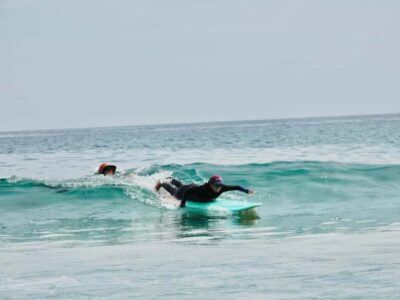
Browse the lists this tour appears in