
Review · SAN FRANCISCO
Beginner Surfing in San Francisco at Pacifica Beach
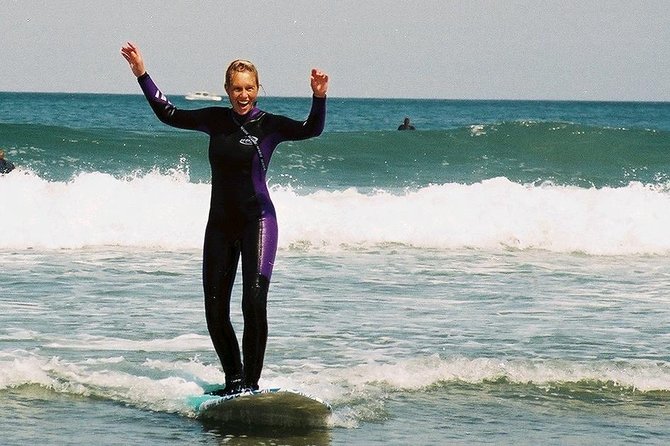
Pacifica Beach is a sensible place to try surfing for the first time. You begin on the sand with ocean safety, wave breaks, paddling, and pop-up practice, then move into shallow water to catch whitewater waves. The lesson is designed to help you get standing quickly without throwing you straight into the deep end.
I like the small maximum group of eight, which gives the instructor room to watch your technique and help you one at a time. I also like that wetsuits and boards are included, and that instructors are CPR, first-aid, and lifeguard certified.
The main consideration is the cold Pacific water and the built-in setup time. The class lasts about two and a half hours, but roughly 30 minutes goes to getting suited up and learning on land, leaving about 1.5 to 2 hours in the water.
Key points to know before you book
- Pacifica Beach is made for first attempts: You begin in shallow water with whitewater waves before moving farther out.
- The lesson covers more than standing on a board: You learn ocean awareness, safety, wave etiquette, paddling, balance, and pop-up technique.
- All essential equipment is supplied: Your price includes a wetsuit, surfboard, professional instruction, and fees.
- The group is limited to eight people: That helps create time for individual corrections and encouragement.
- Certified instructors lead the session: The teaching team includes CPR, first-aid, and lifeguard-certified staff, with instructors such as Alan, Al, David, and Joao named in past sessions.
- Parking costs extra: The meeting point is 5000 CA-1 in Pacifica, and parking is not included.
Why Pacifica Beach works for a first surf lesson
Pacifica sits just south of San Francisco, giving you a chance to trade city sightseeing for a few hours beside the Pacific. This is not a scenic drive with a quick photo stop. You come here to get wet, learn a new skill, and spend real time in the water.
The beach is used for instruction because beginners can start with broken waves, also called whitewater. These are the foamy waves that have already broken and are moving toward shore. They are less demanding than unbroken waves and give you time to work on balance and body position.
That progression matters. Surfing looks simple from the beach, but several things happen at once: you must paddle at the right time, keep the board straight, push up, place your feet correctly, and stay balanced while the wave moves beneath you. Starting in shallow water lets you focus on one step at a time.
You should still respect the ocean. Pacifica is not a swimming pool, and the water can feel cold. The supplied wetsuit is an important part of the experience, not an optional extra. The instructors first explain conditions, wave breaks, ocean awareness, and safety so you know what to watch before you begin.
More Beginner Surf Lessons in the USA
- Maui: Two Hour Beginner Group Surf Lesson in Kihei
★ 5.0 · 950 reviews - Oahu: Beginner-Friendly Waikiki Beach Surfing Lesson
★ 4.9 · 425 reviews - Oahu: Waikiki 2-Hour Beginner Group Surf Lesson
★ 4.9 · 191 reviews
Your first 30 minutes on land
The session opens with setup. You get fitted with a wetsuit and receive a surfboard, then head down to the beach for the land lesson. This early portion can take about 30 minutes, so do not expect to run into the water immediately after arriving.
The instructor explains how waves break and how to read basic ocean conditions. You also learn wave etiquette, which is the practical code that helps surfers avoid getting in one another’s way. For a first lesson, this is just as useful as learning how to stand.
Next comes the body mechanics. You practice paddling, push-ups, and the pop-up motion on land. The aim is to make the movement familiar before you try it on a moving board. You also work on riding position and balance, so you have a clear idea of where your hands and feet should go.
This dry practice may feel less exciting than catching a wave, but it saves time later. The more comfortable you are with the motion on land, the more attention you can give to the water.
Moving into shallow water and whitewater
Once the group is ready, the lesson shifts to the water. You start in a shallow area, riding the whitewater toward shore. The instructor helps you choose suitable waves and gives corrections as you try.
Expect the first attempts to be messy. You may lie too far forward, pop up too slowly, or place your feet unevenly. That is normal. The useful part of a small group is that the instructor can watch what went wrong and offer a simple adjustment before your next attempt.
Past sessions have included instructors named Al, Alan, David, and Joao. The teaching style described by the supplied information is patient, upbeat, and attentive to safety. David was specifically praised for helping beginners stay safe and get standing, while Joao was noted for explaining the basics clearly. Alan, who manages Adventure Out Surfing Clinic, was also singled out for being helpful.
Instructor assignments can change, so you should not book expecting one particular person. What matters is the teaching setup: certified staff, a beginner-friendly beach, and repeated practice rather than a single rushed attempt.
What 1.5 to 2 hours in the water really means
The headline lesson is often described as about three hours, while the practical duration is approximately two and a half hours. The difference is not a trick. Setup and the land lesson are part of the class, and they prepare you for the water portion.
You can expect about 1.5 to 2 hours in the water. That is a useful amount of time for a first lesson. You have enough attempts to settle your nerves, try the pop-up several times, and perhaps stand on a small wave. You are not simply handed equipment and left to figure things out.
The exact number of successful rides depends on ocean conditions, your fitness, and how quickly the movement clicks. Some people may stand after only one lesson. Others may spend much of the class learning to paddle and position the board. The goal is not a guaranteed polished ride. It is a safe, encouraging introduction that gives you a base for another class.
You will likely get tired. Paddling uses your shoulders and arms, while repeatedly climbing onto the board takes effort. The cold water can add to that fatigue, even with a wetsuit. Treat the session as a physical activity, not a passive sightseeing stop.
Same break, a different way into the water:
- Open Group Surfing Lesson in Waikiki, Hawaii
★ 4.5 · 582 reviews - Outrageous Surf ScHool Lesson on Lahaina Side
★ 4.5 · 547 reviews - Los Angeles: Surfing Lesson in Venice Beach
★ 4.8 · 442 reviews - Po’ipu Surf Lesson
★ 5.0 · 361 reviews
How the instruction helps beginners
The strongest feature here is the amount of attention given to the basics. You learn how to move through the water, how to approach a wave, and how to keep yourself and others safe. The instructors also encourage you through failed attempts, which can make a big difference when you are trying a sport that feels awkward at first.
Several people who took the class described the instructors as caring, patient, and focused on individual progress. That matches the structure of the session. A maximum of eight participants is small enough for the instructor to circulate and point out specific mistakes.
The tone also matters. A first surf lesson can feel intimidating if you imagine experienced surfers judging every move. This class is presented as a safe environment for beginners, without aggressive local behavior. You are there to learn, and the lesson is built around that fact.
Still, you should keep expectations realistic. An instructor can show you the right technique and help place you on a wave, but you must supply the balance and persistence. If you catch a wave and stand even briefly, count that as a real success.
Equipment, comfort, and what the price covers
The price is $139 per person. For that fee, you receive the surfboard, wetsuit, professional guide, and all taxes, fees, and handling charges. Parking is the main stated extra cost.
That makes the price easier to assess than a lesson where you must rent equipment separately. You do not need to buy a board or wetsuit for a one-time experiment, and you avoid the hassle of choosing beginner gear on your own. The equipment is also a practical part of staying comfortable in cold water.
The value depends on how much you use the lesson. If you only want a quick novelty, $139 is a significant spend for two and a half hours. If you want proper instruction, safety guidance, and enough water time to make real attempts, the price is more reasonable.
I would especially consider it worthwhile if you are curious about surfing but have been held back by the equipment or by uncertainty about ocean safety. The class removes both barriers. You arrive at the Pacifica meeting point, get the necessary gear, and learn the basic process from an instructor.
Timing, meeting point, and group size
The meeting point is 5000 CA-1, Pacifica, California 94044. The activity finishes back at the same location. Morning and midday lesson options are available, so you can fit the class around other San Francisco plans.
The location is near public transportation, which helps if you do not have a car. Parking fees are not included, so check your transport plan before setting out. You should also allow enough time to arrive at the meeting point ready for setup.
The group limit is eight people. That is small enough to support one-on-one feedback while keeping the class social. Solo participants can join without needing to organize a private lesson, and couples, friends, and families with children aged 12 or older can take part if everyone meets the participation requirements.
The minimum age is 12. Most people can participate, but surfing is active and takes effort. If you have concerns about your ability to take part, ask the operator before booking rather than assuming the class will be suitable.
Weather and cancellation rules
Surfing depends on safe conditions, so weather can affect the schedule. If the operator cancels because of poor weather, you are offered another date or a full refund. A cancellation can also happen if the minimum number of participants is not met, with the same choice of another option or a refund.
You can cancel for a full refund if you do so at least 24 hours before the start time. Cancellations or changes made inside that window are not accepted for a refund, and the cutoff uses Pacifica local time.
That policy is worth noting before you lock the lesson into a tight travel schedule. If this is part of a short San Francisco visit, leaving some flexibility around the class may save you from losing the fee if your plans change at the last minute.
Who will enjoy this Pacifica lesson most
This is a good match if you have never surfed, have tried once without instruction, or want a structured way to get back on a board. You do not need to own equipment or know surfing terms before you arrive.
It also suits people who prefer active sightseeing. You will spend less time looking at the Pacific and more time learning how it moves. The lesson gives you a direct connection to the coast that a standard viewpoint or beach walk cannot provide.
Families with children 12 and older may find the class appealing, especially if everyone wants to try the same activity. Couples and friends can also enjoy the shared challenge, though each person will progress differently.
I would hesitate to recommend it to someone seeking a relaxed, dry morning or a guaranteed ride on a large wave. You need to accept cold water, repeated falls, physical effort, and the possibility that standing may take longer than expected.
Should you book Beginner Surfing in San Francisco?
Book it if you want a proper first lesson rather than an equipment rental and a few unsupervised attempts. The strongest reasons are the certified instructors, small group size, full gear, clear safety teaching, and up to two hours of practice in the water.
The class is especially good for curious beginners who have always thought surfing was out of reach. Pacifica gives you a manageable starting point, and the instructors guide you from land practice into shallow-water waves.
Skip it if $139 feels too high for a single activity, if you dislike cold water, or if your schedule cannot handle a weather-related change. For everyone else, this is a practical and friendly way to test surfing near San Francisco, with a real chance of catching a small wave by the end.
FAQ
Where does the surfing lesson meet?
The class meets at 5000 CA-1, Pacifica, CA 94044, USA. The activity ends back at the same meeting point.
How long does the experience last?
The experience lasts approximately two and a half hours. It is also described as a three-hour beginning lesson, with setup and the land lesson included in the overall time.
How much time will I spend in the water?
You can expect approximately 1.5 to 2 hours in the water. About 30 minutes may be used for the land lesson, getting suited up, and reaching the beach.
Is surf equipment included?
Yes. The price includes rental gear, including a wetsuit and surfboard, as well as professional instruction and applicable taxes, fees, and handling charges.
What will I learn during the lesson?
You will learn ocean awareness, wave breaks, ocean conditions, safety in and out of the water, wave etiquette, paddling, push-up and pop-up techniques, riding waves, and balance.
What is the minimum age?
The minimum age is 12 years old.
How many people can join the class?
The activity has a maximum of eight participants.
What happens if the weather is poor?
If poor weather causes the activity to be canceled, you will be offered a different date or a full refund. If the minimum number of participants is not met, you will also be offered a different date or experience, or a full refund.
Just added for surfers in the USA
- Waikiki: Family, Private, and Group Surfing Lessons★ 5.0 · 4 reviews
- Waikiki: Surf Lessons Easy 60 min classes no crowds!★ 4.9 · 21 reviews
- Two- Hour Group Surfing Lesson in Cocoa Wrightsville Beach, NC★ 5.0 · 13 reviews
- 1-on-1 Private Surf Lesson in Santa Barbara★ 5.0 · 4 reviews
- Astonishing Scavenger Hunt: Surf, Sand and Sculptures!★ 3.0 · 2 reviews
- Electric Bike Rentals in Topsail Island and Surf City★ 5.0 · 2 reviews
- Surf Lesson in Santa Barbara★ 3.0 · 2 reviews
- Surf lesson with KTO Yoga Surf★ 4.0 · 5 reviews
USA Surf Lessons, compared.
Beginner-Friendly Waikiki Beach Surfing Lesson
Read our review →
Private Hanalei Sandy Bottom Surf Lesson on Kauai
Read our review →
Browse the lists this tour appears in