
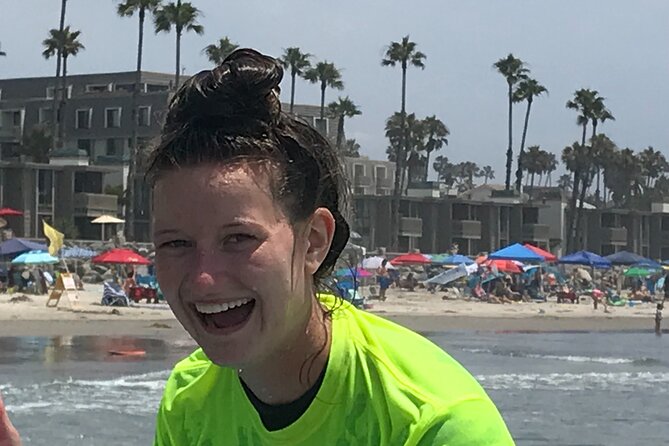
Review · CARLSBAD
Surfing Experience and Lessons
The best part of this Oceanside lesson is its focus on getting you upright, not just handing you a board and pointing toward the waves. You’ll learn how to paddle, stay safe, balance like an airplane, and use three different techniques to stand.
I like the small classes of six or fewer, which gives you a better shot at useful coaching. I also like that the surfboard, wetsuit, and leash are included, so you don’t need to rent gear or guess what works in the water. The main drawback is that surfing is hard work, and the start time can change with conditions.
Key points to know before you book
- Small groups of six or fewer: You get more personal attention than in a large beach class.
- All core equipment is provided: A surfboard, wetsuit, and leash are included in the price.
- Beginner-focused instruction: You’ll practice paddling, safety, balance, and three ways to stand.
- Oceanside meeting point: Meet at Learn to Rip Surf Lessons, 1201 N Pacific St.
- Flexible start time: 9 a.m. is the usual start, but ocean conditions may change it.
- Free parking nearby: Lot 1 offers free parking, though the general price information notes that parking fees are not included.
What the $189 price gets you in Oceanside
At $189 per person, this is not a cheap try-it-once beach rental. You are paying for about two and a half hours of instruction, equipment, safety guidance, and a small class rather than simply hiring a board by the hour.
That price makes more sense if you are a first-time surfer. You do not need to buy or rent a wetsuit, choose the right board, or work out the basics alone. The instructor handles the parts that often waste a beginner’s time, such as positioning, paddling, balance, and the quick movement needed to stand.
I see less value here for an experienced surfer who already knows how to catch small waves. The lesson is built around beginners who want to stand up and ride, so confident surfers may prefer a board rental or a more advanced coaching session.
The small-group limit helps justify the cost. Six people or fewer means the instructor can watch your technique and make corrections instead of giving one speech to a crowd. If your party has more than six people, the operator says a larger arrangement may be possible, but you should contact them before booking.
More Surf Lessons in the USA:
- Maui: Two Hour Beginner Group Surf Lesson in Kihei
★ 5.0 · 950 reviews - Open Group Surfing Lesson in Waikiki, Hawaii
★ 4.5 · 582 reviews - Outrageous Surf ScHool Lesson on Lahaina Side
★ 4.5 · 547 reviews
Meeting at 1201 N Pacific Street
Your meeting point is Learn to Rip Surf Lessons at 1201 N Pacific St in Oceanside, California. The experience is associated with the Carlsbad area, but the stated start and end point is in Oceanside, so check your driving time carefully if you are staying elsewhere in San Diego County.
The activity begins and ends at the same meeting point. That is handy because you return your equipment in one place rather than having to arrange a second pickup. Public transportation is nearby, and free parking is available at Lot 1. The information also notes that parking fees are not included, so confirm the lot signs when you arrive.
Plan to arrive ready to get wet. Wear a tight swimsuit rather than baggy shorts. Loose clothing can be uncomfortable under a wetsuit and may make movement harder when you are trying to stand on the board.
Bring sunscreen and water. You will be working hard, even if the session feels short on paper. This is active practice, not a beachside demonstration, and you may be ready for a solid night of sleep afterward.
Why the start time may change
The default start time is 9 a.m., but the operator may adjust it based on ocean conditions. You should receive a text with the details at least 24 hours before the lesson.
That flexibility is useful because a fixed schedule is not always ideal for ocean activities. It also means you should avoid booking something immediately afterward that cannot be moved. Keep your phone available the day before, and check for the updated start time rather than assuming 9 a.m. is final.
Weather is part of the plan, too. The experience requires good weather, and the operator may cancel if conditions are poor. In that case, you can choose a different date or receive a full refund.
The safety briefing comes first
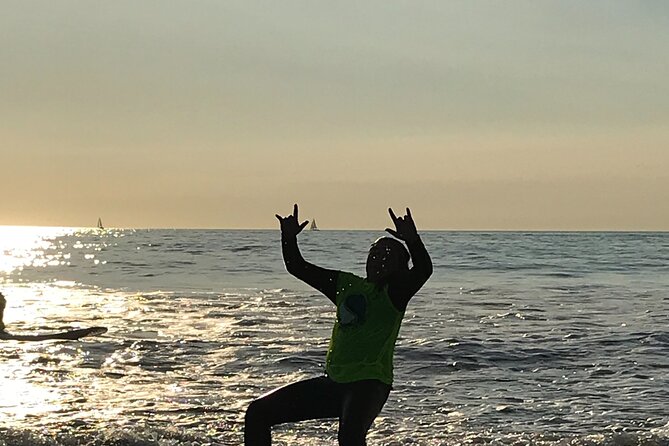
The lesson begins with safety information before you are expected to chase waves. That matters for beginners, who may know how to swim but still have no idea how to handle a board, read a wave, or get clear after a fall.
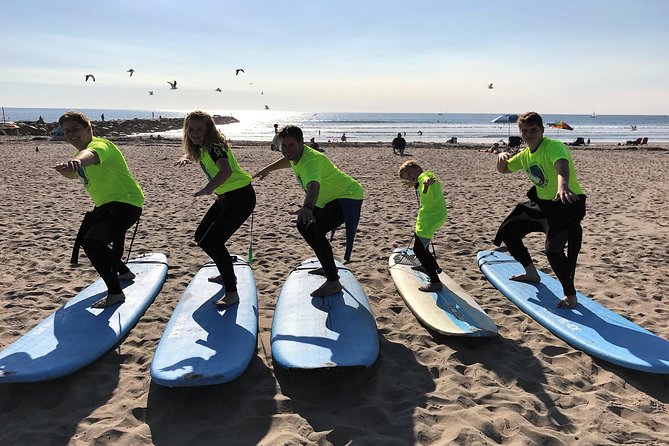
You’ll learn basic safety along with the mechanics of surfing. The instruction covers how to paddle, how to use your body for balance, and how to move into a standing position. You’ll also practice the airplane position, a simple balance skill that helps you control the board instead of wobbling stiffly.
I like this teaching approach because it treats safety as part of learning to surf rather than an unpleasant delay. You can enjoy the session more when you know what to do if you lose balance or need to reset.
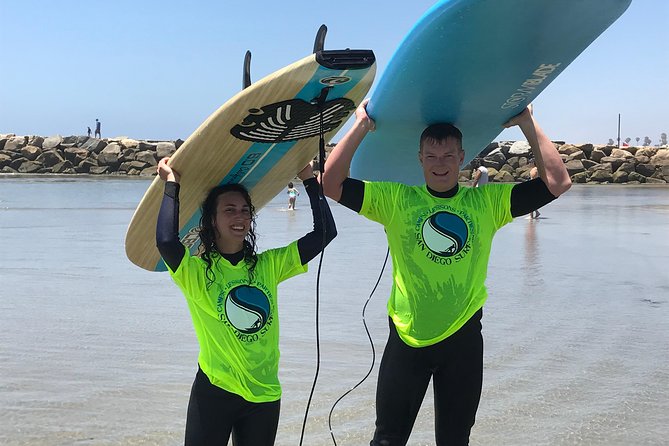
The wetsuit is another practical benefit. The water can make a short lesson feel much longer if you are cold, and the provided suit helps keep you warm while you work. The equipment package also includes a leash, which connects you to the board and is a basic part of a beginner setup.
Alcohol is not allowed during surfing. Save the drinks for later, after you are safely off the water.
Same break, a different way into the water:
- Los Angeles: Surfing Lesson in Venice Beach
★ 4.8 · 442 reviews - Oahu: Beginner-Friendly Waikiki Beach Surfing Lesson
★ 4.9 · 425 reviews - Po’ipu Surf Lesson
★ 5.0 · 361 reviews - Private Hanalei Sandy Bottom Surf Lesson on Kauai
★ 5.0 · 339 reviews
Learning three ways to stand on the board
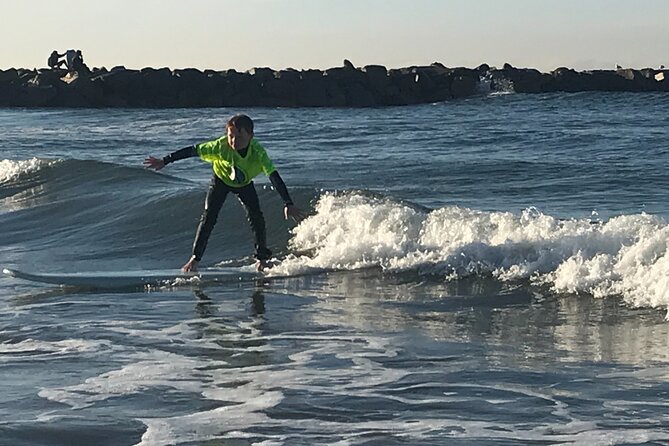
Standing up is the moment most beginners are waiting for, but it depends on several small movements happening in the right order. The lesson breaks those movements into parts instead of expecting you to copy a single demonstration and somehow get it right.
You’ll work on paddling first, then balance, then the standing motion. The instructor teaches three techniques for getting to your feet. Having more than one option can help because different people struggle with different parts of the movement.
Expect some failed attempts. The lesson openly treats falling as part of the process, and that is a useful attitude for surfing. You may paddle too late, rise too slowly, place your feet poorly, or lose your balance as soon as you stand. The goal is to keep making small adjustments until one attempt works.
When you finally catch a wave and stay upright, the payoff is immediate. Even a short ride can make the earlier falls feel worthwhile. You are not just memorizing instructions on the sand. You are trying to connect paddling, timing, balance, and foot placement in real time.
What coaching with Doug may feel like
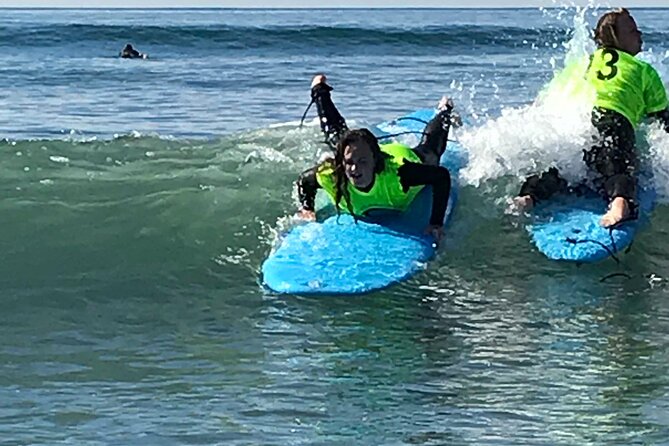
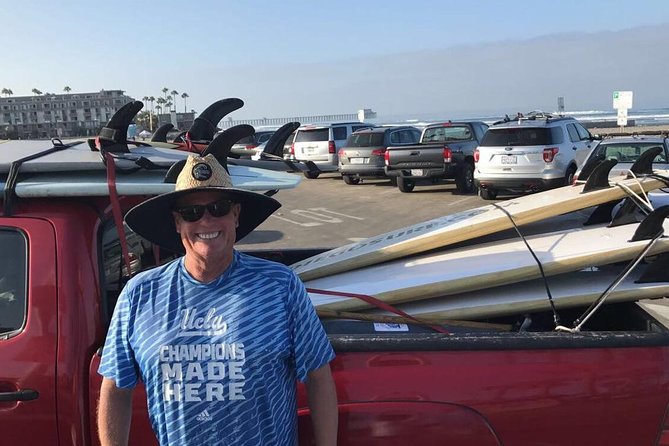
Doug is named as an instructor connected with these lessons, and his teaching style comes across as patient, outgoing, and professional. If he is teaching your class, expect a guide who can keep the mood light while still paying attention to technique.
That balance matters. A beginner needs clear direction, but too much pressure can make the first attempts feel tense. The strongest part of this lesson seems to be its encouragement to keep trying after several failed stands.
Doug also receives specific praise for providing everything needed to stay warm in the water. That points back to one of the practical strengths of the session: you can focus on learning instead of worrying about equipment.
Instructor assignments can change, so you should not book on the assumption that Doug will definitely lead your class. Still, his name is worth knowing if you are arranging a return visit or contacting the operator with a question.
A realistic two-and-a-half-hour rhythm
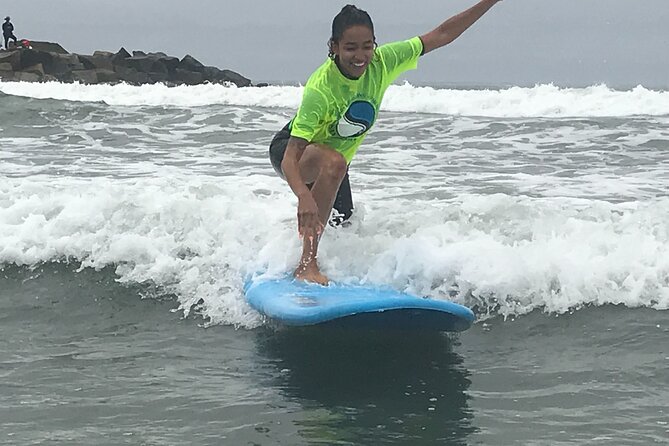
The exact order can shift with conditions, but you can expect the session to move through several clear stages.
First comes arrival, equipment, and basic preparation. You get the board, wetsuit, and leash, then listen to instructions before heading into the active part of the lesson.
Next comes the technique work. You’ll learn how to balance, paddle, and use the airplane position. The instructor will explain the standing motion and show the three techniques you can try.
The main portion is repeated practice. You paddle, attempt to stand, fall, reset, and try again. The small class lets the instructor watch these attempts and offer corrections. This is where the two-and-a-half-hour length earns its keep. You have time to repeat the movement instead of getting one quick attempt before the session ends.
Finally, you return to the meeting point and finish with the equipment. The activity ends where it began, which makes the logistics simple.
Do not expect a sightseeing tour along the coast. The point is to learn a physical skill in the water. The memorable moments come from the first successful ride, the laughter after a fall, and the sense that your body is beginning to understand what the instructor has been explaining.
Who will get the most from this lesson
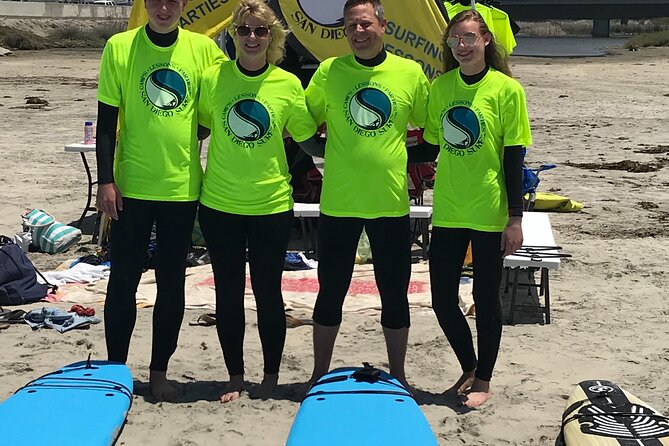
The minimum age is seven, and the experience is suited to most people who can take part in an active beach activity. It works particularly well for families, first-time surfers, and adults who want a guided introduction rather than a solo rental.
Children may enjoy the quick reward of standing on the board, but parents should remember that this is tiring work. The lesson is not passive childcare. Adults should be ready to stay involved and pay attention to the safety instructions.
This also suits people who want a smaller group. Six or fewer participants is a useful limit for a skill that depends on personal feedback. If you are booking as a family or with friends, you have a better chance of learning together without being lost in a large crowd.
I would hesitate to recommend it to anyone looking for a relaxed morning with little physical effort. You will paddle, push up, balance, fall, and repeat the process. Bring water, protect your skin with sunscreen, and plan some downtime afterward.
Service animals are allowed, and the meeting point is near public transportation. Those details make the activity easier to fit into a broader Oceanside visit.
Cancellation and weather planning
You can cancel for a full refund up to 24 hours before the scheduled start. Changes or cancellations made less than 24 hours ahead are not accepted for a refund.
The operator also promises a full refund if the experience is canceled for poor weather, or you can move to another date. Since start times can shift with conditions, keep the day flexible and avoid pairing this with a nonrefundable activity that begins soon afterward.
Confirmation is normally sent when you book. If you reserve within one day of the experience, confirmation arrives as soon as possible and depends on availability.
The activity is offered in English and uses a mobile ticket. That keeps the booking process simple, but you should still save the confirmation and keep your phone charged for the timing text.
Should you book the Oceanside surf lesson?
Book this lesson if you want your first real attempt at surfing to come with equipment, safety coaching, and a small class. The strongest reasons are the six-person limit, the included wetsuit and board, and the clear focus on learning to stand and ride.
I also like that the lesson accepts the messy part of learning. You may fail several times before you get upright, but the instructor keeps the process moving toward a real ride rather than treating the class as a one-time photo opportunity.
At $189, the experience is best value for beginners and families who would otherwise need to rent gear and figure out the basics alone. It is less compelling for experienced surfers or anyone hoping for a low-effort beach outing.
If you can handle the exercise, keep your schedule open for a possible time change, and arrive prepared with water, sunscreen, and a snug swimsuit, this is a practical way to give surfing a serious first try in Oceanside.
FAQ
Where does the surfing lesson begin?
The lesson begins at Learn to Rip Surf Lessons, 1201 N Pacific St, Oceanside, CA 92054. The activity ends back at the same meeting point.
What time does the lesson start?
The default start time is 9 a.m. The operator may adjust the start time depending on ocean conditions and sends updated details by text at least 24 hours in advance.
How long does the experience last?
The lesson lasts approximately two hours and 30 minutes.
What equipment is included?
The price includes a surfboard, wetsuit, and leash. Professional instruction and safety guidance are also included.
What should I bring?
Bring water, sunscreen, and a tight swimsuit. Baggy shorts are not recommended.
Is there a minimum age?
Yes. The minimum age is seven years old.
What happens if bad weather cancels the lesson?
If the activity is canceled because of poor weather, you can choose another date or receive a full refund. You can also cancel up to 24 hours before the start time for a full refund.
Just added for surfers in the USA
- Cocoa Beach: Surfing Lessons & Board Rental★ 4.7 · 24 reviews
- Surfing Lesson in Santa Barbara (2 Hours)★ 5.0 · 10 reviews
- Santa Barbara: Surfing Lessons★ 5.0 · 17 reviews
- Santa Barbara: 1.5-Hour Private Beginner’s Surf Lesson★ 4.7 · 23 reviews
- Private Surfing Lesson in Santa Monica★ 5.0 · 47 reviews
- 2 Hour Private Group Surf Lessons in Huntington Beach★ 5.0 · 4 reviews
- Surf Lesson★ 5.0 · 6 reviews
- Private Surf Lesson in Huntington Beach – Bolsa Chica State Beach★ 5.0 · 6 reviews
USA Surf Lessons, compared.


Beginner-Friendly Waikiki Beach Surfing Lesson
Read our review →

Private Hanalei Sandy Bottom Surf Lesson on Kauai
Read our review →
Browse the lists this tour appears in