
Review · OAHU
Semi-Private Surf Lesson for 2 or 3 people on Waikiki Beach
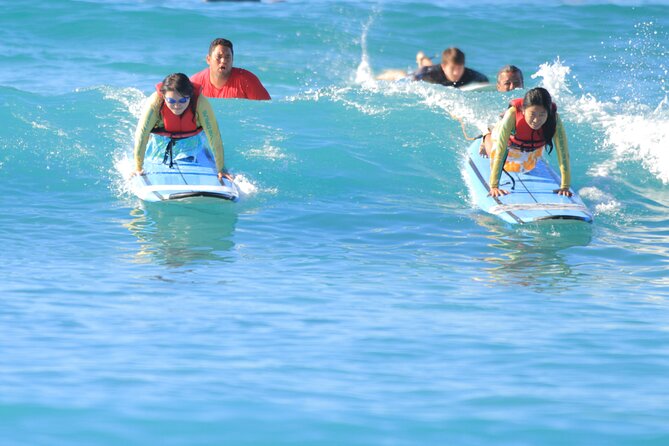
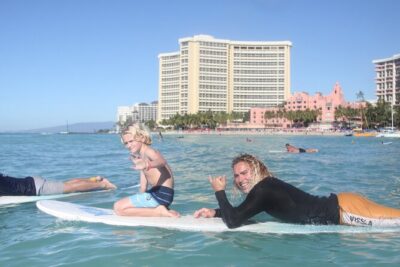
Waikiki is one of the best places to try surfing for the first time because you get a famous beach, steady beginner waves, and an instructor close at hand. This 90-minute semi-private lesson keeps the group to four people, so you are not lost in a crowd while learning to paddle, catch a wave, and get your feet under you.
I like the personal scale and the patient teaching style. Instructors such as Derek, Pauly, Cody, Rae, Paul, and Sione have helped beginners with both technique and confidence. I also like the practical setup: lockers are available, the shop is near public transportation, and the lesson begins with land instruction and ocean safety.
The main caution is the extra cost for some equipment. The $139 price includes taxes and fees, but a rash guard costs $5, and a lock costs $5 if you do not bring one. Ask clearly about any gear you need before heading to the beach.
Key points to know before booking
- Small groups of two to four: The semi-private format requires at least two people and caps the group at four.
- A real beginner lesson: You learn board basics, paddling, wave-catching, land technique, and ocean safety before entering the water.
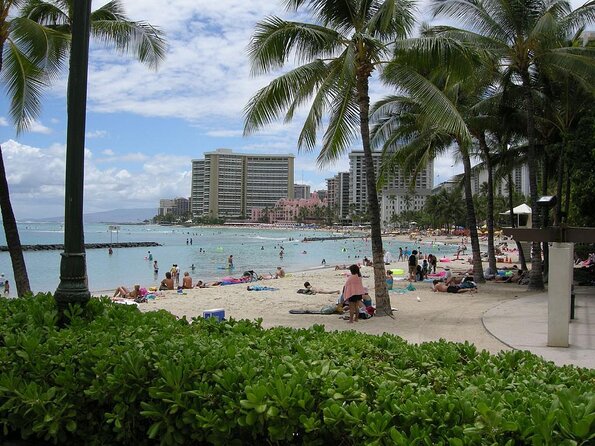
- A short walk to Waikiki Beach: Meet at Big Wave Dave Surf & Coffee, 226 Lewers Street, then continue to the beach.
- Useful family option: Children aged 10 and 13 have taken the lesson, and the instruction can work well for a family group.
- Expect physical work: Paddling takes shoulder endurance, even in small, steady waves.
- Some extras cost more: Rash guards and locker locks are not included, though you may bring your own lock.
Starting at Big Wave Dave on Lewers Street
Your lesson begins at Big Wave Dave Surf & Coffee at 226 Lewers Street, Honolulu. Check in 20 minutes before your scheduled start, not at the last minute. That gives you time to handle any rental questions, store personal items, and get ready for the walk to the beach.
The shop location is practical for a Waikiki day. It is near public transportation, so you may not need a car for this activity. The experience ends back at the same meeting point, which makes it easier to plan lunch, shopping, or another Honolulu activity afterward.
You can leave personal belongings in a locker, but you need to bring your own lock or rent one for $5. That small detail matters. If you are carrying a phone, wallet, room key, or dry clothes, do not assume a lock is included.
A rash guard is also extra at $5. You may prefer one for sun protection and comfort, but the supplied information does not say it is required. Ask at check-in what is included with your booking and what you would need to rent.
More Private Surf Lessons in Oahu
- Private Surfing Lessons in Waikiki
★ 5.0 · 176 reviews - Oahu Private Surfing Lesson
★ 5.0 · 113 reviews - Private Surf Lesson at Waikiki Beach
★ 5.0 · 107 reviews
The land lesson comes before the water
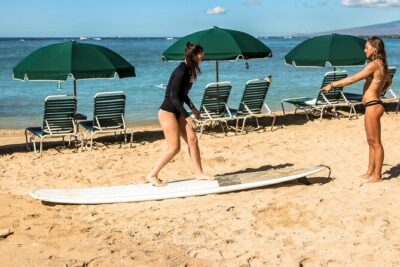
The instruction starts on land, where your guide explains the surfboard and the basic body movements. You learn how to position yourself, paddle, and prepare to catch a wave before facing the water.
That order is important for a first lesson. You can focus on technique without also trying to stay afloat. The staff also cover ocean safety, giving you the basic information needed before you move from the beach into Waikiki’s surf.
Expect a practical lesson rather than a long classroom talk. The goal is to get you ready for several attempts in the water. The strongest part of this format is the direct feedback. A small group gives the instructor more chances to correct your form and help you time a wave.
You should listen closely during this opening section. Surfing looks simple from the beach, but paddling, turning, pushing up, and standing require several movements at once. A good land demonstration can save you energy later.
Waikiki Beach and the first wave attempts
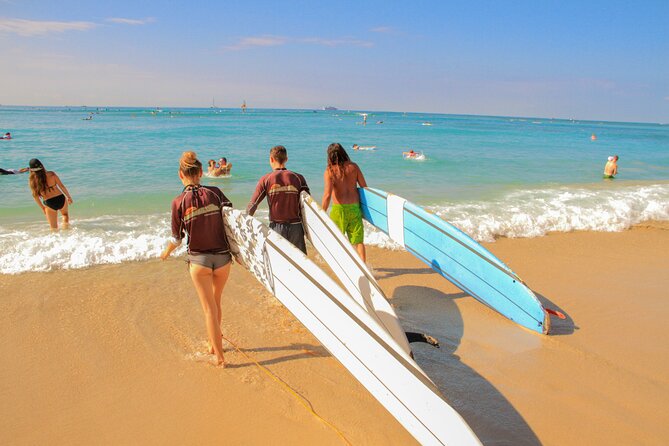
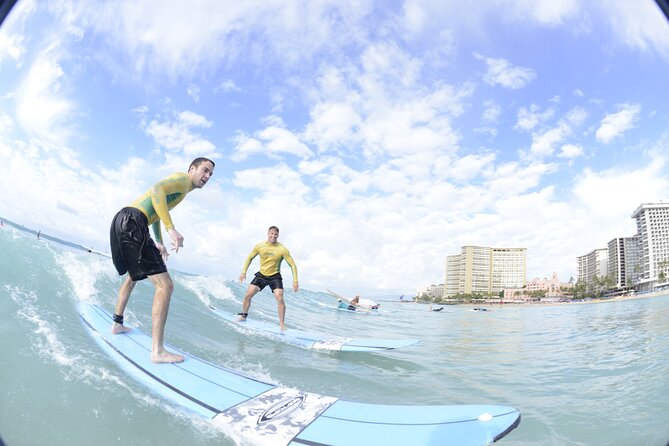
After the demonstration, your instructor guides you into the ocean. The lesson focuses on the basics: paddling into a wave, catching it, and trying to stand on the board.
The waves used for instruction are described as small but steady. That is a useful combination for beginners. You need enough movement to catch a wave, but a smaller wave can feel less intimidating than a larger break.
Your instructor helps direct you toward suitable waves and gives you repeated chances to try. The exact number of attempts depends on the group and the time spent preparing, but the teaching style is built around getting you moving rather than watching from shore.
Do not measure success only by how long you stand. For a first lesson, learning to paddle into position and recognizing when a wave is ready are useful wins. One beginner may stand on the first attempt, while another may need the whole session. Both outcomes fit the normal learning curve described by this experience.
The physical side should not be underestimated. Paddling takes shoulder endurance, and getting back into position after a missed wave uses energy. I would avoid scheduling this immediately after a hard upper-body workout. You need enough strength left to make several attempts.
Why the four-person limit matters
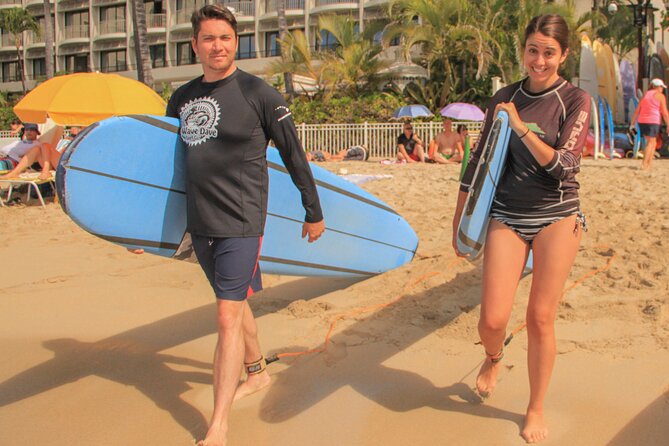
The maximum group size is four, and that is one of the best reasons to choose this option. You are not signing up for a large class where the instructor must spread attention across a long line of boards.
The semi-private booking requires a minimum of two people. That makes it a natural fit for couples, siblings, friends, or a family of up to four. If you are traveling alone, this specific product is not designed for a solo booking.
A four-person group can still feel social, but you should expect some waiting between attempts. Surf lessons require space and safe timing. The advantage is that your instructor can watch each person and offer corrections instead of simply giving one speech to the entire class.
Past sessions have included a family with children aged 10 and 13, and the instructors were praised for being patient and supportive. That does not guarantee that every child will enjoy the physical effort, but it shows why the format can suit families with older children who are ready to follow water-safety directions.
If your group has four people, the semi-private setup may offer good value. If only two people book, you pay the same listed per-person price but get a smaller lesson. The choice comes down to how much personal attention you want and how important surfing is to your Waikiki plans.
More Private Surf Lessons in the USA
- Private Surfing Lessons on the North Shore of Oahu
★ 5.0 · 87 reviews - Private Surf Lesson in Waikiki
★ 5.0 · 83 reviews - 1.5-Hour Semi Private Surfing Lesson in Honolulu
★ 5.0 · 76 reviews - Oahu Semi Private Surfing Lesson
★ 5.0 · 73 reviews
Instructors who focus on confidence and form
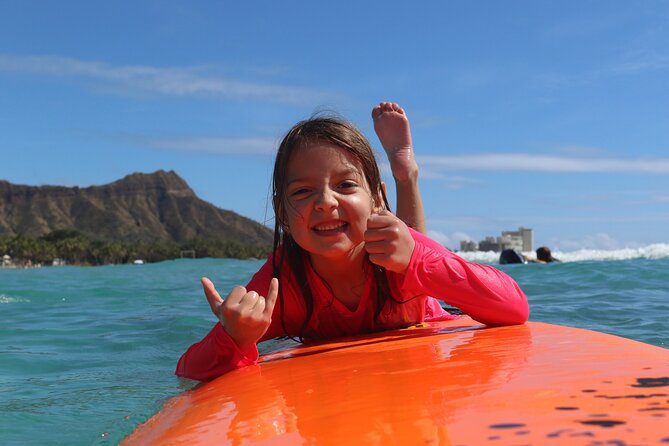
The instructors are a central part of this experience. Names connected with past lessons include Derek, Pauly, Cody, Rae, Paul, and Sione. You may not have one of those specific instructors, but the feedback gives you a useful picture of the teaching approach.
Derek was described as helpful and good at making the lesson fun for a couple. Pauly worked with two boys and was praised for his instruction. Cody focused on proper technique and form. Rae brought a positive attitude to a first-time session, while Paul and Sione were noted for patience and steady support.
Those details matter because a beginner needs more than a push toward the waves. You need someone who can explain the movement clearly, keep you calm after a fall, and offer another try without making you feel rushed.
The best outcome is not simply standing once. You want to leave knowing what you did right, what needs work, and how to try again. The repeated emphasis on patience, support, and multiple attempts makes this lesson appealing for first-timers who feel nervous about looking awkward in the water.
The cost, the extras, and the value
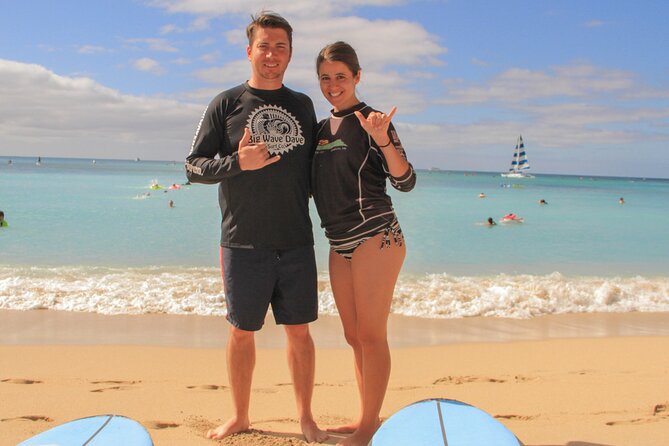
The price is $139 per person. Taxes, handling charges, fuel surcharge, landing and facility fees are included, so the listed amount gives you a clearer starting point than a bare lesson price with several mandatory fees added later.
The extras are modest individually but worth planning for:
- Rash guard rental: $5
- Locker lock rental: $5, or bring your own lock
- Photography: available with advance reservations
The value depends on your priorities. You are paying for a small class, an instructor-led introduction, safety instruction, equipment access connected with the lesson, and a chance to surf at Waikiki rather than simply watch it from the sand.
Still, you should ask what specific surf gear is included before paying. One customer raised concerns about additional charges for equipment and whether water shoes were needed. The available details indicate that the teaching area may involve reef, while the lesson also uses a sandy beach setting. Conditions and equipment needs can vary, so a direct question at check-in is sensible.
For a couple or family that wants one memorable activity, the price can make sense. For someone who plans to surf several times during an Oahu stay, comparing other schools may be worthwhile. A single lesson is an introduction, not a full surfing course.
What to bring and how to prepare
Arrive 20 minutes early. That is the most important timing instruction, since check-in, changing, locker use, and equipment questions can take longer than expected.
Bring a lock if you have one that fits the locker. Otherwise, budget $5 for the rental. Keep valuables to a minimum, even with storage available.
You should also be ready for a moderate workout. The lesson involves paddling and repeated efforts to catch waves. Comfortable swimwear and sun protection are practical choices, though the supplied details only specifically identify the optional rash guard rental.
I would also plan a little recovery time afterward. Beginners may find the shoulder work tiring, especially if they are not used to paddling. The lesson lasts about one hour and 30 minutes, but the effort can feel longer than the clock suggests.
Who will get the most from this lesson
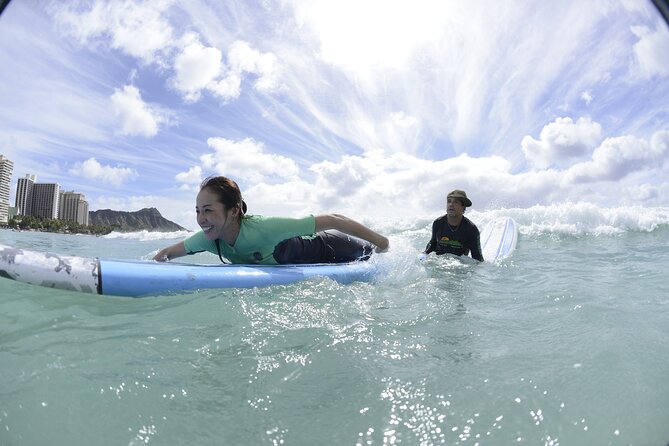
This experience suits a couple or small family that wants a guided first try without committing to a large class. The four-person cap is especially useful when everyone in your group wants to learn together.
It also suits people who value encouragement. The instructors have been recognized for patience, positive instruction, and helping students make repeated attempts. That is useful if you are unsure about your balance or worried that you will not stand up.
Families should consider the physical demands and each child’s comfort with ocean instruction. Children aged 10 and 13 have taken part, but the information does not provide a formal minimum age or swimming requirement. Ask the provider if you have younger children or specific concerns.
This may be less suitable if you want a private one-on-one session, a long advanced lesson, or a full-day surf program. It is a compact introduction with a focus on basic technique and a first taste of Waikiki surfing.
Cancellation and weather details
You can cancel at least 24 hours before the local start time for a full refund. Changes or cancellations made within 24 hours are not refunded or accepted.
The activity requires good weather. If poor weather causes a cancellation, you are offered a different date or a full refund. That policy is helpful for a beach activity, but keep the timing in mind if your Oahu schedule is tight.
Confirmation is provided at booking, and the experience ends at the original meeting point. The activity has a maximum of four participants and requires a moderate level of physical fitness.
My take: book it for a small, focused first lesson
I would choose this lesson if you are a couple, family, or group of friends who want a well-supported first attempt at surfing in Waikiki. The four-person maximum, land demonstration, ocean-safety briefing, and repeated chances to try make it more useful than simply renting a board and guessing what to do.
The price is not the lowest way to get on a board, and you should clarify gear charges before starting. But the small group and patient instruction can justify the cost, especially for a one-time Honolulu activity.
Book it if you value guidance and want to surf with people you know. Consider another option if you are alone, need a fully private lesson, or plan to take several lessons and want to compare package prices first.
FAQ
How long does the semi-private surf lesson last?
The lesson lasts approximately one hour and 30 minutes.
How many people can join the lesson?
The group has a maximum of four participants. Semi-private lessons require at least two people to book.
Where does the activity begin?
You check in at Big Wave Dave Surf & Coffee, 226 Lewers Street, Honolulu, Hawaii 96815. The activity ends back at the same meeting point.
How early should I arrive?
You should check in 20 minutes before the lesson start time.
Are lockers included?
Lockers for personal belongings are included, but you need to bring your own lock or rent one for $5.
What happens if bad weather cancels the lesson?
You can choose a different date or receive a full refund if the activity is canceled because of poor weather. You can also receive a full refund if you cancel at least 24 hours before the start time.
Just added for surfers in Oahu
- Surf Honolulu: Ala Moana Stand-up Paddleboard Lesson★ 5.0 · 3 reviews
- Semi-Private Surfing Lesson in Waikiki, Oahu★ 5.0 · 26 reviews
- Waikiki 2 Hours Private Guided Surf Lesson★ 3.5 · 8 reviews
- Surf Activity on the Wai Kai Wave in Ewa Beach★ 5.0 · 8 reviews
- Surf Lessons on the North Shore Great for Families and all Ages★ 5.0 · 27 reviews
- Learn to surf with a local big wave rider on the North Shore of Oahu★ 4.5 · 10 reviews
- Private Group Surf Lesson★ 5.0 · 47 reviews
- Semi-Private Surf Lesson★ 5.0 · 17 reviews
Oahu Surf Lessons, compared.
Beginner-Friendly Waikiki Beach Surfing Lesson
Read our review →
Family, Private & Group Surfing Lessons, Waikiki Courtesy Shuttle
Read our review →
Browse the lists this tour appears in