
Review · TAURANGA
Group Beginner Surf Lesson in Mount Maunganui
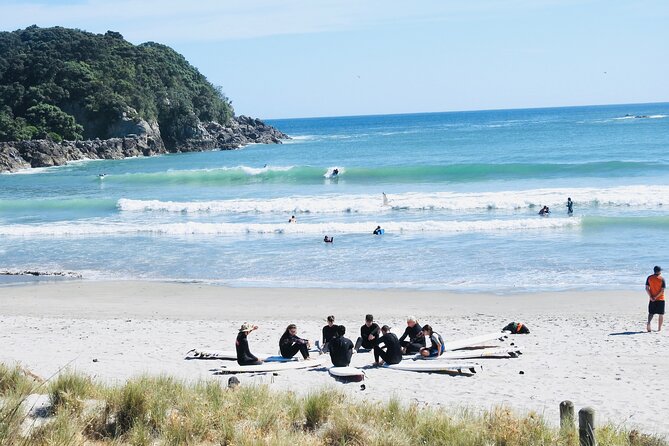
Mount Maunganui gives you a fine place to try surfing for the first time: a famous beach, a 90-minute lesson, and instruction designed to get you from sand drills to small waves without fuss. The key detail is the maximum of eight people per instructor, which gives you a better chance of getting useful pointers instead of becoming one face in a crowd.
I like the all-in equipment and the clear teaching sequence. You learn safety and ocean awareness first, then paddling, then the footwork needed to stand. I also like that the lesson is built around shallow water and encouragement. Patrick, one of the instructors, has been singled out for especially helpful advice with first-time surfers.
The main consideration is the short format. Ninety minutes is enough for an introduction and some practice, but not enough to turn you into a polished surfer. You also need basic swimming ability, reasonable fitness, and good weather on the day.
Key points at a glance
- Small groups of up to eight: You should receive more personal guidance than in a large beach class.
- Mount Maunganui Main Beach: Learn beside one of Tauranga’s best-known coastal settings.
- Surfing New Zealand-certified instruction: The lesson includes a formal safety briefing and step-by-step coaching.
- Board and wetsuit provided: Bring only swimwear, a towel, and sunscreen.
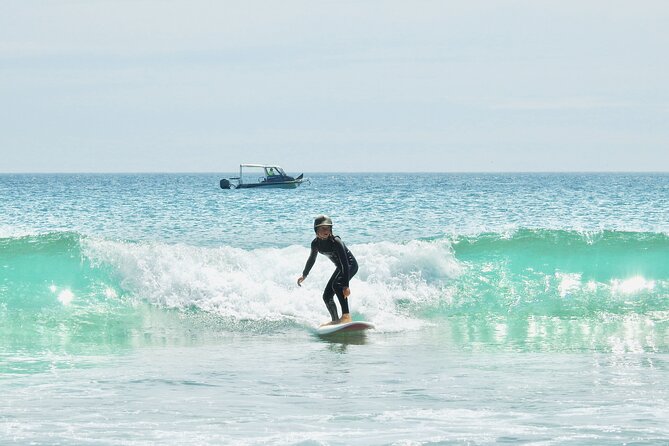
- Practical first-lesson skills: Work on ocean awareness, paddling, catching waves, and standing up.
- Ages 10 and older: You need basic swimming ability and a moderate level of physical fitness.
Starting opposite 27 Marine Parade
Your lesson begins at Mount Surf School, opposite 27 Marine Parade in Mount Maunganui. The activity finishes back at this meeting point, so you do not need to arrange a second pickup location or figure out where to leave the group afterward.
The meeting point is near public transportation, which helps if you are staying around Tauranga or Mount Maunganui without a car. The booking is mobile-ticket friendly, and confirmation arrives at the time of booking. For a beach activity, that simple setup matters. You can focus on arriving ready for the water rather than sorting out paperwork on the morning.
Bring swimwear, a towel, and sunscreen. The surf school supplies the board and wetsuit. That keeps the cost easier to judge because you are not paying extra to rent the two most important pieces of equipment for a first lesson.
Give yourself enough time to find the meeting point and get ready. The supplied details do not specify an exact check-in period, so I would avoid arriving at the last minute, especially if you need to change before the class starts.
More Beginner Surf Lessons in New Zealand:
- Mount Maunganui: Group Beginner Surf Lesson
★ 5.0 · 16 reviews - Beginner Surf Lesson at Te Arai Beach
★ 5.0 · 6 reviews - Greymouth: 2-Hour Beginner Surf Lesson
★ 4.5 · 2 reviews
Why Mount Maunganui works for beginners
Mount Maunganui’s Main Beach is the setting for the lesson, and the beach itself is part of the appeal. You are not learning in an indoor pool or an anonymous patch of water. You are looking out at the coast, wearing a wetsuit, and trying the same basic movements that make surfing such a popular part of New Zealand beach life.
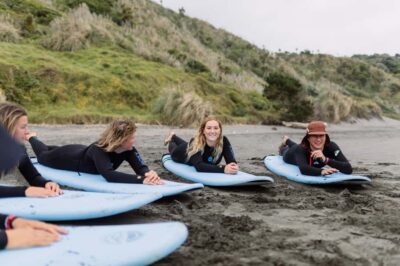
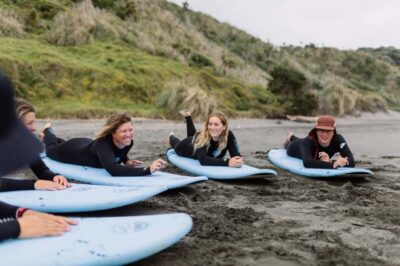
The lesson is aimed at beginners, so the goal is not to send you straight into difficult surf. The plan begins on the sand, where your instructor can explain the movements clearly before you deal with moving water. That order makes sense. Standing on a surfboard requires several actions at once, and it is much easier to understand the sequence when the board is not shifting beneath you.
The water work takes place in the shallows. This gives you a practical first taste of surfing while keeping the early practice manageable. You will still have to balance, paddle, watch the water, and respond to a wave. The shallow setting simply gives you a more forgiving place to learn those basics.
No beach class can remove every challenge. Waves are not machines, and your success will depend on the conditions, your balance, and how comfortable you feel in the water. Still, a beach known for beginner lessons, a safety briefing, and close instructor support is a sensible combination for a first attempt.
The 90-minute lesson, step by step
1. Welcome, equipment, and safety
The session starts with a welcome and safety briefing. This is not filler. A good first lesson needs to explain how to handle the board, where to focus your attention, and how to behave around the water and other people.
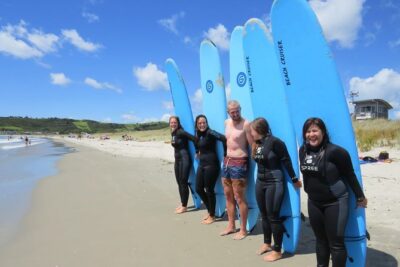
You will use a surfboard and wetsuit supplied by the school. The wetsuit helps make the session more comfortable in the water, while the board gives you the stable platform needed for the early exercises. You do not need to purchase or pack specialist gear for this activity.
The group size is capped at eight people per instructor. That limit is especially useful at the start, when you may need help with board position, body placement, or the order of the standing movement. It also means the instructor can keep a closer eye on a group in the water.
More Surf Lessons in New Zealand:
- 2 Hour Surf Lesson – Te Arai Beach
★ 5.0 · 119 reviews - Raglan: Group Surf Lesson
★ 5.0 · 79 reviews - Auckland: Group Surfing Lesson with Muriwai Surf School
★ 4.9 · 34 reviews - Queenstown: White Water Surfing Along the Kawarau River
★ 4.6 · 30 reviews
2. Ocean awareness on the sand
Before you enter the water, the instructor covers ocean awareness. The supplied details do not list every point in this briefing, so you should expect a general introduction to reading the conditions and acting safely rather than a long technical course in surf science.
This part helps you understand that surfing is not just about standing up. You need to notice the water around you, pay attention to the instructor, and know what you are trying to do before a wave reaches the board.
The sand lesson is also where the instructor demonstrates the basic movements step by step. You can concentrate on hand placement, body position, and footwork without the distraction of a moving board. If you are nervous, this is the point where the class should begin to feel less mysterious.
3. Paddling and standing
Next comes paddling technique and the movement used to stand on the board. These are the core skills of the lesson. Paddling helps you move with the wave, while standing requires a quick but controlled change from lying down to a balanced stance.
Do not expect perfect form at once. The value of this section is that you get a simple sequence to repeat. Your instructor can watch for common beginner problems and offer corrections while the group is still on the beach.
The review of Patrick’s instruction is useful here. He was praised for giving good advice and being especially helpful with a first surfing attempt. If Patrick is leading your session, you may benefit from that same direct, practical style. Instructor assignments can vary, so the important point is the small-group format and the school’s certified teaching approach.
4. Shallow-water practice
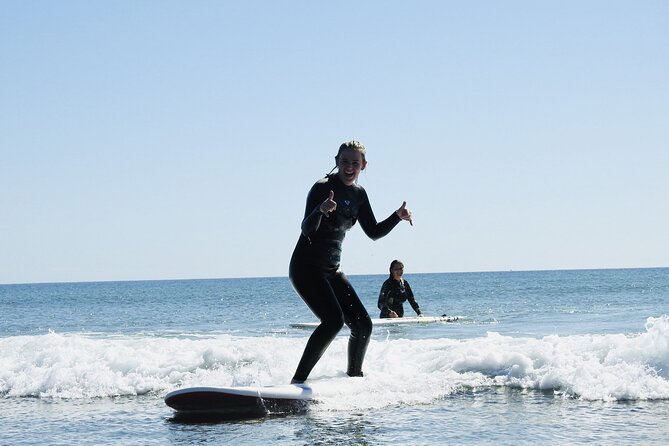
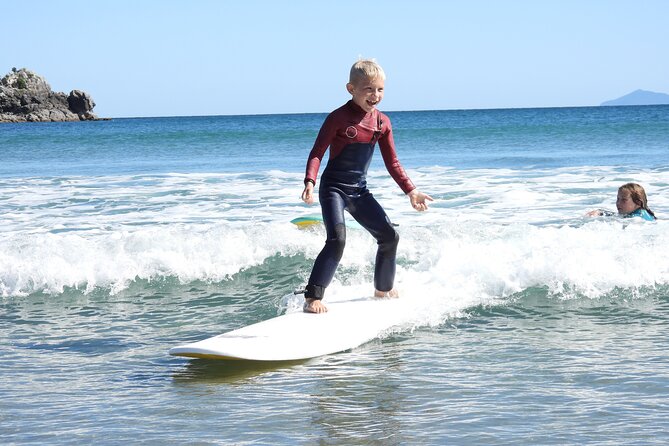
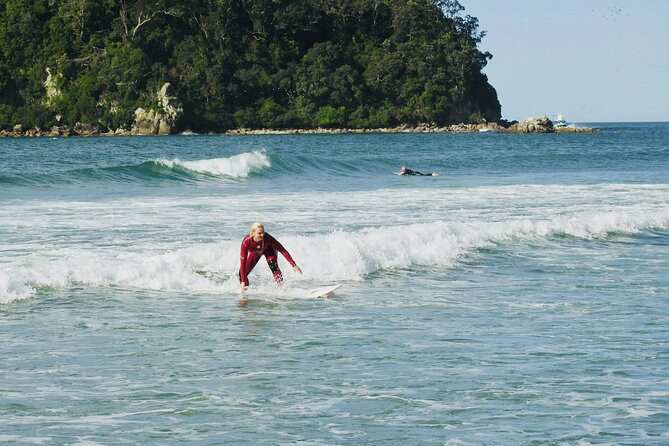
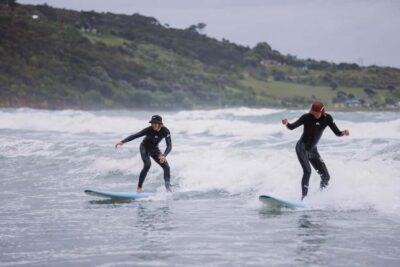
After the beach demonstration, you move into shallow water. This is where the lesson becomes more active. You will practice paddling, try to catch waves, and work on standing while the instructor offers guidance and encouragement.
The phrase catch your first waves should be understood in the right way. This is an introductory lesson, not a promise of long rides or advanced surfing. Some people may stand up quickly. Others may spend more time learning to keep the board straight or getting comfortable with the timing.
That variation is normal, and the small group helps. The instructor can give you a specific correction instead of offering only broad advice to everyone. You may be told to adjust your position, change when you stand, or focus on where the board is going. Those small tips can make the difference between a frustrating attempt and a useful first lesson.
What the small group changes
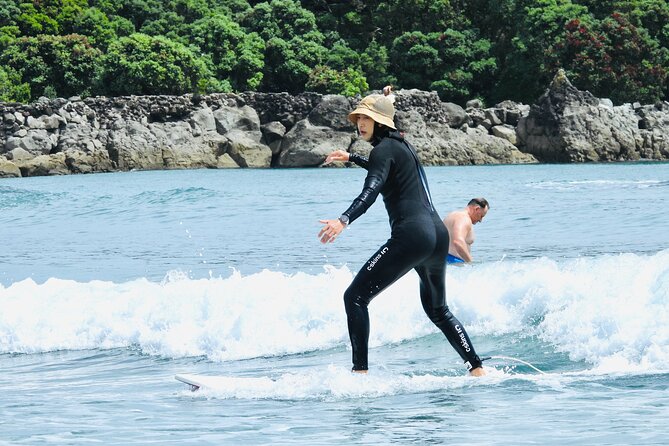
A group of eight is not a private lesson, but it is small enough to keep the class personal. You will still share the instructor’s attention, and you may have moments when other people are practicing. The benefit is that the instructor has a manageable number of people to supervise and coach.
For a beginner, this matters more than a long list of technical features. You need someone to notice when your hands are misplaced, when your body is too far forward, or when you are trying to stand at the wrong moment. You also need clear reminders about safety and board control.
The group setting can make the experience less intimidating, too. You are learning alongside people at the same stage, rather than being expected to perform alone. The lesson is designed to be fun and supportive, but it still asks you to take part physically. You will get the most from it if you are willing to try repeatedly and listen closely to corrections.
The value at $49.03
At $49.03 per person, this is priced as an accessible introduction rather than a major half-day commitment. The useful comparison is not only the lesson time. The price includes the instructor, the board, the wetsuit, the safety teaching, and access to a beginner setup at Mount Maunganui.
For someone who owns no surfing gear, that package has clear value. Buying or renting equipment separately would make a one-time experiment more complicated. Here, you can test whether surfing suits you before spending more money on lessons or equipment.
The limitation is the 1.5-hour duration. You are paying for a focused introduction, not extended beach time or a full progression course. If you already surf and want longer rides or more advanced coaching, this lesson may feel basic. If your goal is to find out how it feels to paddle out, catch a small wave, and attempt a stand-up, the price is easier to justify.
The small group also improves the value. An inexpensive class is less appealing if the instructor has too many people to watch. With a maximum of eight per instructor, you have a fair chance of receiving personal advice during the water practice.
Who should book this lesson

This experience suits first-time surfers and people with little or no previous board experience. It is also a good fit if you are visiting Tauranga and want an active coastal activity that takes roughly 90 minutes rather than a full day.
You need to be at least 10 years old, have basic swimming ability, and be in moderate physical condition. Surfing involves repeated paddling, getting on and off the board, and working in the water. The activity is beginner-friendly, but beginner-friendly does not mean effortless.
It can work well for friends or family members who want to learn together. The shared class gives you a common activity and keeps the cost below a private lesson. Service animals are allowed, and the meeting point is near public transportation.
I would be more cautious if you dislike swimming, have limited mobility, or want guaranteed success standing on the board. The class teaches the right foundations, but your first session may involve plenty of attempts before everything comes together.
Weather, timing, and cancellation
Surfing depends on conditions, so the experience requires good weather. If poor weather causes the lesson to be canceled, you are offered another date or a full refund. That protects you from paying for a session that cannot run safely, but it may affect a tightly planned visit to Tauranga.
You can cancel for a full refund up to 24 hours before the start time. Cancellations or changes made less than 24 hours before the experience are not refunded or accepted. The cut-off follows local time, so check the time carefully if you are booking from another time zone.
Because the activity ends at the original meeting point, it is easy to plan around a nearby meal, beach walk, or other Tauranga activity. Still, I would avoid placing an important timed booking immediately afterward. Weather changes can affect outdoor plans, and you may want a few minutes to change and collect your belongings.
What to bring and how to prepare
Keep your packing simple. You need:
- Swimwear
- A towel
- Sunscreen
The surf school provides the board and wetsuit. You do not need to arrive with surfing experience, though it helps to come ready to listen and repeat the movements several times.
Apply sunscreen before the lesson and follow the instructor’s safety directions. You will spend time on the sand and in open coastal conditions, so sun protection remains useful even if the weather feels mild.
Try not to judge the lesson by how quickly you stand. Surfing has a small comedy routine built into it: you lie down with confidence, attempt to rise with urgency, and often end up back in the water. The useful result is learning what to change on the next attempt.
Is the Mount Maunganui surf lesson worth booking?
I would book this lesson if you want a reasonably priced first introduction to surfing in a well-known New Zealand beach setting. The strongest reasons are the small group limit, included board and wetsuit, and step-by-step instruction from a Surfing New Zealand-certified instructor.
Patrick’s helpful first-timer coaching is a good sign, though your instructor may be someone else. The 90-minute format is short, so book it for the experience of learning the basics and trying your first waves, not for advanced progress.
Skip it if you need a private class, dislike physical activity in the water, or have no basic swimming ability. For most suitable beginners, though, this offers a practical way to see if surfing is for you without buying equipment or committing to a longer course.
FAQ
Where does the surf lesson start?
The lesson starts at Mount Surf School, opposite 27 Marine Parade, Mount Maunganui 3116, New Zealand.
Where does the activity finish?
The activity ends back at the meeting point at Mount Surf School.
How long is the surf lesson?
The lesson lasts approximately 1 hour and 30 minutes.
How much does the experience cost?
The listed price is $49.03 per person.
Is equipment provided?
Yes. The surf school provides the surfboard and wetsuit. You should bring swimwear, a towel, and sunscreen.
What age is the lesson suitable for?
The lesson is suitable for ages 10 and older.
Do I need to know how to swim?
You need basic swimming ability to take part.
What happens if bad weather cancels the lesson?
You will be offered a different date or a full refund if poor weather causes the experience to be canceled.
Just added for surfers in New Zealand
- Beginner Surf Lesson at Te Arai Beach★ 5.0 · 6 reviews
- Private 2 Hour Surf Lesson★ 5.0 · 5 reviews
- Raglan: Private 1:1 Surf Lesson★ 5.0 · 2 reviews
- Raglan: 3 Day Surf Lesson Package★ 5.0 · 2 reviews
- Mount Maunganui: Group Beginner Surf Lesson★ 5.0 · 16 reviews
- Mount Maunganui: Private Surf Lesson★ 5.0 · 2 reviews
- Greymouth: 2-Hour Beginner Surf Lesson★ 4.5 · 2 reviews
- Raglan: 2 Day Surf Lesson & Rental Package★ 4.6 · 5 reviews
New Zealand Surf Lessons, compared.
Auckland: Group Surfing Lesson with Muriwai Surf School
Read our review →
Queenstown: White Water Surfing Along the Kawarau River
Read our review →
Browse the lists this tour appears in