
Review · QUEENSTOWN
Queenstown: White Water Surfing Along the Kawarau River
The unusual part comes quickly: you are not sitting in a raft. You are lying on a light bodyboard, using your arms and legs to steer through grade 2 to 3 white water on the Kawarau River. I like the active format and the chance to try standing waves, whirlpools, underwater currents, and an optional cliff jump in one outing.
I also like the small group limit of 10, along with transport from central Queenstown and a full 5mm wetsuit included. The main caution is simple: this is not a gentle float trip. You need to swim, work your legs, and stay calm in moving water. One recent customer found the training intimidating and felt the activity demanded more strength than expected.
Key points to know before booking
- Up to 12km on a bodyboard: You control a light board rather than riding in a raft.
- About 1 to 1.5 hours in the river: The full outing lasts 270 minutes, including travel and preparation.
- Grade 2 to 3 rapids: Expect a real white-water challenge, not a scenic river cruise.
- Standing waves and whirlpools: You may get to surf a wave, spin through a whirlpool, or catch an underwater current.
- Small groups of up to 10: The format should allow close instruction and a less crowded feel.
- Queenstown transport included: Meet at 5 Duke Street, or drive to the Roaring Meg Power Station if you are not staying downtown.
Why riverboarding feels different from rafting
Rafting lets a group share the work. Riverboarding puts you right in the water. Your board is small, light, and easy to move, so your arms, legs, and body position matter on every rapid.
That makes this a good choice if you want an active challenge rather than a ride where you mainly hold a paddle and follow instructions. You will feel the current directly, and you may work harder than the cheerful photographs suggest.
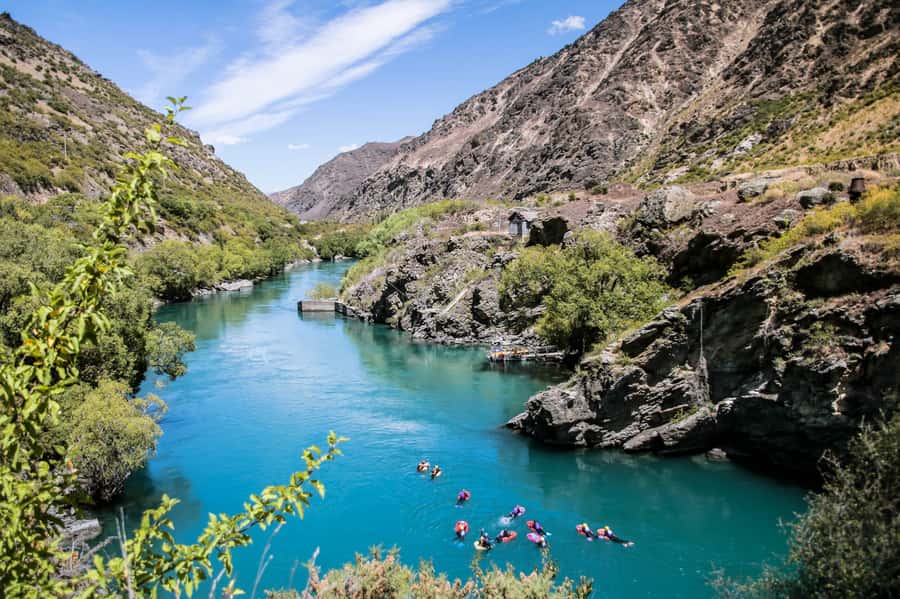
The activity covers up to 12km of the Kawarau River, a famous waterway in the Queenstown area. The river shifts between fast rapids and quieter sections, giving you a chance to catch your breath and look around. The gentler stretches also provide some of the trip’s best scenery, since you are low to the water with fewer distractions.
The advertised rapids reach grades 2 to 3. That is serious enough to make your nerves work, but the trip is not presented as an expert-only run. Still, grade 2 to 3 water can feel demanding when you are managing your own board. You should be comfortable swimming and able to follow instructions quickly.
More Surf Lessons in the world:
- Tenerife: Surfing Lesson for All Levels, Photos included
★ 4.9 · 1,314 reviews - Group Surfing Lesson at Playa de las Américas, Tenerife
★ 5.0 · 1,072 reviews - Canggu: 2-Hour Surf Course
★ 4.8 · 1,053 reviews
Meeting the river at Roaring Meg
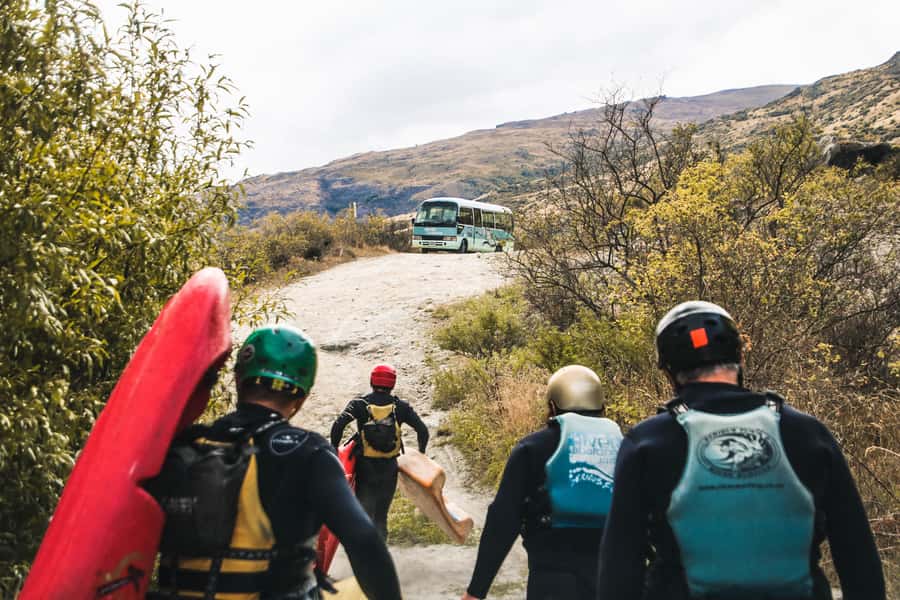
The standard meeting point is the loading zone at 5 Duke Street in Queenstown, behind the bakery and opposite the Sofitel. This is a street departure, not a hotel pickup, so arrive ready at the stated departure time. The vehicle leaves Queenstown on schedule.
If you are staying outside central Queenstown, you can drive yourself to the base at Roaring Meg Power Station on Kawarau Gorge Road. The drive from Queenstown takes about 45 minutes after the departure time, and you are asked to wait in the car park for the team.
That arrangement matters. A self-driving participant should not simply show up at the Queenstown meeting point and expect to join there. You need to go to the power station and wait for the group. For most visitors, the included return transport is the easier option, particularly if you are staying near the center.
The full booking lasts 270 minutes. That includes transport, changing, safety instruction, time on the river, and the return journey. Only about 1 to 1.5 hours is spent in the water, so set your expectations correctly. You are paying for a half-day adventure, not five hours of continuous bodyboarding.
Getting suited up for cold water
Serious Fun Riverboarding supplies a full 5mm wetsuit, helmet, wet shoes, life jacket, and bodyboard. Bring your own swimwear and towel. You should wear the swimsuit under the wetsuit and keep dry clothes available for the ride home.
The equipment does more than keep you warm. A helmet and life jacket give you basic protection and flotation, while the wet shoes help with footing and comfort around the river. The bodyboard is the central piece of kit. It is built to be maneuverable, allowing you to turn and position yourself more actively than you could on a larger raft.
The company also uses fins on the feet. This is an important practical detail because fin work adds effort, especially when you are swimming or trying to hold a line in moving water. If your swimming is weak or your legs tire quickly, do not assume the board will do all the work.
The guides offer different board choices based on how much adrenaline you want. The supplied details do not spell out the exact board types, so ask during the briefing which option suits your comfort and ability. A smaller or more responsive setup may feel exciting, but a less aggressive choice can help you get comfortable before tackling the stronger current.
Learning the basic moves before the rapids
Before you reach the main white water, you receive instruction and practice the basic skills needed to manage the board. You need to understand how to hold it, how to aim your body, and how to react when the current pushes you off line.
This training is one of the most important parts of the outing. In a raft, you can rely on the group and the guide’s commands. On a bodyboard, you need to respond with your own body. Instructions may come quickly, especially when you are learning several skills at once.
Give yourself permission to start cautiously. You do not need to chase every optional challenge on the first run. Pay attention to the guide, ask for a repeat if a technique is unclear, and be honest about your swimming ability. A recent poor rating focused on the training area feeling unsafe and the amount of information arriving at once. That does not mean every group will have the same impression, but it is a useful warning to speak up if you need clearer instruction.
This is also where the trip separates confident swimmers from people who simply want an unusual sightseeing outing. The activity is not suitable for non-swimmers, and basic comfort in moving water is more useful than a desire to try something new.
Same break, a different way into the water:
- Legian Beach, Bali: Beginner or Intermediate Surf Lessons
★ 4.9 · 1,019 reviews - Playa de las Américas: Private or Small-Group Surf Lesson
★ 4.8 · 980 reviews - Maui: Two Hour Beginner Group Surf Lesson in Kihei
★ 5.0 · 950 reviews - Bondi Beach: 2-Hour Surf Lesson Experience for Any Level
★ 4.9 · 935 reviews
Riding 12km of Kawarau white water
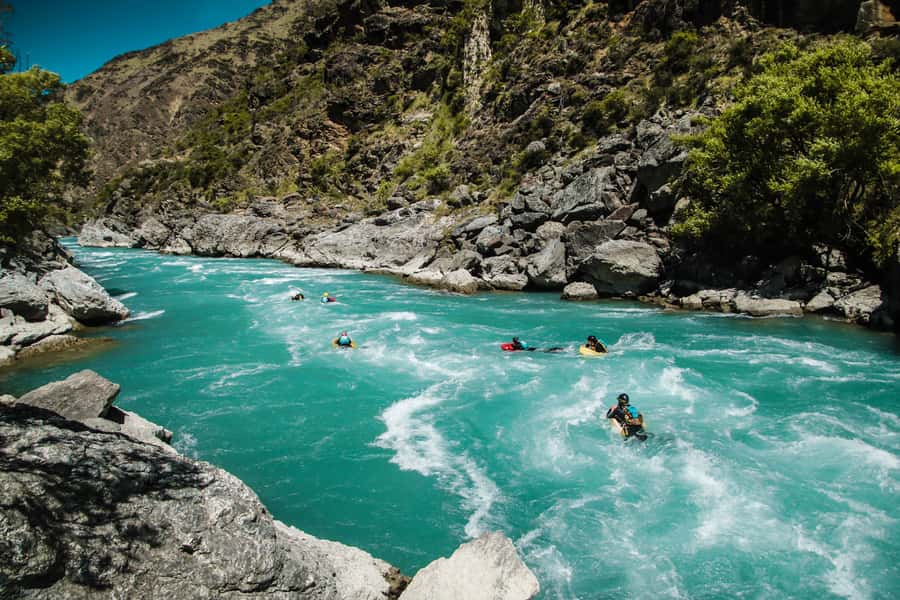
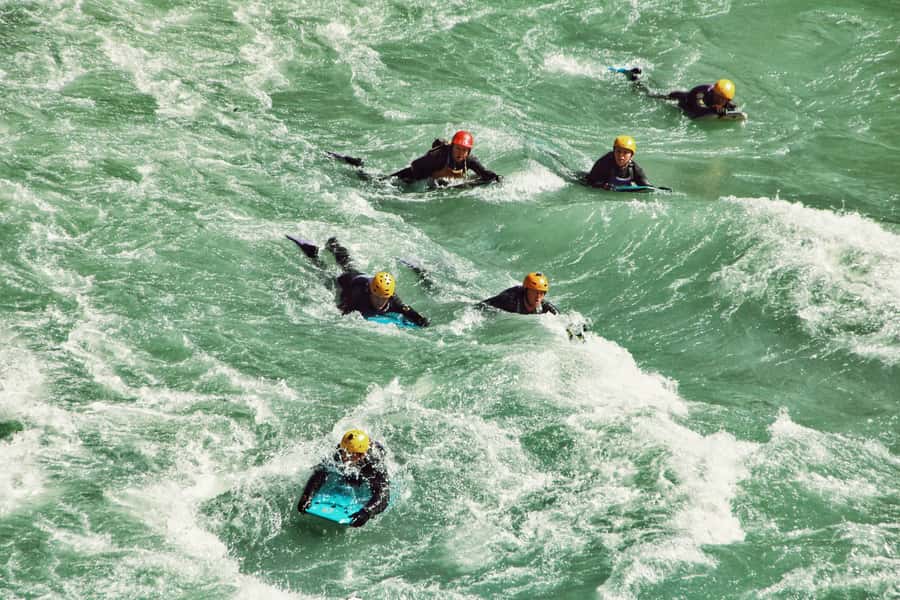
Once you enter the river, the outing becomes a series of short tests. You may paddle or kick into a rapid, line up your board, and let the current carry you through. The board keeps you close to the surface, so water movement feels immediate and physical.
The grade 2 to 3 rapids provide the main action. You may be turned, pushed sideways, or separated from the line you intended to take. The aim is not simply to survive each rapid. The guides also create opportunities for you to use the river, including surfing standing waves and riding whirlpools.
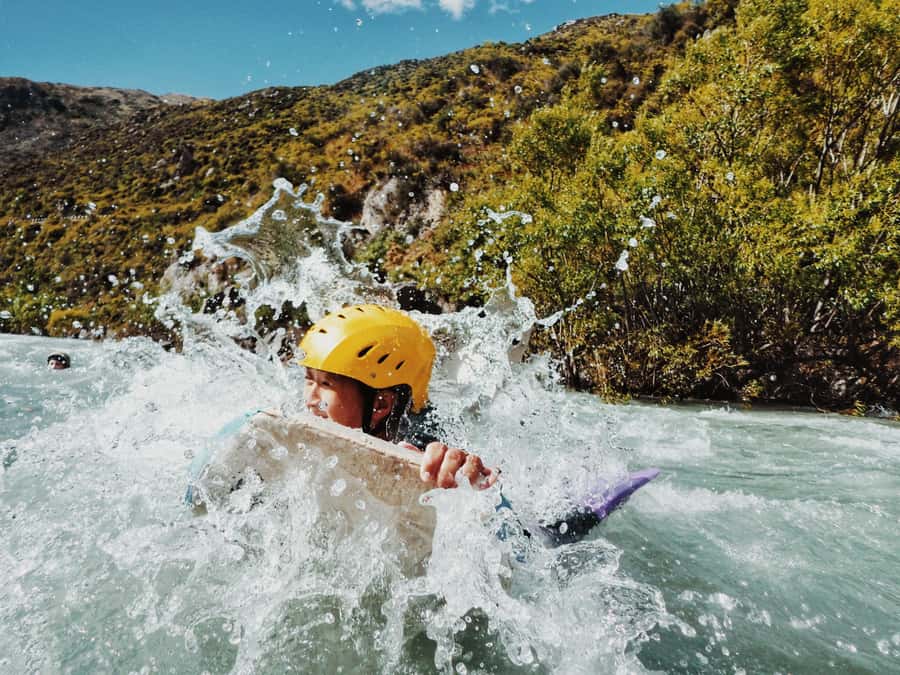
A standing wave is a wave that stays in place as water flows through it. Catching one on a bodyboard can give you a brief surf-like ride without an ocean beach. Whirlpools offer a different sensation, with the current turning you around rather than sending you straight downstream.
You may also try catching an underwater current if you are comfortable. This is the kind of optional challenge that makes the activity appealing to thrill-seekers, but you should not feel pressured to attempt every feature. The river will already provide plenty to manage.
The route can cover up to 12km, though the exact run depends on conditions and the day’s operation. The river is fast and energetic, but the quieter portions matter too. They give you a chance to look at the Kawarau Gorge and catch your breath before the next rapid.
The cliff jump and the gentler stretches
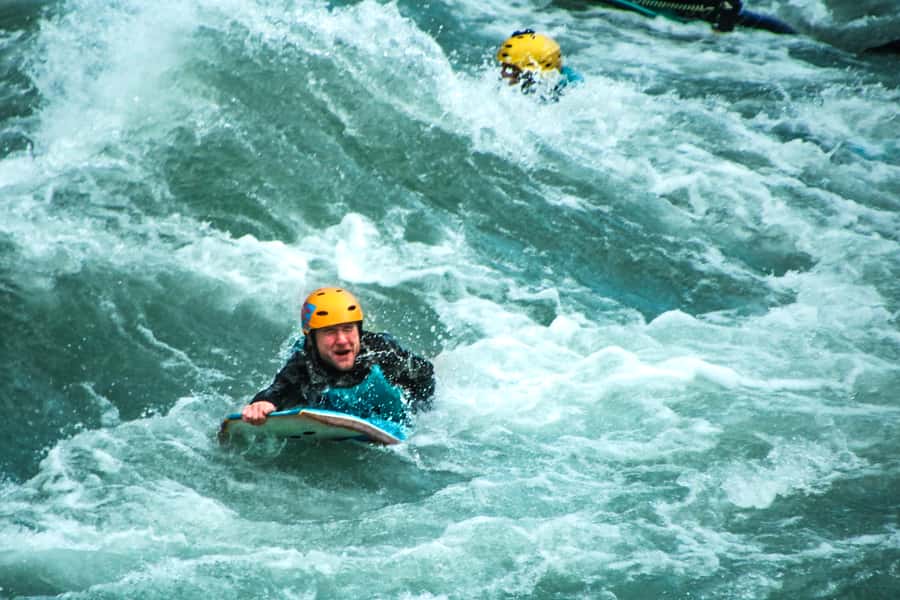
A cliff jump may be offered along the river. It is an optional extra, not the point of the outing, and you can choose whether to take part. If you are already using your energy to manage the board, skipping the jump is a sensible choice.
The calmer stretches are also valuable. They break up the hard work and let you see the surrounding scenery from river level. A raft can give you a wider view, but a bodyboard places you close to the water, with the river’s speed and texture always in front of you.
The mix of action and quiet is one of the better features of the route. You get more than a string of rapids, but you should not mistake the calm sections for a relaxed trip overall. The activity keeps asking you to stay alert.
How the guides shape the day
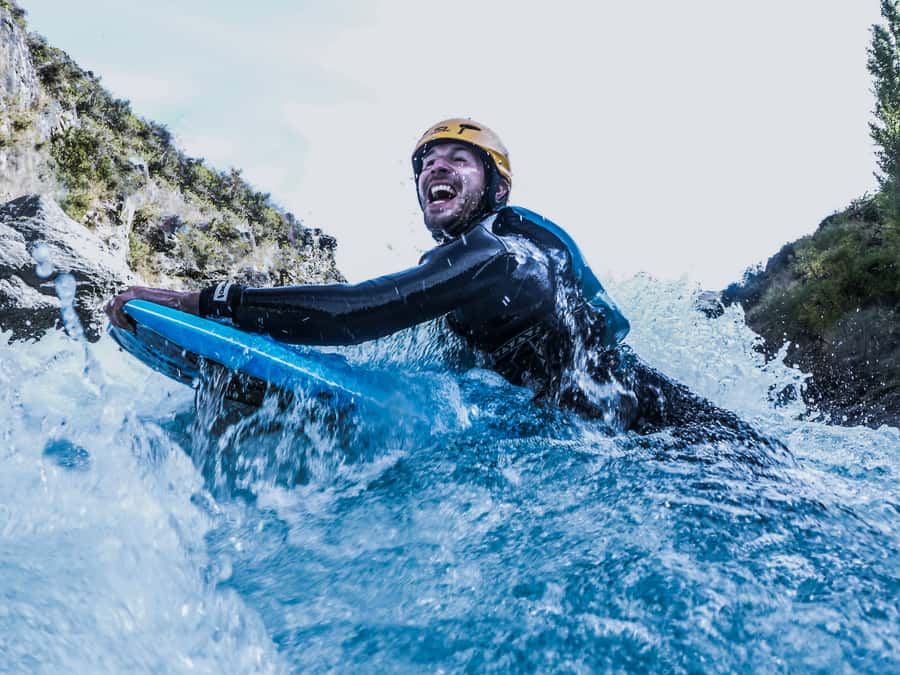
The guide team is central to the experience. The strongest praise is aimed at the crew’s friendly manner and the way they look after participants. Several high ratings describe the guides as fun, caring, and able to make people feel comfortable.
That matters in an activity where nerves can rise before the first rapid. A good guide can turn a frightening moment into a manageable one by giving short instructions and helping you reset after a mistake. The small group size, capped at 10, should also make it easier to hear directions and receive attention.
The available information does not provide individual guide names, so you cannot choose a particular leader when booking. You can expect English-language instruction.
The guide’s care does not remove the need for personal judgment. You are responsible for telling the team if you are struggling, confused, or too tired to continue with an optional feature. This is an active sport, and confidence should build at your own speed.
Is $164 good value?
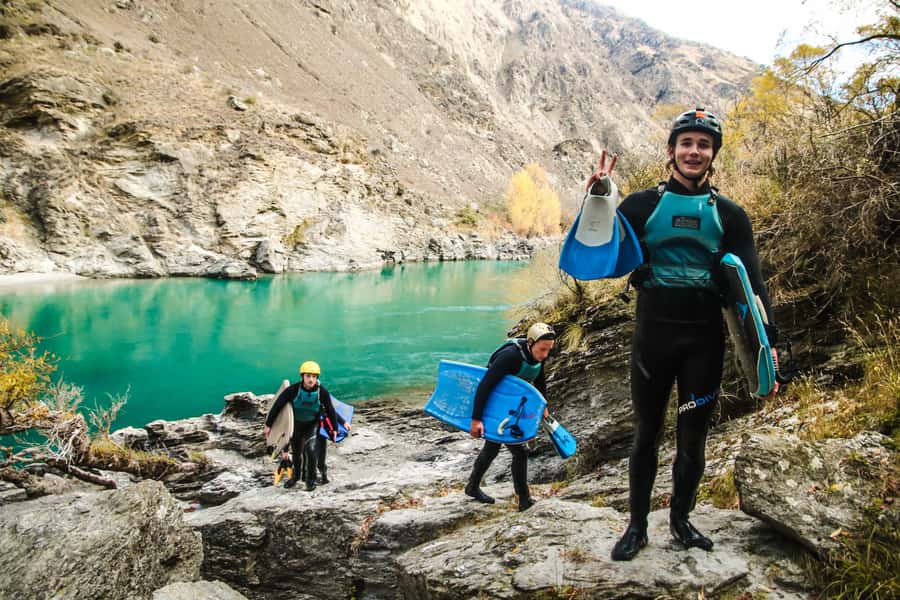
At $164 per person, this is not a cheap way to see the Kawarau River. The price makes more sense if you compare it with the amount of equipment, transport, instruction, and staff time included.
You receive return transport from central Queenstown, a 5mm wetsuit, helmet, wet shoes, life jacket, bodyboard, and light snacks and refreshments. You also get a 270-minute outing with about 1 to 1.5 hours in the river. You do not need to rent specialist gear or arrange your own transport to the river.
The value depends on what you want from a river activity. If you want a gentle sightseeing trip, $164 is too much for an outing that may leave you tired and nervous. If you want to be physically involved and try several forms of white water, the cost is easier to justify.
A rating of 4.6 from 30 ratings suggests the activity usually lands well, but the low rating is worth taking seriously. The biggest risk is not hidden equipment fees. It is booking an activity that demands more swimming confidence and leg strength than you expected.
Who should book this Kawarau adventure?
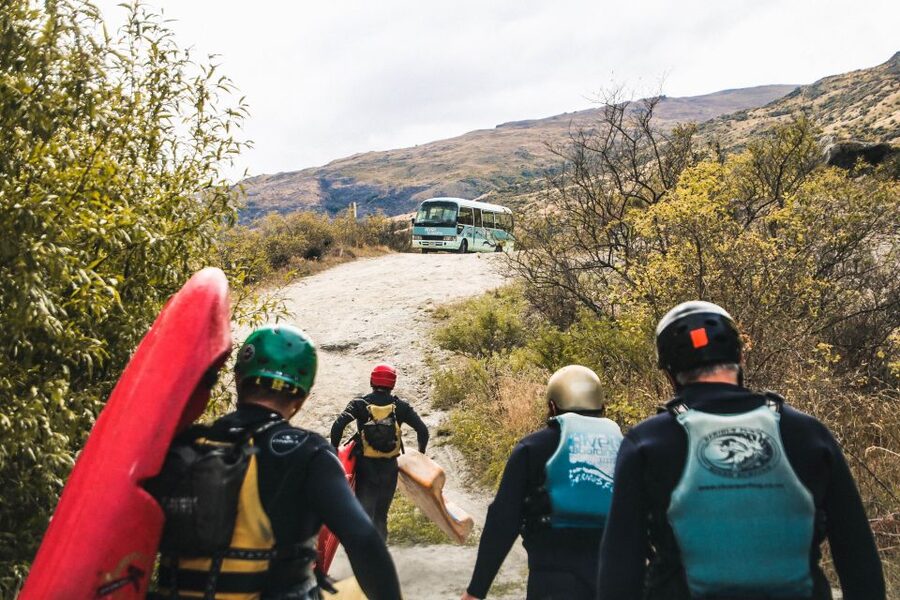
I would recommend it to confident swimmers, active adults, and older children who enjoy a physical challenge. The minimum age is 8, but age alone does not make a child ready. A young participant needs to follow instructions, handle cold water, and stay calm when the river moves them around.
It suits you if you like trying unusual activities and want more control than a raft provides. It also works well for a small group of friends who want a shared challenge with a few optional thrills along the way.
I would not choose it for anyone with limited mobility, anyone using a wheelchair, or anyone who cannot swim. It is also a poor match if you are nervous in water and hoping the guide will do most of the work.
The experience may suit first-time riverboarders, but first-timers should be realistic. You do not need advanced white-water skills from the start, yet you do need a sound swimming base and the willingness to learn quickly.
Timing, cancellation, and practical planning
The activity offers reserve-now, pay-later booking, which can help if you are still arranging your Queenstown schedule. Cancellation terms need careful attention because the supplied booking information gives two different cutoffs: one says a full refund is available up to 24 hours before departure, while the detailed information says there is no refund within 48 hours.
Confirm the exact policy at booking rather than relying on one cutoff. Trips can also be canceled or changed because of dangerous river conditions, too few participants, or concerns about whether a client is suitable for the activity.
Plan to arrive at the street meeting point on time. If you miss the departure vehicle, the group will already be heading toward the river. Self-drivers should follow the separate Roaring Meg Power Station instructions instead of going to Duke Street.
Should you book Serious Fun Riverboarding?
Book it if you want to feel the Kawarau River rather than simply look at it. The bodyboard format, standing waves, whirlpools, optional underwater currents, and small group make this a distinctive Queenstown adventure.
Skip it if your swimming skills are basic, you dislike cold water, or you want a relaxed scenic outing. At $164, the activity rewards the right kind of participant: someone ready to work, listen, and accept a few nerves along the way.
For a confident swimmer who wants an active half-day with supportive guides and included gear, I think it is a strong pick. Just treat it as a real white-water sport, not an easy float with a few splashes.
FAQ
How long does the riverboarding activity last?
The full activity lasts 270 minutes. About 1 to 1.5 hours is spent in the river, with the remaining time used for transport, preparation, and instruction.
How far do you bodyboard?
You can bodyboard up to 12km along the Kawarau River. The exact route may depend on river conditions and the operation on the day.
What grade are the rapids?
The activity includes grade 2 to 3 rapids.
Do I need to know how to swim?
Yes. Non-swimmers are not suitable for this activity, and you should be comfortable in moving water.
What equipment is provided?
The activity provides a full 5mm wetsuit, helmet, wet shoes, life jacket, and bodyboard. Light snacks and refreshments are also included.
What should I bring?
Bring swimwear and a towel.
Where is the Queenstown meeting point?
Meet at the loading zone at 5 Duke Street, behind the bakery and opposite the Sofitel. The group meets on the street and leaves at the departure time.
Can I drive directly to the river base?
Yes. If you are not staying in downtown Queenstown, drive to the base at Roaring Meg Power Station on Kawarau Gorge Road. The drive is about 45 minutes after the Queenstown departure time, and you should wait in the car park.
Is the cliff jump compulsory?
No. The cliff jump is an optional activity along the river.
Can children join?
Children under 8 cannot join. Participants aged 8 and older must still be able to swim, follow instructions, and manage the physical demands of the activity.
Just added for surfers in the world
- Surf, Yoga & Glamping Weekend in Cornwall★ 5.0 · 33 reviews
- Cocoa Beach: Surfing Lessons & Board Rental★ 4.7 · 24 reviews
- Surfing and Yoga in Lisbon★ 5.0 · 15 reviews
- Muizenberg Cape Town: Private Surf Lesson★ 5.0 · 37 reviews
- 8 Day Outstanding Surf & Yoga Holiday in Tamraght, Agadir★ 5.0 · 18 reviews
- Surf, Stay and Yoga in Byron Bay 2 day 2 night★ 5.0 · 10 reviews
- Surf Rental★ 5.0 · 31 reviews
- Santa Barbara: Surfing Lessons★ 5.0 · 17 reviews
New Zealand Surf Lessons, compared.
Auckland: Group Surfing Lesson with Muriwai Surf School
Read our review →
Browse the lists this tour appears in